Opposition Leader Urges Accountability for Past Coup Makers at Memorial
The user wants a short summary of the article, 1-2 sentences, 120-220 characters, max 240. Must be in English only. No filler. Lead with what happened, then single most important detail. No quotes, no labels, no markdown. Article: Oppositio
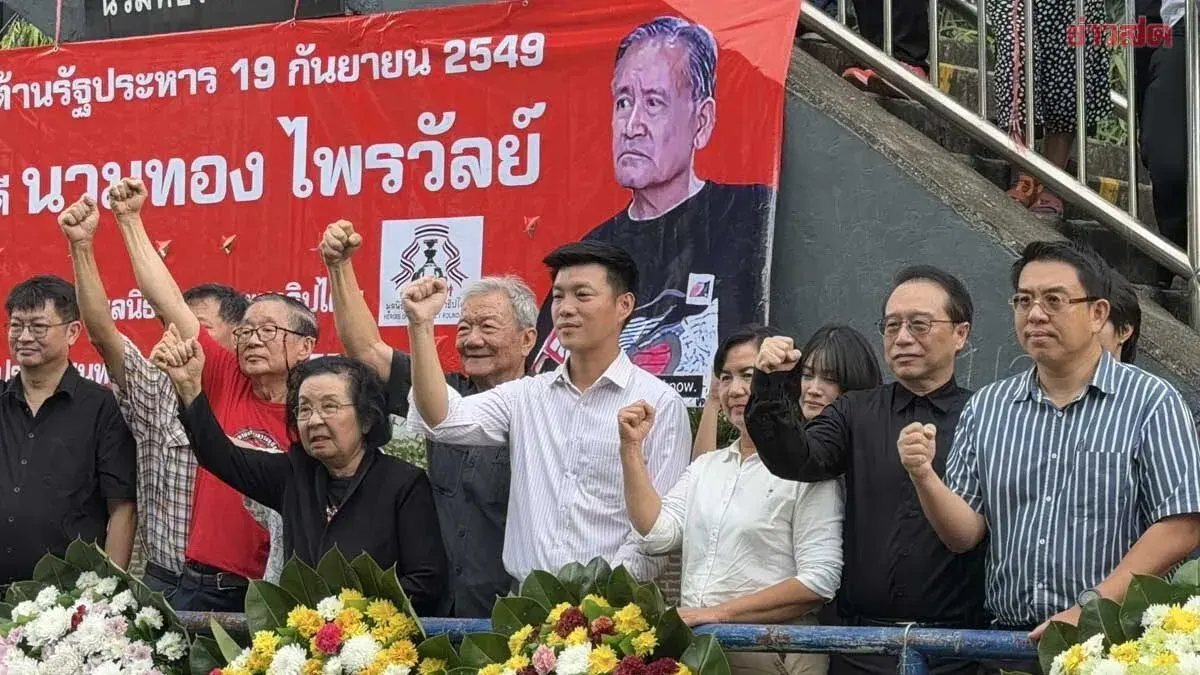
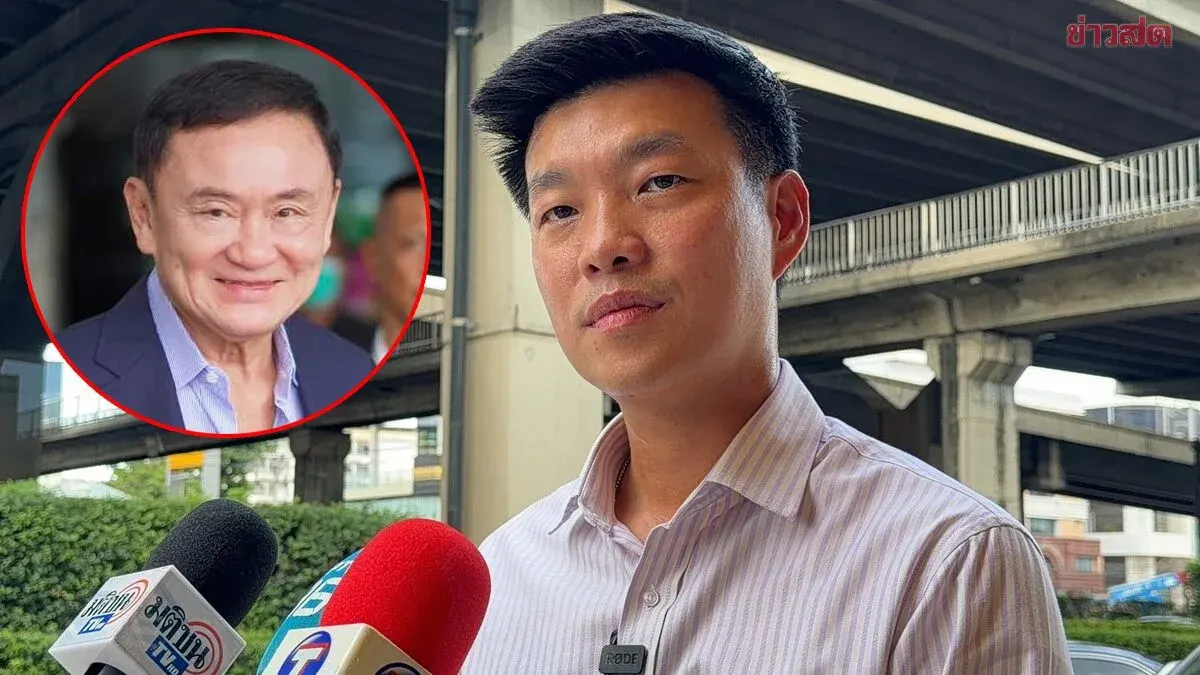
People's Party list MP and opposition leader Nattapong Ruengpanyawut attended a ceremony commemorating 20 years since Nuamthong Praiwan gave his life resisting a coup, urging that Thailand must hold coup makers accountable retroactively and pointing to South Korea's 1980 Gwangju Uprising as a lesson.
At 2:30 PM on October 31, 2026, at the Suthammanusorn area in front of Thai Rath TV station on Vibhavadi Road, Nattapong Ruengpanyawut, People's Party list MP and opposition leader in the House of Representatives, along with Bangkok MPs Anusorn Thamjai and Ekarach Udom-amnuay, Nonthaburi MP Panyarat Nanthaphusitanon, former People's Party list MP Wiroj Lakkhanadisorn, and Senator Thewarit Manichai, participated in the two-decade memorial for Nuamthong Praiwan.
In his remarks, Nattapong referenced a clip of 'Uncle Nuamthong' saying, 'Just his one life — what could be more important than the country's democracy?' which moved him deeply. He said the one thing binding their generation together, regardless of age, is the demand for something better, something greater than themselves. 'The word democracy — what is better is our children's future. Our desire is simple: only the methods of struggle differ between past and present. In the past, struggle might have involved gun barrels, guns, or tanks, but in this era, the struggle may take another form, under the shadow of the 2017 Constitution.'
Nattapong continued that the key takeaway from the recent referendum was that over 21 million voters had already decided they want the 2017 Constitution abolished — a clear public mandate that they must collectively fight for and push forward. He urged everyone at the memorial to remember past struggles, noting that shared memory and feeling are what link arms to keep moving forward.
Nattapong cited South Korea as an example. Thailand once aided Korea during the Korean War; today Korea enjoys deeper democracy and greater prosperity. He spoke with representatives of Korea's May 18 Foundation about the 1980 Gwangju Uprising, which led to South Korea's current constitution from 1987. Nattapong noted he was born on May 18, 1987 — the same day and month as the Gwangju Uprising, and the year Korea adopted its new constitution.
Korean representatives asked a question that left Nattapong stunned and unable to answer properly. They said they had studied Thai history before the October 14 event, seeing hundreds of thousands of citizens demanding more democracy. After that event, why didn't Thailand achieve real change like Korea, where massive public demands for democracy actually transformed the system?
Nattapong shared that if he hadn't become an MP or politician, he would hardly know this deep history — that Thailand tries to erase its history, the education system never teaches it, the People's Party plaque disappeared, while Korea has monuments and stories everywhere, and Korean dramas embed the Gwangju Uprising in many series.
'Preserving memory prevents history from repeating. Making those who staged coups face punishment at least once is crucial to preventing future coups. In Korea, both corrupt politicians and those who staged coups were punished. But in our country, we see corrupt politicians walking free, and those who staged coups never face any consequences.'
Nattapong added that as a politician, he asks only one thing: if one day we succeed in transitioning to democracy, we must be able to investigate past cases retroactively and bring the guilty to justice.