Marine Department Warns: Stop Littering to Save Marine Life
The article discusses marine debris in Thailand, citing DMCR data: 80% from land, mostly single-use plastics; 20+ tons washed onto Koh Samui beaches; 200-250 sea turtles die annually; 2026 coastal cleanup collected 203 tons; plastics domina
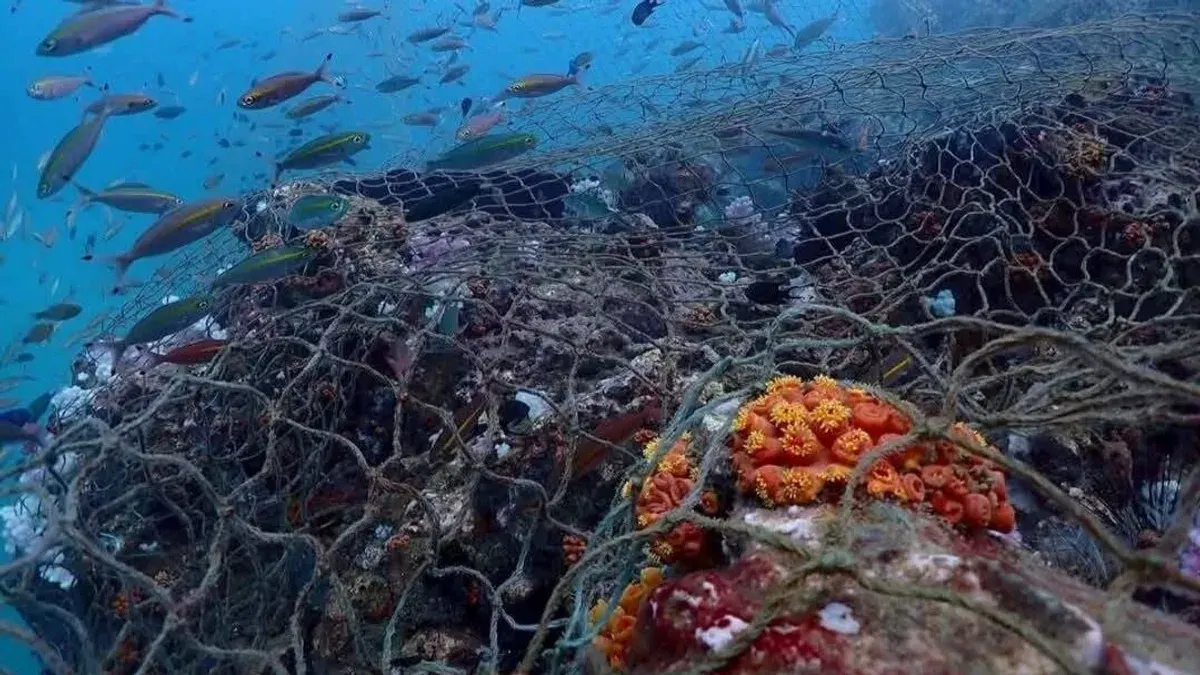
The Department of Marine and Coastal Resources (DMCR), the Ministry of Natural Resources and Environment, and the Marine Knowledge Hub revealed that over 80% of marine debris originates from land-based activities, mostly single-use plastics that do not decompose easily, directly impacting coral reefs, rare marine animals, and ecosystems.
Over 20 tons of waste were blown onto Koh Samui in Surat Thani province by storms, covering more than one kilometer of tourist beaches, evidence of marine litter from waste and items humans discard into waterways and the sea, both from shore via rivers, wind, and currents, and from activities at sea.
Another scene in the Andaman Sea shows a juvenile hawksbill turtle struggling amidst discarded fishing gear in Tarutao National Park, Satun province. This turtle was fortunate to be found before dying of exhaustion, yet 200-250 sea turtles in Thailand per year lose their chance at survival.
Breaking down the most common debris types in Thai waters: plastic beverage bottles 22%, plastic bags or handle bags 19.42%, glass bottles 10.96%, snack wrappers and candy wrappers 7.97%, foam fragments and food containers 14.47%, with the remainder being beverage cans, straws, plastic caps, and fishing gear such as rope fragments, floats, and hooks.
Four million pieces is the figure for coastal waste collection in 2026 by DMCR alongside all relevant sectors across 147 areas in 24 provinces, collecting a total of 202,863.51 kilograms or 203 tons of waste removed from coastal ecosystems.
Concerningly, the top five categories still show 73.5% plastic waste, followed by 26.9% thin plastic food packaging like snacks, 15.1% beverage bottles and cans (plastic), 7.8% single-use plastic water cups, and 5.5% single-use plastic boxes, plates, bowls, and cups. This leaves tens of thousands of tons of waste in the sea breaking down into microplastics, becoming a silent threat to marine life, where a single discarded item can endanger many lives in the ocean.
Consistent with 2025 DMCR statistics, over 300 rare marine animals lost their lives due to debris, particularly sea turtles affected at a rate of 284 out of 665 green turtles, accounting for over 42.7%. The most common impact was ingestion at 59.9%, followed by entanglement at 28.5%.
Some turtles entangled in marine debris develop anemia or malnutrition because they cannot eat while entangled; some lose limbs, becoming disabled. This rescue center has nearly 30 disabled turtles from fishing gear entanglement that cannot be released back to nature.
Veterinarian Thanapan Chomchuen, operational veterinarian at the Eastern Gulf of Thailand Marine and Coastal Resources Research Center, DMCR, spoke about the mission to care for sea turtles at the Rare Marine Animal Rescue Center in Rayong province.
He added that sea turtles naturally injured by marine debris, after rescue, are sent for rehabilitation for about three months, each with different symptoms. Some entangled in debris develop anemia, some lose limbs and become disabled, while these four turtles were fortunate to have the chance to return to the sea.
The problem of marine debris with rare marine animals, especially sea turtles, is a top-tier issue causing sea turtle...