Parliament Panel: Holy Basil Patent Limited to Four Improved Varieties
Parliament panel says holy basil plant variety protection covers only four improved varieties, not the whole species, so other local varieties remain free to cultivate and sell.
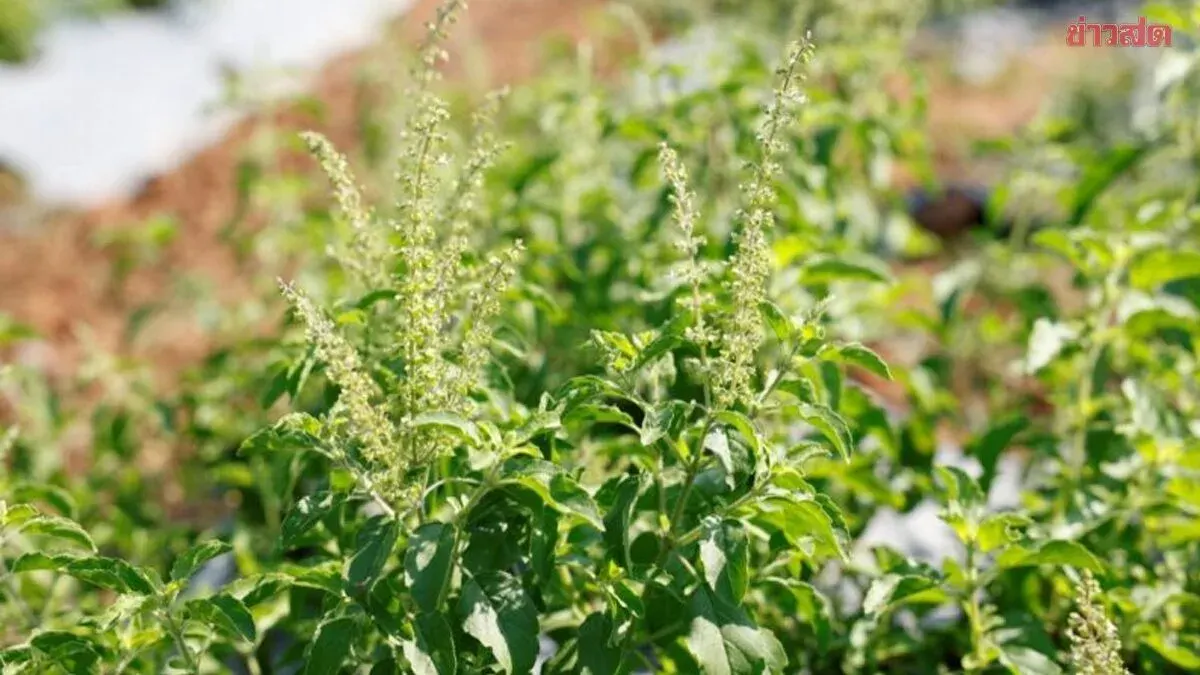
At 9:30 a.m. on November 6, 2026, at Parliament, MP Thanthan Thaninwatthananth of the People's Party, acting as spokesperson for the House Committee on Higher Education, Science, Research and Innovation, announced the committee's meeting results. The panel reviewed policies on economic crop research and development by higher education institutions and research agencies, focusing on intellectual property management and the fair commercial and public utilization of research outcomes. Interested agencies were invited to provide information, particularly regarding holy basil research and development, a topic drawing significant public attention due to intellectual property concerns and impacts on citizens.
The committee clarified that the plant variety protection registration for 'Kaphrao Kaew Juree 1-4' covers only those newly improved varieties, not holy basil as a whole. The public may still cultivate, consume, and sell other local holy basil varieties normally.
Regarding the research collaboration model, the National Center for Genetic Engineering and Biotechnology (BIOTEC) explained that state-private partnerships typically involve both joint research and contracted research, with clear terms on intellectual property rights, benefits, and benefit-sharing. The holy basil project under review was a contracted research project conducted by Kasetsart University for CPRAM Co., Ltd., the funding sponsor, with a budget of approximately 5.5 million baht. The goal was to develop holy basil varieties with consistent aroma, larger and thicker leaves, suitable for food production, using selection and chromosome-doubling techniques, along with post-harvest management studies.
The project yielded the 'Kaphrao Kaew Juree 1-4' varieties, with variety rights belonging to CPRAM, while cultivation manuals and associated knowledge belong to the university and have been released to the public. The university confirmed it charged standard external rates for services, equipment, and facilities.
On the scope of protection and public impact, representatives from the Department of Intellectual Property and the Department of Agriculture clarified that patent protection is separate from plant variety protection under the Plant Varieties Protection Act B.E. 2542 (1999). Patents cover inventions or processes meeting criteria, while improved holy basil varieties fall under the Plant Varieties Protection Act, assessed on novelty, distinctness, uniformity, and stability. The Department of Agriculture emphasized that the registration of 'Kaphrao Kaew Juree 1-4' does not affect the cultivation or sale of any other local holy basil varieties.
The committee spokesperson added that regarding access to plant genetic resources and benefit-sharing, the Agriculture Department confirmed that using common local plants or wild varieties for commercial research or improvement requires permission and a benefit-sharing agreement. In CPRAM's case, such permission was obtained and an agreement signed. This mechanism aims to ensure benefits from natural resource and genetic utilization return to conservation efforts and local source communities, alongside promoting plant breeding.
The committee has proposed that the Ministry of Higher Education, Science, Research and Innovation, Kasetsart University, and relevant agencies...