Parliament Pushes to Resolve Decades-Long Land Dispute
Parliamentary committees are examining legal solutions to decades-long land disputes at Thap Lan National Park in Nakhon Ratchasima, where about 30,000 residents face losing homes and farmland due to overlapping boundaries established when
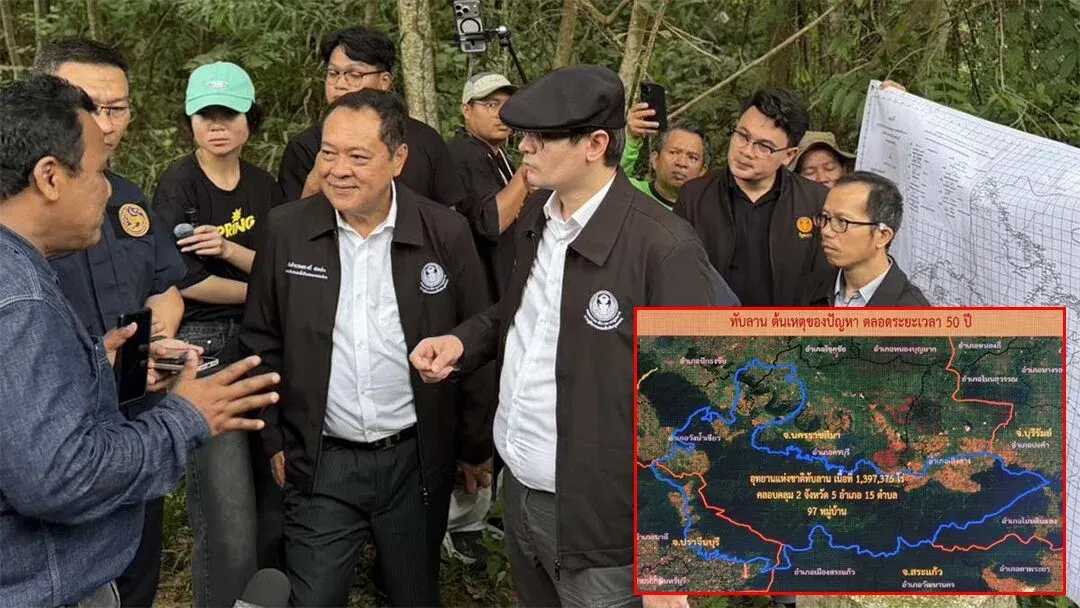
Deputy Police Colonel Thavee Sodsong, a Phak Prachaachat list MP and chair of a special committee reviewing an amnesty bill for people affected by state land and natural resource policies, joined Rangsimant Rom, also a Phak Prachaachat list MP and chair of the legal affairs and human rights committee, in hearing concerns about overlapping land disputes at Thap Lan National Park in Wang Nam Khiao district, Nakhon Ratchasima. The committee is collecting facts and examining legal solutions to resolve a decades-long land dispute and ensure fairness for affected residents, particularly regarding the park's boundary revision to address overlaps on land where people settled before the park was established in 1981. Thap Lan was designated a UNESCO World Heritage site in 2005 as part of the Dong Phayayen-Khao Yai Forest Complex, encompassing nearly 1.4 million rai across five districts in Nakhon Ratchasima and Prachuap Khiri Khan provinces, though approximately 260,000 rai overlap with residential and agricultural land. A March 14, 2566 cabinet resolution approved boundary adjustments affecting over 150,000 rai to resolve overlapping areas, with about 30,000 residents at risk of losing their homes and farmland without resolution. The government, led by Natural Resources and Environment Minister Suchati Chomklin, is proceeding with boundary revisions while verifying land rights for over 5,000 residents, balancing conservation with allocating farmland and strictly enforcing laws against violators. Meanwhile, parliamentary committees are studying facts and hearing from stakeholders to find legal remedies, with an amnesty bill for people affected by forestry and land cases awaiting consideration in parliament, hoping that both boundary revisions and amnesty provisions will move forward to resolve these long-standing disputes.