Devotees flock to Phra Chao Tan Jai, a sacred Buddha image at Wat Phra Brom Thad Ban Tak in Tak Province, believing it grants wishes with remarkable speed. The image must be sculpted and consecrated within 24 hours to hold its sacred power.
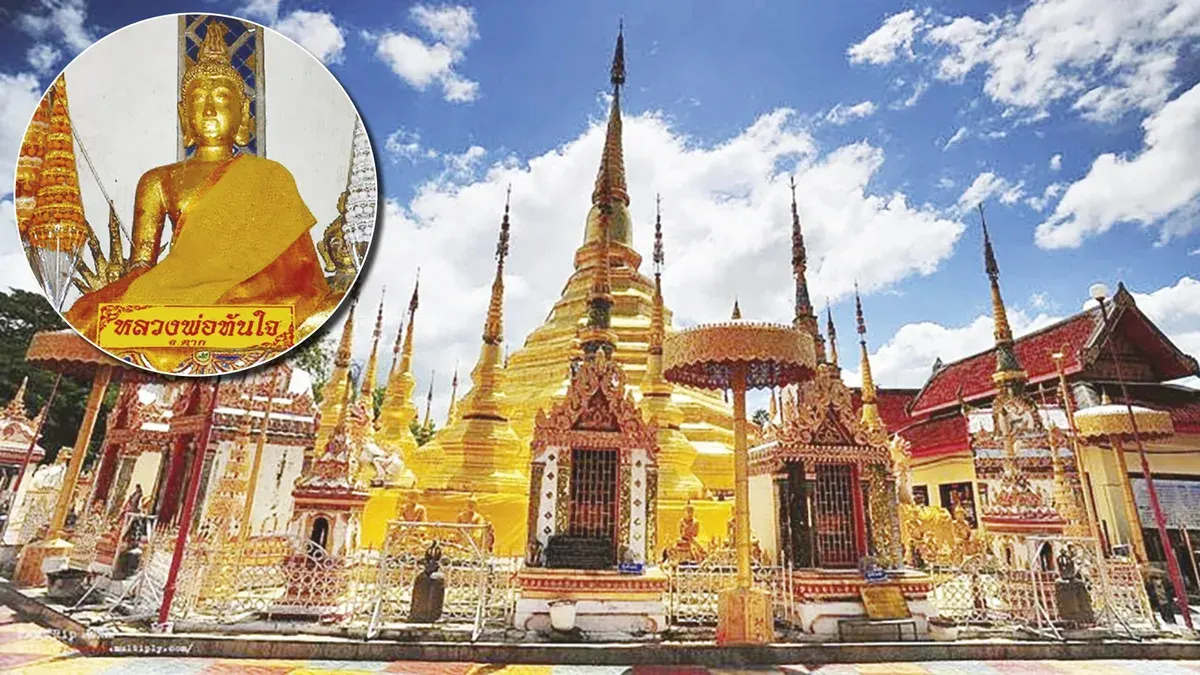
Phra Chao Tan Jai, or Luang Por Tan Jai, at Wat Phra Brom Thad Ban Tak in Ban Tak District, Tak Province, is a sacred Buddha image greatly revered by devotees who visit to seek blessings. Believers hold that "whatever is requested is typically granted with remarkable speed," truly befitting the image's name.
The tradition of creating Phra Chao Tan Jai images dates back centuries and is found in many important temples throughout northern and northeastern Thailand. The defining belief is that the image must be completed within a single day—beginning after 6 PM and finished before sunset (6 PM) the following day. If construction is not completed within this timeframe, it is considered an ordinary Buddha image. Since typical Buddha image creation involves elaborate and complex procedures, completing both the sculpture and consecration ceremony within 24 hours is considered miraculous. Believers attribute this to the divine power and sacred blessings that respond to the sincere devotion and unity of the faithful, allowing all rituals to proceed without obstruction.
Another crucial aspect of creating Phra Chao Tan Jai is the insertion of a "heart of the lord," similar to a human heart, along with various auspicious objects and valuables within the Buddha image. Throughout the sculpting period, monks must chant Buddhist mantras continuously through the night until dawn. Through these elaborate steps and rituals completed in one day, the Buddha image embodies holiness and sacred power, granting blessings to supplicants with remarkable swiftness.
This ancient sacred Buddha image is deeply revered by residents of Tak city and neighboring provinces, enshrined in the old chapel of Wat Phra Brom Thad Ban Tak, a historically significant temple. The site was the original location of old Tak city, which has a long history dating back to the time of Queen Chamadevi, before the city was relocated to the current Rang district. According to inscriptions of King Ramkhamhaeng, he won a military elephant battle against the Lord of Chod on a hill near this pagoda.
Importantly, this temple also houses Buddha relics, according to a legend written in northern dialect by King Lieo Lok: The Buddha journeyed along the Ping River and arrived at Doi Mahiyangka within the Tak city area, telling Ananda that this was a pleasant and beautiful place. If the Buddha were to pass into Nirvana, his bones and hair should be brought back to this hill. After the Buddha's Parinirvana, four Arahants brought his relics, along with four more strands of hair, to Doi Mahiyangka and built a square stupa to contain them, serving as a place of worship for all humans and devas.
Later, Phra Kru Phituk Phra Brom Thad (Thong Yu) traveled to worship the Shwedagon Pagoda in Yangon, Myanmar, and brought back designs to construct a covering for the original stupa, embellishing it with beautiful gold leaf. This is considered the pagoda of the year of the Rat.
Phra Chao Tan Jai is a brick and mortar Buddha image finished with gold leaf in the Mara Vijaya pose, measuring 32 inches across the chest. According to tradition, Phra Chao Tan Jai, regardless of materials used, must be completed within one night, representing the exceptional faith of local Buddhists. As the current abbot, Phra Kru Phituk Brom Thad (Pan), has noted, the creation of this image demonstrates the sincere devotion of the community who came together in white robes to participate in its construction.