Communities in Ubon Ratchathani Province are demanding Pak Mool Dam open its spillway gates during monsoon season to allow fish migration and spawning, citing a cabinet resolution designed to restore ecosystems and support local fishermen's
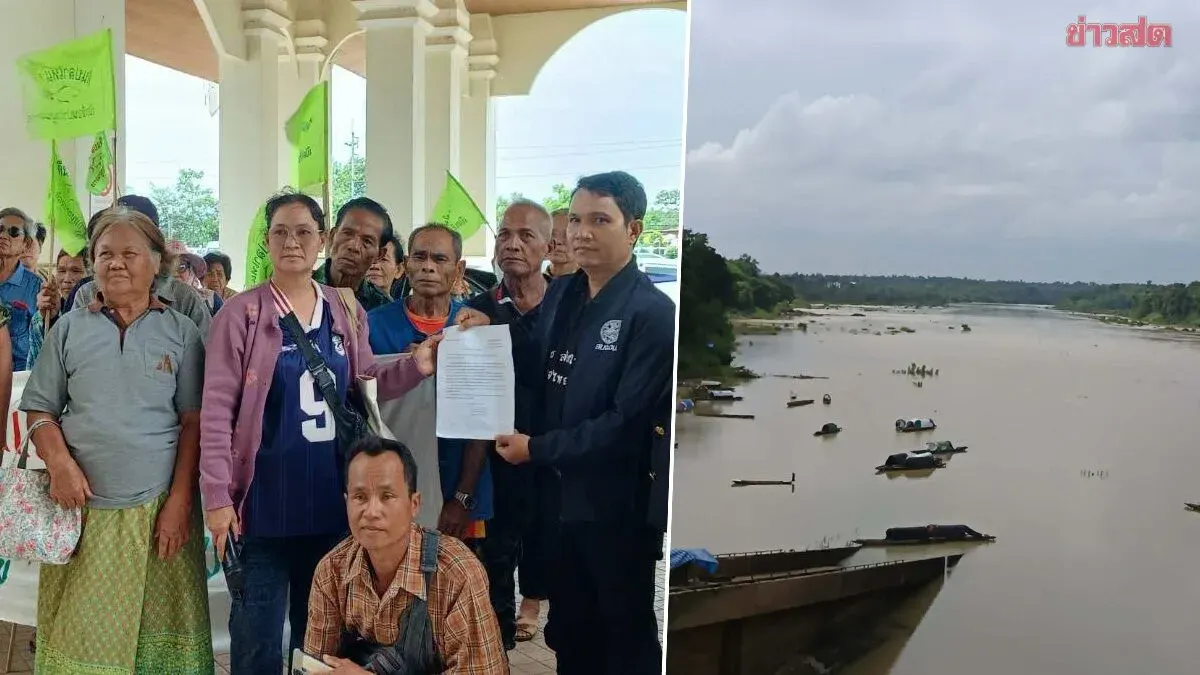
More than 30 representatives from poor community networks petitioned the governor of Ubon Ratchathani Province on July 10, 2569, requesting the opening of all spillway gates at Pak Mool Dam to allow migratory fish from the Mekong and Mun rivers to spawn and breed according to their natural cycles. The movement aligns with a cabinet resolution designed to provide relief and remedy to communities impacted by the dam's construction, received by Lieutenant Colonel Krakod Prasertvorig, the deputy governor.
The letter emphasizes that the onset of the monsoon season marks a critical period when multiple fish species naturally migrate upstream to spawn and breed, essential for maintaining aquatic ecosystem health and ensuring food security for local communities. Opening the dam gates during this season would follow existing cabinet directives aimed at reducing environmental damage, restoring fish migration, and enabling local fishermen to practice their livelihoods sustainably.
Community representatives argued that opening the spillway gates not only preserves the Mun River's biodiversity but also revitalizes the grassroots economy of communities dependent on fishing resources and riverine ecosystems. They called on the province to act urgently, considering the critical importance of the fish spawning season to avoid losing another year's opportunity to restore natural resources and community ways of life.
Deputy Governor Prasertvorig stated that after receiving the letter, the provincial Dharma Center would submit the matter to the Pak Mool Dam management subcommittee for joint consideration of next steps. He noted that current water levels remain stable, with the M7 station at approximately 107.5 meters and the dam area at about 98.6 meters. Any decision to open spillway gates requires consultation among all stakeholders, including the Electricity Generating Authority of Thailand (EGAT), relevant agencies, and agricultural sectors, to balance farmers' water needs with ecosystem restoration.
"If all parties agree there is sufficient water for agriculture, there could be consideration of opening some spillway gates to allow fish migration and spawning. However, this decision must go through committee deliberation and cannot be made by any individual," the deputy governor said.
Somjai Srangsorok, coordinator of the public network monitoring floods and the Mekong River dam, noted that the Pak Mool Dam management subcommittee was established to implement the cabinet resolution on opening the spillway gates, not to decide whether to open them. While Ubon Ratchathani must consider flood conditions, opening the dam during the fish spawning season should follow the existing cabinet resolution.
"The gates should be opened according to the cabinet resolution," she stated. "This committee was created to manage the opening process in accordance with that resolution. However, Ubon Ratchathani also faces flood risks, so the province must consider both factors. Previously, the province opened gates at Khong Sapuea during tourist season, which generated significant income—nearly 300 million baht in a single month alone."