Ancient Khmer Temple Pond Dries Up, Fish Die
Severe drought has drained the iconic pond at Wat Thepprast Sarakamphaeng Noi, an ancient Khmer temple in Si Saket province, leaving dead fish scattered across exposed cracked earth and disrupting a beloved merit-making tradition for visito
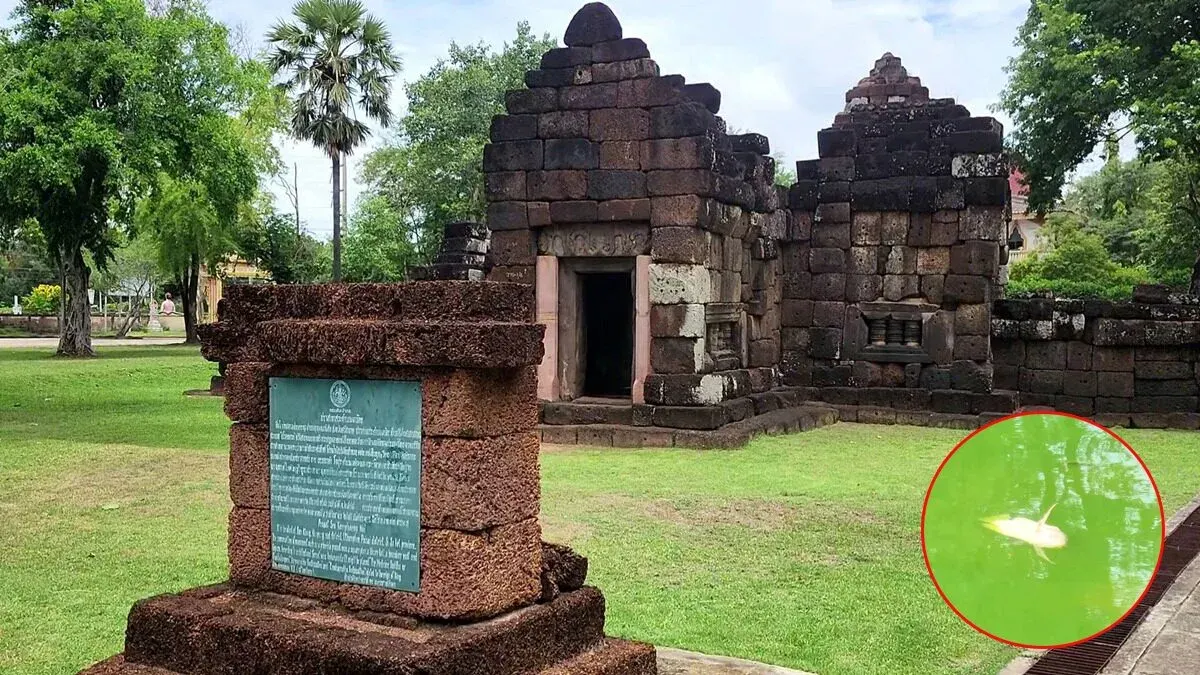
A crisis has unfolded at Wat Thepprast Sarakamphaeng Noi in Utumpornpisai district, Si Saket province, where the iconic pond fronting the ancient Khmer temple has severely dried up. The water level has dropped dramatically, exposing cracked earth and thick mud in many areas. Dense aquatic weeds now blanket the pond, while the remaining water appears stagnant and dark green, emanating a strong putrid smell. Dead fish of various sizes float scattered throughout the pond and cling to vegetation, creating a distressing sight for visitors.
The temple, which houses Sarakamphaeng Noi Prasart—an important Khmer-era structure built around the 18th Buddhist century during King Jayavarman VII's reign—was historically used as a public hospital. Today it functions as a historical learning center, cultural tourism destination, and religious site where locals and visitors from across Thailand come to make merit, pray, and feed the fish. Feeding the fish has long been a signature attraction, with large schools of fish swarming the surface whenever visitors scattered food.
Visitors arriving expecting this cherished experience left deeply disappointed. Ms. Nuchrin, 40, who brought her three-year-old daughter to make merit and feed the fish, expressed heartbreak at the transformation. "I've visited many times because I loved the peaceful atmosphere and the variety of fish," she said. "Every time we scattered food, fish would rush to the surface creating a beautiful sight. But today we were shocked to find the water almost gone, dead fish everywhere, and a terrible smell. I worry this will damage the temple's reputation and the spiritual experience of those who come to make merit here."
Venerable Sanya, a monk at the temple, revealed that the pond has never experienced such severe water depletion in living memory. The dramatic decline has devastated the aquatic life that local residents and Buddhists have released as merit-making offerings over many years. Local administrative organizations and residents have begun coordinating efforts to address the crisis.