Village Elders Share Stories of Life and Tradition
Researchers returned to a Pwo Karen village on Doi Tao after a decade to document elder traditions, finding a community where weaving has experienced a cultural revival and extended families maintain close-knit caregiving systems.
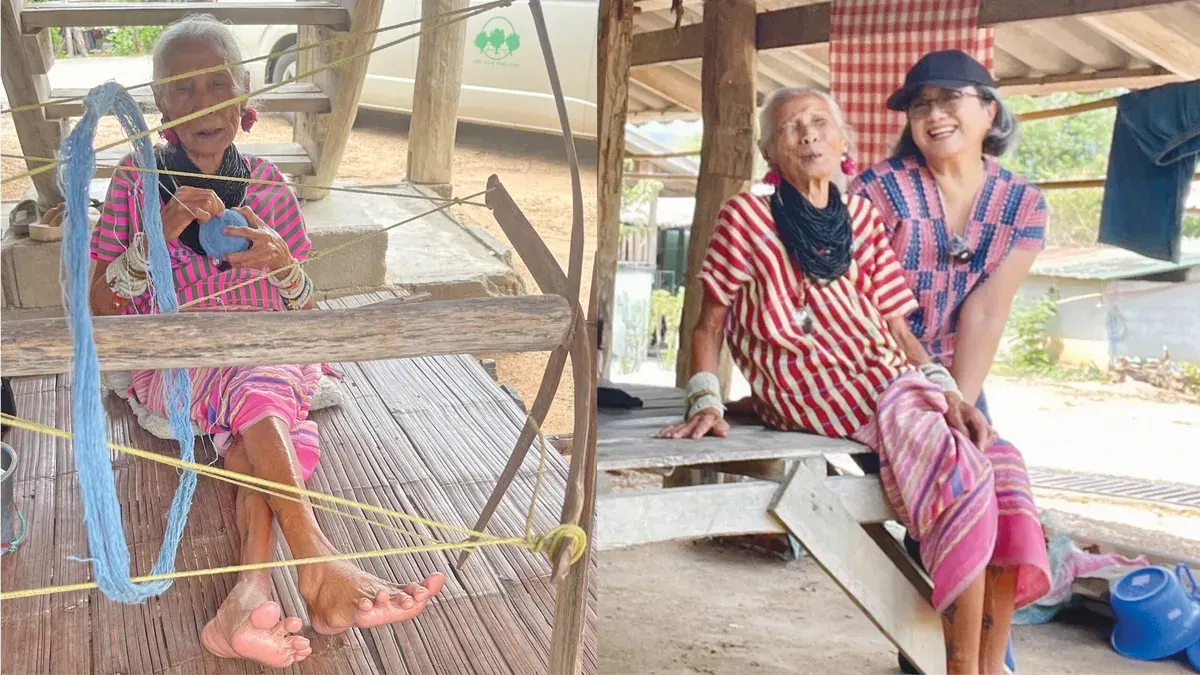
After a decade-long absence, the Thung Saeng Tawan team returned to Lhay Kaew community in 2026 to engage with elders and understand the lifestyle systems within the Pwo Karen settlement on Doi Tao in Chiang Mai. Morning sunlight filters through the homes as smoke drifts from cooking fires. The Pwo Karen culture centers on extended families, with newly married children building houses near their parents' homes, creating tight-knit clusters of relatives within earshot of one another.
Elderly residents gather under the houses to socialize, some chewing betel nut while discussing local news, while nearby young women quietly work at looms. In the past, weaving was passed down from mother to child out of necessity, but traditional knowledge nearly vanished with the arrival of roads, markets, and cheap commercial textiles. Fortunately, a revival of natural dye techniques and modern designs has rekindled interest in traditional weaving among younger generations, providing income without requiring them to seek work outside the village.
Karen families prepare rice offerings for elders and provide daily care to aging relatives who live nearby. As they enter their final years, most elders in their 70s and 80s show a peaceful acceptance of life, famously expressed by one 86-year-old grandmother who says, "Old age comes, whether we like it or not." Most elders prepare traditional clothing and household items for their eventual passing, viewing it as an ancient practice. They spend their days spinning cotton, greeting visitors, and enjoying the simplicity of daily life without worry about the future.
The quiet community becomes lively during periodic markets when vendors from the lowlands drive up to sell food, supplies, and clothing. Even elderly residents with mobility issues make the effort to attend these gatherings for brief respite and social connection.