PM Orders Water Contamination Response, Cross-Border Cooperation
Prime Minister Anutin Charnvirakul chaired a national disaster command meeting and issued eight directives to address water contamination, including inter-agency crackdowns on illegal chemical transport, standardized testing of water and crops, health checks for at-risk communities, and securing clean water supplies. The order also calls for cross-border cooperation via the Foreign Affairs Ministry and measures to combat seasonal PM2.5 pollution in northern provinces.
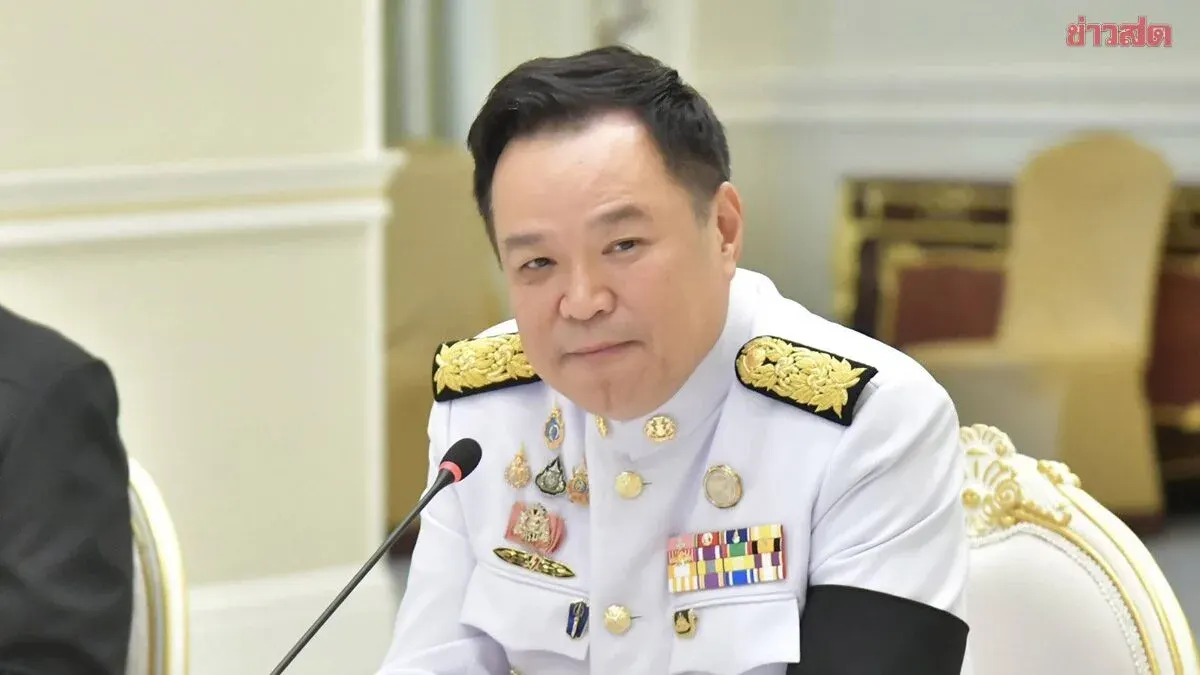
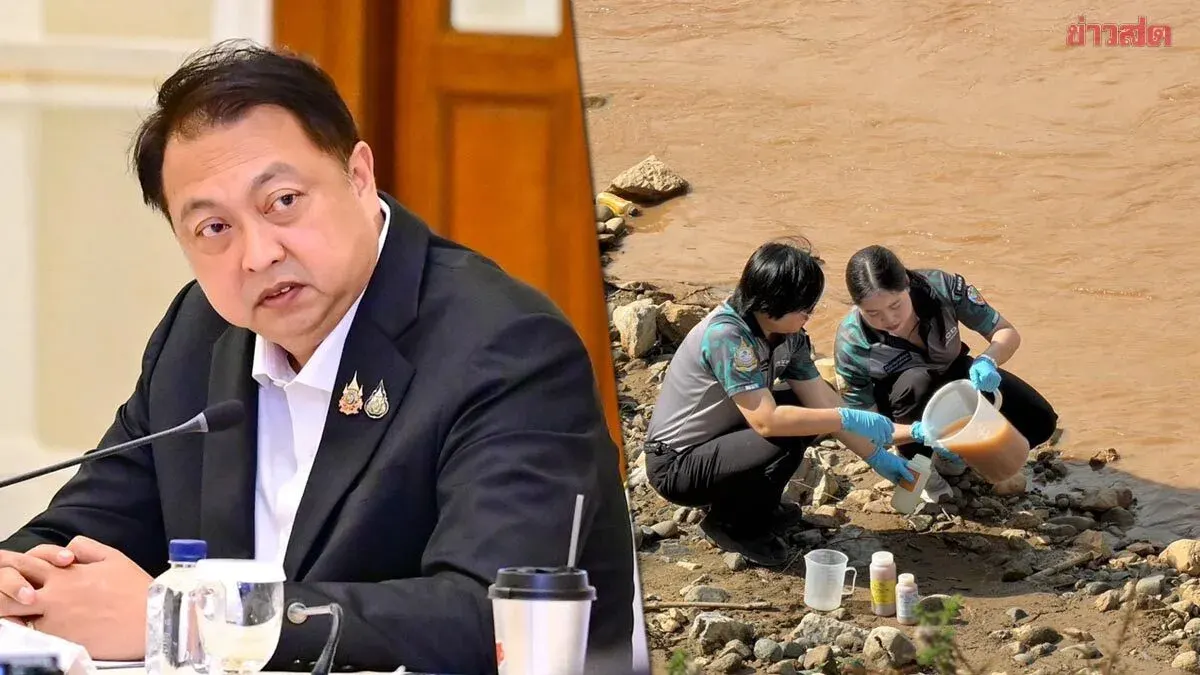
On November 21, 2026, Prime Minister and Interior Minister Anutin Charnvirakul chaired a meeting of the National Disaster Prevention and Mitigation Command (NDPMC) to monitor the situation and set guidelines for addressing water contamination. The following directives were issued:
1. Relevant agencies must integrate efforts to inspect and suppress illegal import, possession, transport of hazardous materials and chemicals that pollute water sources, with provincial governors leading teams to investigate and crack down on offenses related to hazardous chemicals that could cause water pollution. 2. The Ministry of Natural Resources and Environment (MNRE) is the lead agency to set standards and methods for testing water contamination, and to produce clear maps showing contaminated and clean areas, supported by the Ministry of Higher Education, Science, Research and Innovation (MHESI), the Ministry of Interior, and the Ministry of Public Health. 3. The Ministry of Agriculture and Cooperatives (MOAC) is the lead agency to set standards and methods for testing agricultural produce contamination, and to produce clear maps of affected and unaffected areas, supported by MHESI and the Ministry of Public Health. 4. The Ministry of Public Health must deploy health teams to examine residents in at-risk areas and provide safety guidance. 5. The Ministries of Interior, Natural Resources and Environment, and Agriculture and Cooperatives must jointly secure alternative clean water sources to replace contaminated ones, urgently distribute clean water, establish central distribution points, or support community water production vehicles to ensure continuous access to safe drinking and usable water in affected areas. 6. MOAC, together with the Ministry of Commerce, must swiftly build public confidence by defining measures in contaminated zones such as suspending farming and restoring land based on academic principles, assisting affected farmers, and clearly communicating affected areas. 7. The Department of Disaster Prevention and Mitigation (DDPM), with the Public Relations Department as lead, must compile contamination situation data covering water quality, agricultural produce, and public health impacts. Agencies testing water and produce must designate responsible officers, reporting formats, and submit data to DDPM continuously. 8. The Ministry of Foreign Affairs (MFA), with MNRE, must use relevant international mechanisms to promote cooperation in tracing contamination sources, exchanging water quality data, and jointly determining remedial measures at the source, while establishing continuous monitoring and prevention mechanisms for cross-border contamination.
The Prime Minister assigned deputy prime ministers responsible for each region to oversee problem resolution, with the Ministry of Public Health supporting health examinations, treatment, and public guidance, integrating environmental, health, agricultural, communication, and international cooperation efforts to prevent recurrence.
Additionally, the Prime Minister urged northern provinces, especially Chiang Mai and Chiang Rai, to prepare for PM2.5 dust situations, enforcing laws strictly against burning weeds, forests, and agricultural residues, while accelerating public relations, inspections, and readiness of personnel and equipment to suppress burning immediately upon detection.