DNA testing by Prince of Songkla University confirmed that canned fish samples contain blackchin tilapia, not catfish as labeled, prompting calls for accountability from the Fisheries Department in Thailand.
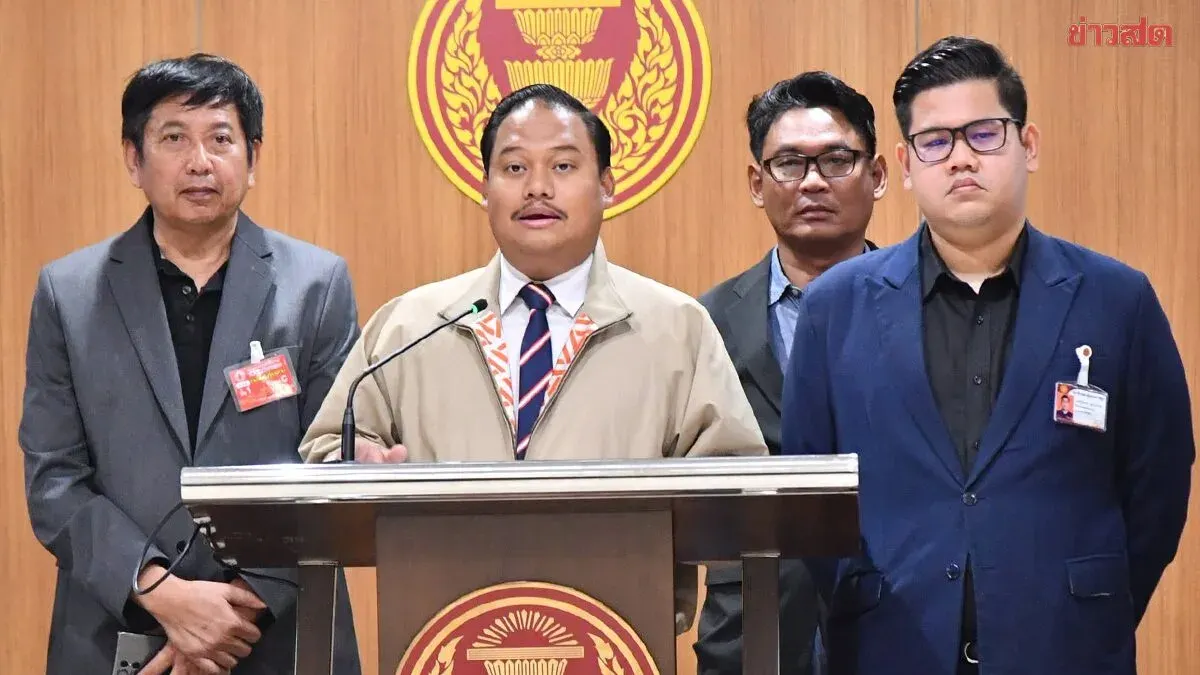
At 11:00 AM on July 14, 2025, at Parliament, Nattcha Boonchaiinsawadi, a Pheu Thai party list MP, and relevant agencies announced updates on DNA testing of canned fish suspected to contain blackchin tilapia. Nattcha said he had submitted canned fish samples from members of the public to multiple government agencies under the Ministry of Higher Education, Science, Research and Innovation, but was told testing could not proceed because officials viewed it as a political issue. He then partnered with BIOTHAI, a non-profit NGO focused on biodiversity, ecological agriculture, food security, and farmer rights, to arrange independent testing.
Nattcha reported that testing at Prince of Songkla University's International Center of Excellence for Seafood Science and Innovation confirmed results from two samples. One sample from a factory in Samut Songkhram province that had not previously made headlines was found to be tilapia, while a second sample from a factory in Samut Sakhon that had been seized and previously tested by the Fisheries Department was also confirmed as tilapia. However, laboratory DNA mini-barcoding analysis of three fish pieces, tested three ways and confirmed eight times, matched the DNA Bank record maintained by the Fisheries Department for imported blackchin tilapia imports.
Nattcha stated that over the past year, the Fisheries Department had swept up blackchin tilapia using budgeted rubber money to purchase millions of kilograms, claiming they would make fermented fish paste and fertilizer. A year later, fish with no documented source appeared in cans. He vowed to pursue this matter and hold responsible parties accountable for dereliction of duty. He said he would refer the case to the Agriculture Minister asking how they would take responsibility, since civil servants under their oversight certified to the private sector that headless, footless fish were not headless and footless, raising questions about why there was a rush to certify and cut short these processes. He pledged to follow up in Parliament and relevant committees.
Nattcha added that the blackchin tilapia situation is now 2-3 times worse than last year because local fish in natural water sources have been depleted. The Fisheries Department's approach lacks direction, and the 2025 budget contains not a single baht designated to address or eliminate the blackchin tilapia problem, despite 1.3 million baht being spent on blackchin tilapia eradication in 2024. He questioned why the 2025 budget has zero funding and why this is not seen as a public problem, given the severe impact on aquaculture farmers.
Prokchai Uthairap, Director of BIOTHAI, stated that DNA mini-barcoding testing of the canned fish from Samut Songkhram confirmed it as tilapia with a confidence level of 99.03–99.35 percent, while another brand was confirmed as blackchin tilapia.
Witthun Lianjamuon, Secretary-General of the Bioway Foundation, said the testing was conducted to give the public confidence in their food, to identify the true source of raw materials, and to understand the situation regarding blackchin tilapia imports.