Lanta & News
No. 01 · ENDLESS
National

Poll: Thais Want Genuine Scrutiny After No-Confidence Debate

A Suan Dusit University poll shows 68 percent of Thais are interested in the no-confidence debate, but over half doubt it will effectively check government performance—citizens want serious investigation of allegations and political account
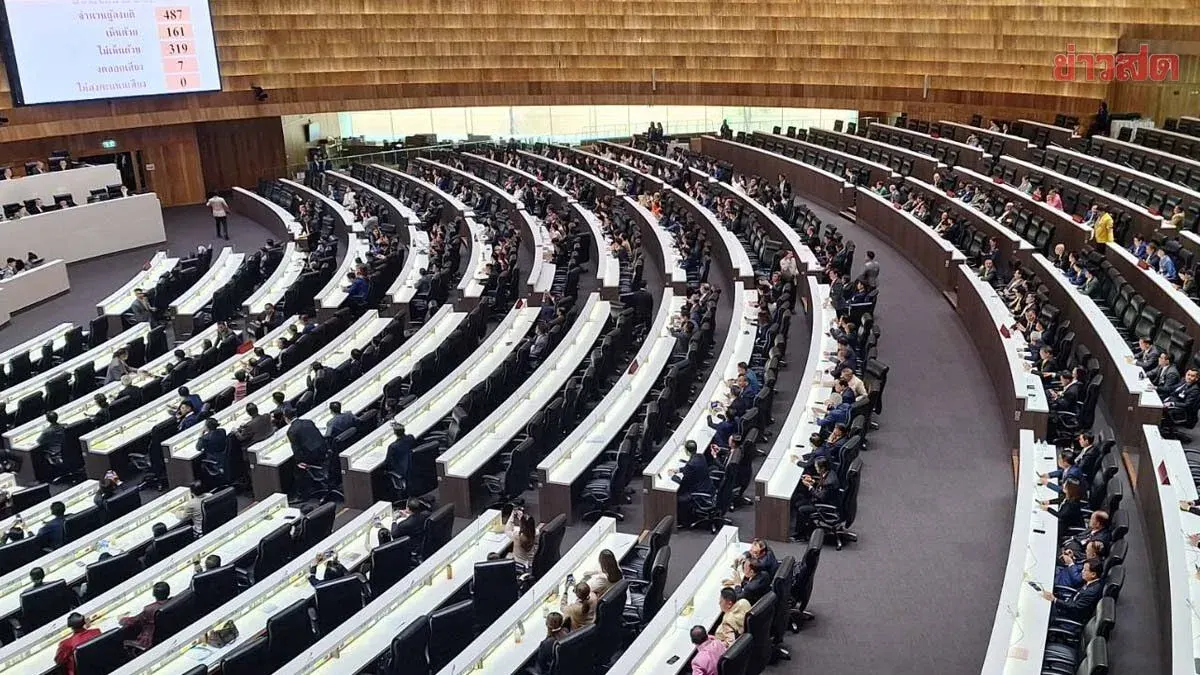
Poll: Thais Want Genuine Scrutiny After No-Confidence Debate
1h ago Khaosod

On August 23, 2024, the Surandaj Poll at Suan Dusit University surveyed 1,267 Thai citizens nationwide on their views regarding the government no-confidence debate, conducted online and in the field between August 18-21.

The survey found that 68 percent of respondents showed at least some interest in following the upcoming debate, with 38.28 percent moderately interested and 29.68 percent very interested. When asked which issues they most wanted addressed in the debate, respondents ranked economic hardship and inflation at 80.58 percent, local government corruption at 54.54 percent, energy problems and fuel prices at 53.59 percent, the 400 billion baht loan scheme at 35.04 percent, and parliamentary procedures at 34.25 percent.

However, skepticism prevailed on the debate's impact. Over half of respondents—54.30 percent—did not believe the debate would effectively check the government's performance, while 45.70 percent did believe it would. Regarding hopes for outcomes, 56.99 percent wanted serious and continuous investigation of allegations, 46.25 percent wanted the government to clarify public doubts, and 45.30 percent wanted those involved to accept political responsibility.

When asked about expected changes to Thailand's overall political situation following the debate, half of respondents (50.28 percent) thought little would change, 28.49 percent expected improvement, 14.36 percent were uncertain, and 6.87 percent expected deterioration.

Dr. Peeraphan Korthong, chair of the Surandaj Poll, noted that more than half the public still doubts the debate will provide effective oversight, and most believe the political situation is unlikely to change afterward. What citizens actually expect, he said, is serious follow-up investigation of allegations, clarification of doubts, and acceptance of responsibility by those involved. These outcomes will be the true measure of the debate's political impact.

Nontavat Suwannasakha, a lecturer in law and politics at Suan Dusit University, observed that the poll reflects the public's continued faith in the no-confidence debate as a mechanism for checks and balances, yet their expectation for concrete results beyond parliamentary procedure. Economic hardship, inflation, and bureaucratic corruption remain the chief criteria by which citizens judge government effectiveness and legitimacy.

Citizens also place high value on political accountability, demanding that allegations raised in the debate be investigated and verified with genuine rigor. The no-confidence debate, therefore, should not end with a parliamentary vote but should lead to sustained processes of oversight and evaluation of government performance. The opportunity should be used to strengthen public confidence, legitimacy, accountability, and long-term political stability in Thailand.

No. 01 of Read at source → Next
National

Why You Wake Up With a Headache: 9 Common Medical Causes

Morning headaches often stem from sleep disorders, poor posture, or conditions like sleep apnea and migraines rather than stress alone. Seek medical attention if headaches occur regularly or are accompanied by other neurological symptoms.

Why You Wake Up With a Headache: 9 Common Medical Causes
2h ago Khaosod

Doctors say morning headaches are not caused by stress alone. Morning headaches may be linked to sleep disorders, headache conditions, or various health problems. One of the most common causes is cervicogenic headache, especially in people who sleep in positions that place the neck in an abnormal posture. The nine most common causes of morning headaches identified by doctors include sleep apnea, which often causes bilateral head pain that gradually improves within a few hours; poor sleep schedule; migraine; teeth grinding or clenching; temporomandibular joint disorder; overuse of painkillers, caffeine, or alcohol; idiopathic intracranial hypertension; depression and anxiety; cluster headaches; and hypnic headaches (alarm clock headache), which are less common. In some cases, morning headaches may be associated with serious neurological conditions such as brain tumors or blood vessel abnormalities, which typically worsen progressively and may be accompanied by other neurological symptoms. Doctors recommend consulting a physician if you notice a regular pattern of morning headaches, especially if they occur frequently or affect daily life. Seek immediate emergency care if you experience a new type of headache, the worst headache of your life, or headaches accompanied by other abnormal symptoms.

No. 02 of Read at source → Next
National

Ancient Temple Structure Safe After Floods, Officials Confirm

Wat Phumin's ordination hall in Nan province sustained no new structural damage from recent flooding, officials confirmed after inspectors assessed the 19th-century temple following August floods.

Ancient Temple Structure Safe After Floods, Officials Confirm
2h ago Khaosod

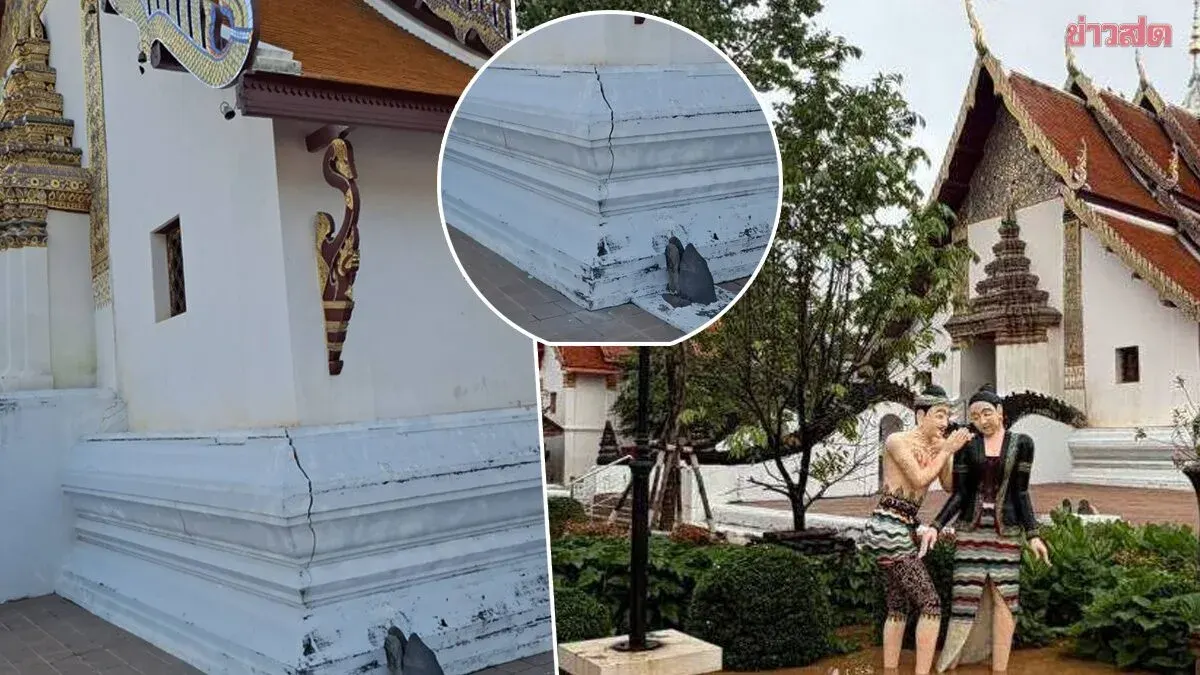
The Fine Arts Department has clarified that Wat Phumin's ordination hall remains structurally sound following recent flooding in Nan province on August 19-21. Panombutr Chanthrachot, director-general of the Fine Arts Department, reported on August 23 that after initial concerns about cracks and subsidence on the eastern side of the ordination hall in Mueang District, his office dispatched inspectors from the Fine Arts Office 7 in Chiang Mai on August 21 to assess damage to heritage sites, including Wat Phumin. The inspection found that the current flood waters caused no new damage to the temple or its murals. Visible cracks are pre-existing ones discovered after the 2024 floods—surface-level damage that does not affect the building's internal structure.

Engineers and conservation experts conducted a detailed structural survey after the previous flood, including archaeological excavations in late 2024 to examine the foundation and building framework. The investigation determined that cracks around the ordination hall at the lotus base, doorways, and entrance stairs resulted from uneven subsidence between the heavy ordination hall and the surrounding courtyard. However, because the hall subsided evenly on all sides, internal cracking remained minimal and localized to the peripheral lotus base.

The department is preparing restoration designs with emergency conservation measures including reinforcing the foundation walls of the ordination hall and potentially separating the structure from the surrounding courtyard to address uneven subsidence. Future work may include adjusting and lifting the foundation using pile systems for the ordination hall walls, roof supports, and the central Buddha image. Director-general Chanthrachot confirmed that the ordination hall's structure remains sound and that the Fine Arts Department continues ongoing conservation work at Wat Phumin, including prior restoration and gilding of Buddha images. The department also prioritizes conservation of other monuments in Nan Province, such as Wat Chang Kham nearby.

No. 03 of Read at source → Next
National

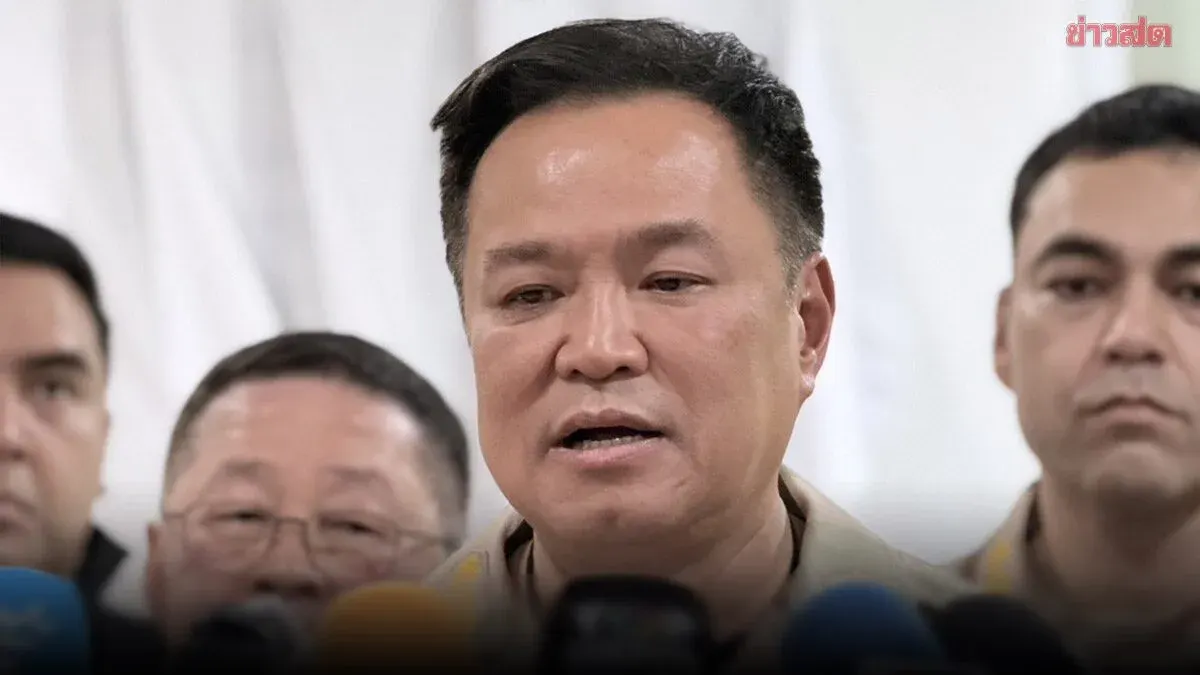
Poll: 37.86% Say Anutin Government Won't Survive Political Crises

Nearly 38% of Thais believe Prime Minister Anutin's government won't survive current political crises, according to a Nida Poll conducted in August that surveyed over 1,300 respondents about threats including civil service exam fraud and th

Poll: 37.86% Say Anutin Government Won't Survive Political Crises
2h ago Khaosod

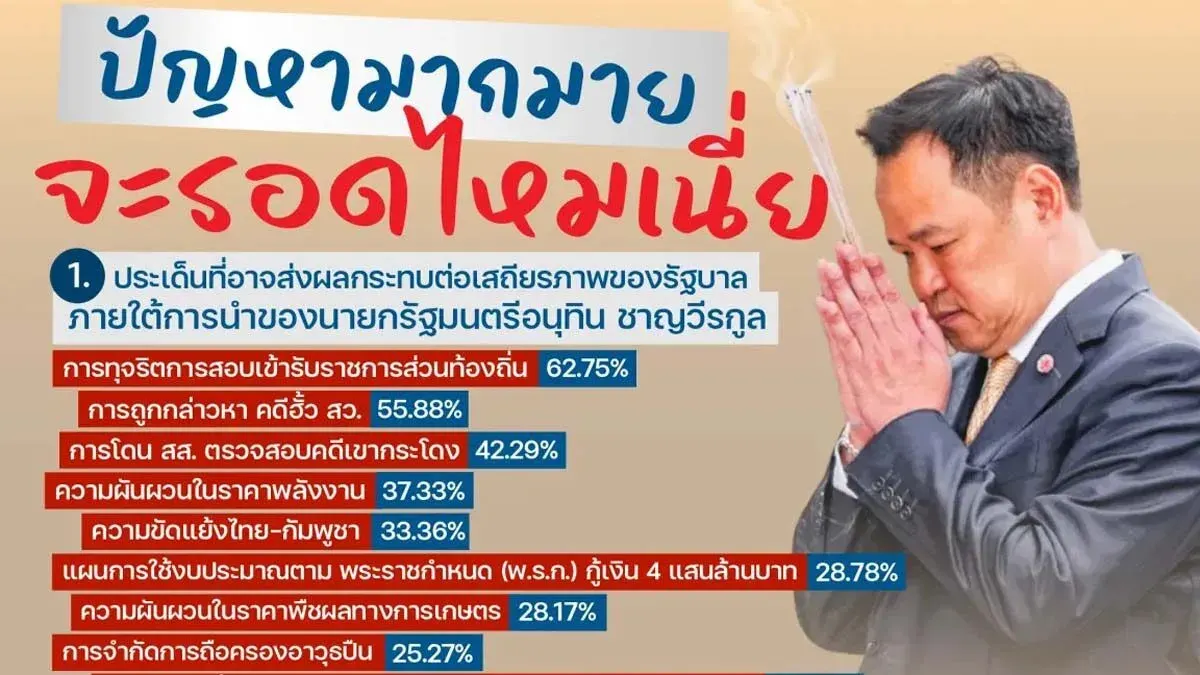
The Nida Poll, the opinion research center of the National Institute of Development Administration, released survey findings on August 23, 2569 examining "Multiple Problems: Will We Survive?" The survey was conducted between August 18–20, 2569 among 1,310 respondents aged 18 and over, drawn from all regions, educational levels, professions, and income brackets across Thailand, addressing issues that could affect stability under Prime Minister Anutin Charnvirakul's leadership.

When asked which issues could threaten government stability, 62.75% cited civil service recruitment exam fraud, followed by 55.88% naming allegations related to the Huay Sai case, 42.29% citing parliamentary inspection into land encroachment charges, 37.33% pointing to energy price volatility, and 33.36% mentioning Thai-Cambodian tensions. Other concerns included a budget spending decree to borrow 400 billion baht (28.78%), agricultural commodity price swings (28.17%), gun ownership restrictions (25.27%), stricter criteria for state welfare benefits in 2569 (24.27%), and illegal activity by foreigners in Thailand (22.98%). Fewer cited scrutiny of the TH-AI Passport project (18.17%), while 5.34% saw no major threats to government stability.

Regarding capacity to handle these risks, 39.69% said the government could manage some issues, 31.99% said it could not manage them at all, 16.26% said it could handle all of them, and 1.68% said it could handle most. On the question of government survival, 37.86% believed it would definitely not survive, 26.03% said it would survive but be severely weakened, 17.94% said it would survive with minor damage, and 17.71% said it would survive comfortably.

On the incident of Prime Minister Anutin bowing to Thaksin Shinawatra, 41.45% of respondents viewed it as a sign of respect from junior to senior, 29.62% called it political theatre, 21.60% cited the adage that politics has no permanent friends or enemies, 17.48% saw it as a bid for Thaksin's support, 12.21% saw it as showcasing Thaksin's prestige, 9.62% interpreted it as a signal that Pheu Thai would continue supporting Anutin, 9.31% disagreed with Anutin's action, 4.73% approved of it, and 3.82% declined to answer or were uninterested.

No. 04 of Read at source → Next
National

Minister Surasak Leads Chao Phraya Basin Flood Response Drive

Thailand's tourism minister chaired the first meeting of a Chao Phraya River Basin flood and drought prevention subcommittee on August 23, issuing six directives including improved early warning systems, provincial preparedness checks, and

Minister Surasak Leads Chao Phraya Basin Flood Response Drive
2h ago Khaosod

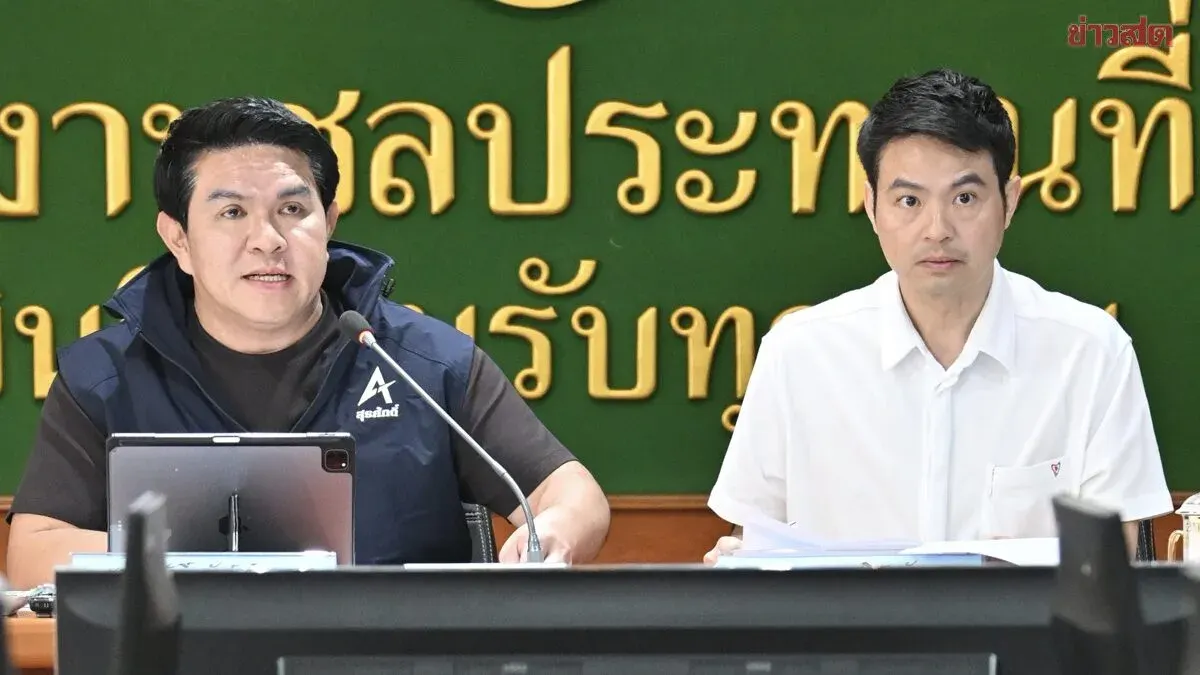
On August 23, 2026, Surasak Phanthcharoenwongkul, Minister of Tourism and Sports and chair of the subcommittee, presided over the first meeting of the Chao Phraya River Basin flood and drought prevention subcommittee at the Irrigation Department office in Saraburi district, Chainat province, held both in person and via Zoom. Deputy Prime Minister Akkanit Nitithanprabasat, who chairs the central region's main committee, had appointed this subcommittee on August 14, 2026, to coordinate comprehensive water management covering prevention, response, recovery, and rehabilitation under the National Disaster Prevention and Mitigation Plan 2021–2027.

Minister Surasak outlined six urgent directives: First, task GISTDA, the Thai Meteorological Department, Irrigation Department, and other agencies to create real-time flood and drought risk maps and improve early warning systems. Second, develop checklists and contingency plans for provincial governors to monitor preparedness, including inspection of water gates, embankments, pumps, weed removal, and saltwater intrusion management across all phases. Third, provincial governors must establish command centers coordinating military, police, civilians, and local authorities, prioritizing vulnerable groups and ensuring adequate temporary shelters.

Fourth, hospitals and health centers must stock medicine and medical staff to provide 24-hour care. Fifth, the Irrigation and Agricultural Promotion departments must align 2026 water allocation plans with agriculture without affecting 2027 water needs for agriculture, industry, tourism, and ecosystems, while distributing water to farmland to reduce hardship for riverside residents. Sixth, provinces must rapidly survey damage and distribute compensation transparently and fairly, using satellite imagery from GISTDA to verify losses and streamline relief.

No. 05 of Read at source → Next
National

Thai Sports Authority Warns Athletes on Social Media Use in Japan

Thailand's Sports Authority has warned athletes competing at Japan's 2026 Asian Games to avoid social media posts that breach copyright, violate organizer rules, or break Japanese law, including live streams and defamatory content.

Thai Sports Authority Warns Athletes on Social Media Use in Japan
2h ago Khaosod

The Sports Authority of Thailand has instructed Thai athletes and officials competing at the 20th Asian Games to exercise caution on social media, prohibiting live streams, video uploads that risk copyright infringement, and destructive posts that violate organizer rules or Japanese law.

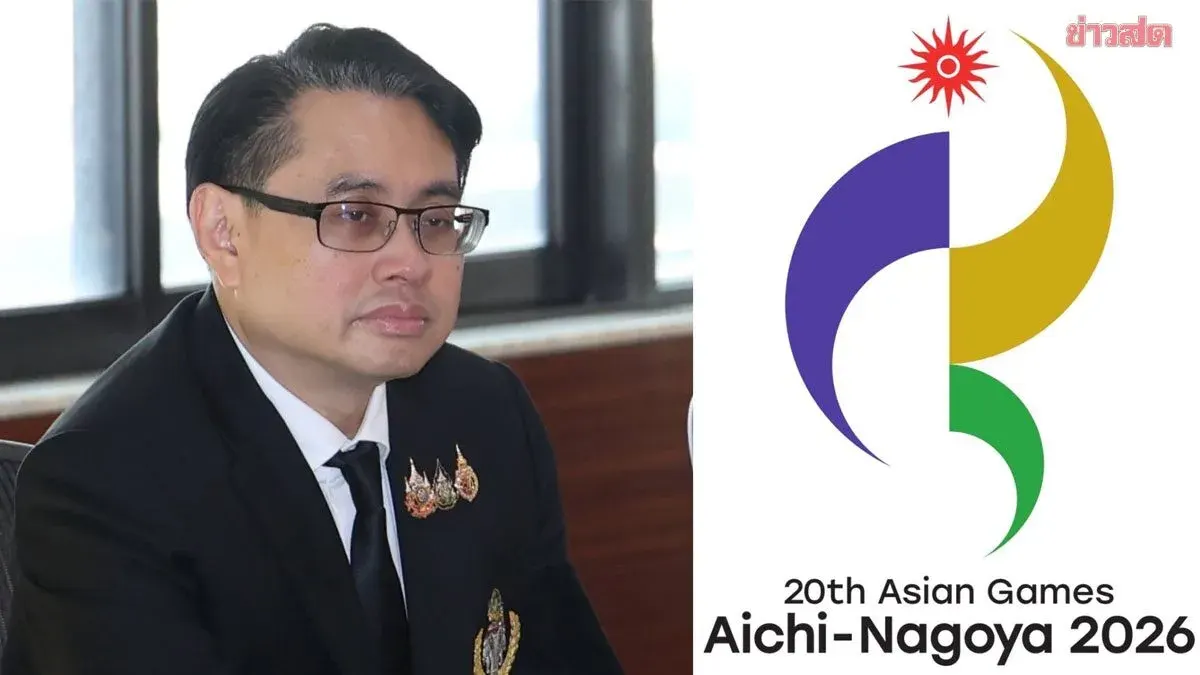
Dr. Kongsakd Yodmanee, director of the Sports Authority of Thailand, has warned Thailand's national sports teams and officials competing at the 20th Asian Games from September 19 to October 4, 2026 in Nagoya, Aichi Prefecture, Japan. He stressed the need for heightened awareness when using social media to avoid violating organizer regulations or breaking Japan's strict laws.

The authority has coordinated with various sports associations to instruct athletes, coaches, and officials to refrain from posting defamatory content or engaging in any online behavior that violates organizer rules or Japanese law. This includes live streaming, recording videos or images that infringe on competition copyright, and posting non-constructive, degrading, or disrespectful content toward the host country and fellow competitors. Japan has strict laws governing privacy rights and online defamation.

Yodmanee noted that Thai athletes have historically demonstrated discipline and respect for host countries, and he expresses confidence they will not violate any laws or organizer measures. However, he acknowledged that athletes will inevitably face criticism online and suggested they ignore negative commentary to maintain focus on their competitions.

For the 20th Asian Games and 5th Asian Para Games, the Japanese hosts have partnered with global social media platforms to deploy AI systems and monitoring teams to delete posts and block accounts engaging in cyberbullying around the clock, protecting athletes' mental health while enforcing strict copyright controls in the digital age.

No. 06 of Read at source → Next
Community

Rare Buddhist Amulets and Medallions Sought by Collectors

Collectors seek rare Buddhist amulets from venerated Thai monks, including copper and bronze medallions from abbots like Luang Pho Kaew Supatot and Luang Phu Singh Kamphiro, typically cast to commemorate significant milestones or fundraise

Rare Buddhist Amulets and Medallions Sought by Collectors
2h ago Khaosod

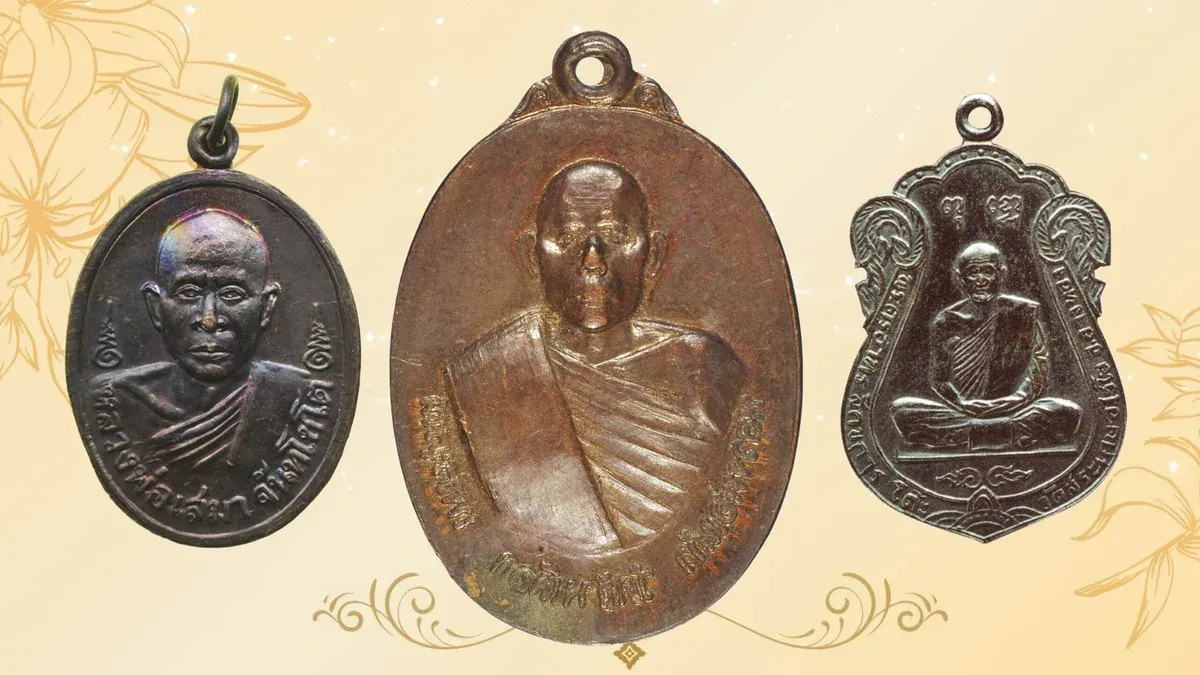
The article explores several sought-after Buddhist amulets and medallions from venerated monks. Luang Pho Kaew Supatot, former abbot of Wat Chang Phueak in Phetchabun Province, is known for his oval-shaped copper coin amulets from BE 2519, measuring 2.3 centimeters, cast to fundraise for a preaching hall. The front features a half-image of Luang Pho Kaew with reversed lettering, while the back displays a yantra with Khmer script.

Another notable piece is the medallion of Luang Pho Semai Chantachoto, created on December 9, BE 2520, by the Udon Thani monastic community to commemorate the late abbot of Wat Taluk Du in Udon Thani Province. Though created after his passing, the bronze-shaded yellow metal oval coin has become a valuable amulet.

Luang Phu To (Phra Kru Athon Sikkhakan) of Wat Sa Ket in Ang Thong Province is celebrated for his nine-tier Buddha image castings and his oval-shaped amulets from BE 2514. The front depicts a half-seated figure in meditation, while the back features a yantra with script commemorating his 70th birthday.

Luang Phu Singh Kamphiro, abbot of Wat Sri Suk in Maha Sarakham Province, had amulets created in BE 2561 for his 93rd birthday celebration. The oval coin features his half-image in robes on the front and a sacred yantra on the back, serving as a fundraiser for temple development.

No. 07 of Read at source → Next
Community

Renowned Buddhist Monk Luang Pu Hian of Nong Bua Temple

Luang Pu Hian, former abbot of Nong Bua Temple in Kanchanaburi Province, was a revered Buddhist monk who trained numerous disciples who became celebrated scholars and created sought-after amulets distributed freely to devotees throughout hi

Renowned Buddhist Monk Luang Pu Hian of Nong Bua Temple
2h ago Khaosod

Phra Sophon Samajarn, also known as Luang Pu Hian Suvannacho, was the former abbot of Sri Upphalarama Temple (Nong Bua Temple) and former ecclesiastical chief of Muang District, Kanchanaburi Province. He is recognized as a devoted and close disciple of Luang Pu Yim, the venerable abbot of Nong Bua Temple in Muang District, Kanchanaburi, a highly accomplished Buddhist master renowned for his spiritual attainment. Notably, Luang Pu Hian taught many disciples who became celebrated Buddhist scholars specializing in esoteric studies, including Luang Pu Di of Nuea Temple, Luang Pu Jai of Sadet Temple, Luang Pho Sorn of Lad Ya Temple, Luang Pho Chaem of Chula Mani Temple, Luang Pho Hang of Nuea Temple, Luang Pho Dok Mai of Don Chedi Temple, and Luang Pho Muean of Klang Nuea Temple, among others.

Originally named Hian Ratsuwan, he was born on Saturday, January 6, 2419 (1876) at Nong Bua subdistrict, Muang District, Kanchanaburi, to Thai-Chinese parents Nai Pho and Nang Yaem Ratsuwan. He was one of seven siblings born into a farming family with modest means. Despite his humble origins and the necessity of helping his parents earn their livelihood, he pursued education diligently and became proficient in reading, writing, and the Thai and Khmer languages, earning respect from his community.

At approximately age 22, he underwent ordination at Sri Upphalarama Temple on July 6, 2440 (1897), with Ajarn Yim as his preceptor, Phra Kru Singkhipuran Kanajarn of Thewasangkharam Temple as his ceremony conductor, and Phra Ajarn Yue as his witness. He received the ecclesiastical name Suvannacho. He remained at Sri Upphalarama Temple throughout his monastic training under Luang Pu Yim, demonstrating humility and respect for his teacher and senior disciples.

When Luang Pu Yim passed away in 2454 (1911), the provincial ecclesiastical authorities appointed Hian as abbot of Nong Bua Temple. He later served as ecclesiastical chief of Muang District in 2458 (1915) and as a preceptor in 2473 (1930). He received royal ecclesiastical rank promotions: in 2461 (1918) as Phra Kru Niwit Samajarn, in 2490 (1947) as Phra Kru Sannyabat Chueng Aek, and in 2496 (1953) as Phra Ratchakanakha. He passed away peacefully from old age on December 27, 2503 (1960) at the age of 84, completing 63 Buddhist Lent periods.

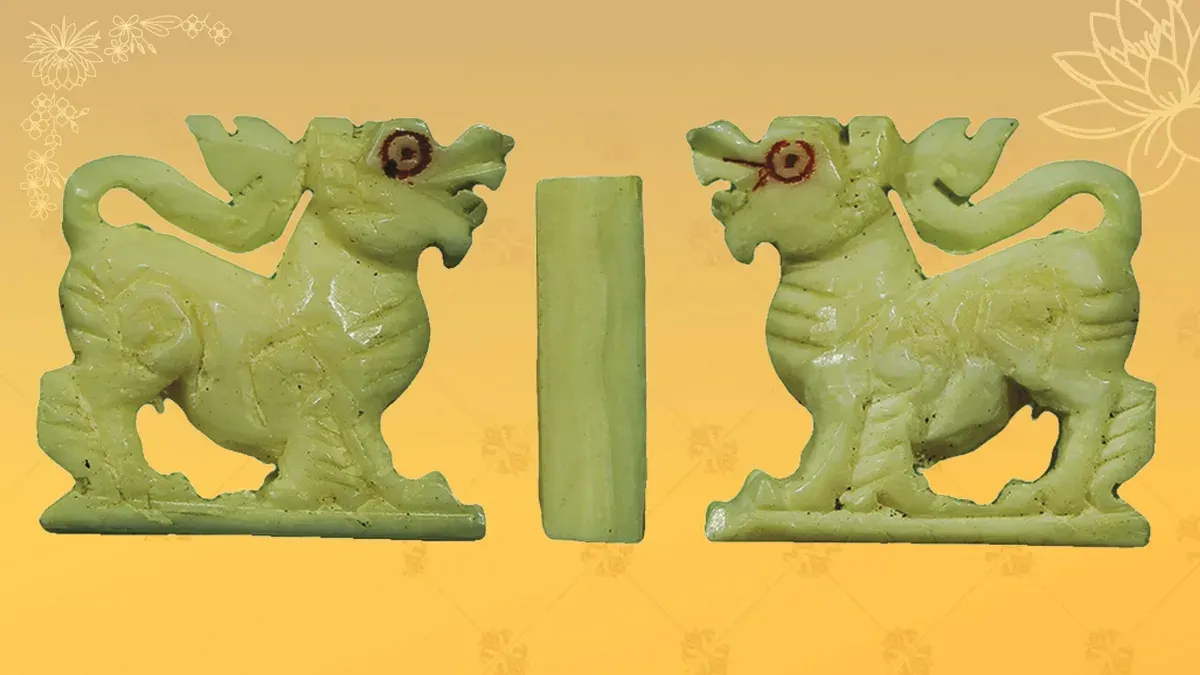
Luang Pu Hian created many auspicious amulets and talismans, including takrut charms, wishing beads, beaded panels, sacred rings, and closed-eyed Buddha images modeled after Luang Pu Yim's designs but in smaller sizes. He distributed these freely to faithful devotees throughout his life. In his declining years, his disciples requested that he produce amulets as mementos to distribute to those who came to make merit. All of his amulet batches became highly valued, particularly the "Lion Tusk" amulet created in 2497 (1954), which was carved from elephant ivory in the form of a lion.

No. 08 of Read at source → Next
National

New Cultural Route Links Bangkok Palace to Koh Kret Arts Hub

A new cultural tourism route connecting Bangkok's Grand Palace to Koh Kret in Ayutthaya opens August 12, offering free shuttle buses and access to Thai art museums celebrating the late Queen Sirikit's royal vision through master craftspeopl

New Cultural Route Links Bangkok Palace to Koh Kret Arts Hub
2h ago Khaosod

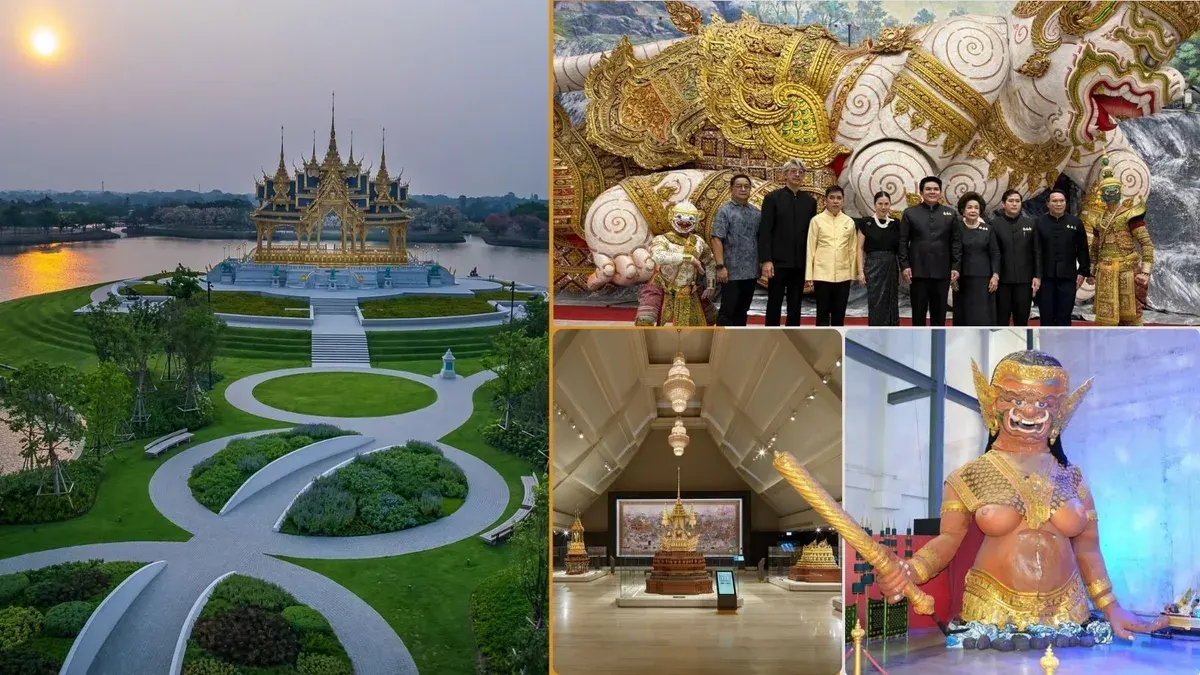
The 'Koh Kret Arts, Land of Siam' project is a new cultural and arts tourism route connecting the Grand Palace in Bangkok to Koh Kret in Ayutthaya Province. The project is run by the Ministry of Tourism and Sports through the Tourism Authority of Thailand in partnership with the Sirikit Foundation. It opens to the public and tourists from August 12 to December 26, 2025, with free shuttle buses operating Wednesday through Sunday, one trip per day.

Tourism Minister Surasak Phancharoenwrakul led an inaugural tour group by bus from the Grand Palace to Koh Kret, visiting key sites including the Khon Learning Building, the Arts of the Land Museum, and the Bhumibol Adulyadej Memorial House, which house exceptional Thai artwork and craftsmanship knowledge.

According to the minister, Koh Kret is not simply a venue for displaying art, but a space reflecting the royal vision of the late Queen Sirikit through the work and skill of Thai artisans. The route opening offers Thais and tourists worldwide the opportunity to see the heart, wisdom, and value behind Thailand's finest art.

The 'Koh Kret Arts, Land of Siam' route is designed to let travelers experience not just the beauty of finished works, but learn the creative process behind them—from training and craftsmanship to knowledge passed down across generations—connecting tourism with genuine conservation and preservation of Thai heritage.

The route launch marks the beginning of broader long-term development plans. The Ministry of Tourism and Sports, the Tourism Authority of Thailand, the Sirikit Foundation, and working teams are planning to develop Koh Kret into a 'national cultural landmark' despite its significant cultural assets remaining relatively unknown.

Development will include designing new tourism experiences, organizing activities reflecting the site's identity, and bringing the stories and processes of craftwork to life. Private businesses will be invited to develop shops, services, and activity spaces appropriately, extending visitor spending and encouraging repeat visits.

The key aim is to make Koh Kret a place where people can spend time, learn deeply about master Thai craftsmanship, and transform cultural assets into economic opportunity that creates jobs and income for artisans and communities while preserving this superior knowledge.

'This project will not happen just one day and end,' the minister said. 'We will make Koh Kret a living, active place with new reasons for people to return. Our goal is to make this location a cultural landmark that Thai people take pride in, and another must-visit destination for tourists worldwide.'

No. 09 of Read at source → Next
Police

Palm Plantation Fire Spreads After Wasp Attack

A wasp attack in a Phatthalung oil palm plantation turned catastrophic on August 23 when the owner set fire to a nest, causing flames to spread across 12 rai in the dry heat and wind.

Palm Plantation Fire Spreads After Wasp Attack
2h ago Khaosod

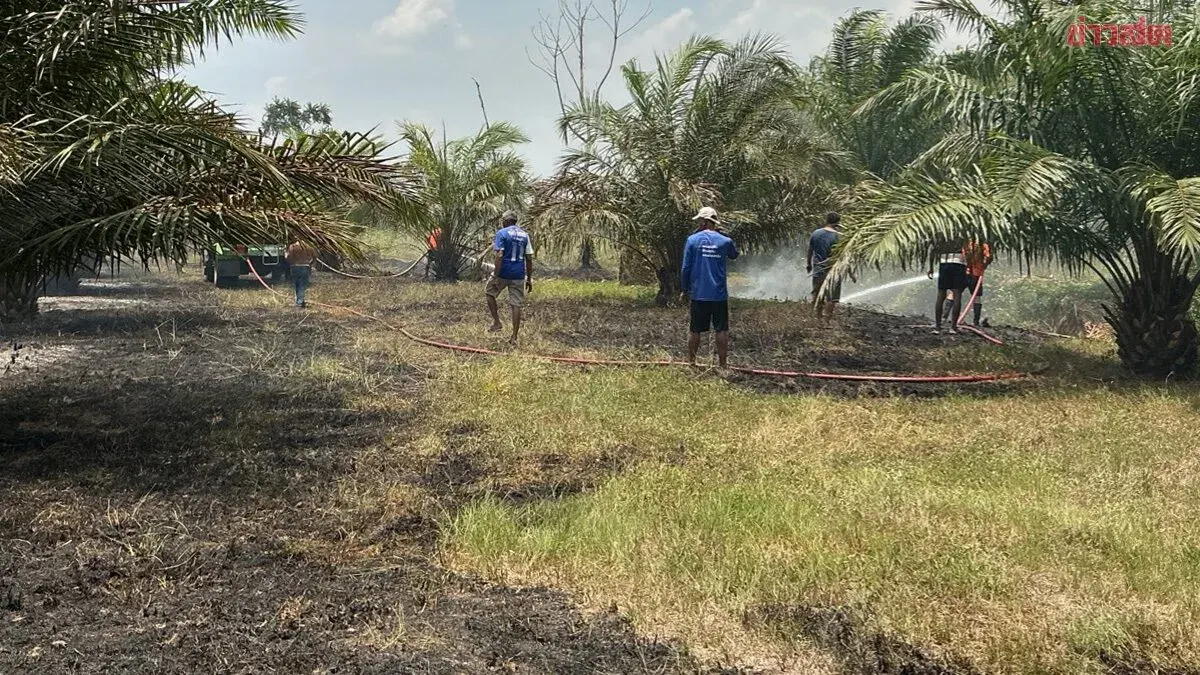
Firefighters in Phatthalung province responded at 12:30 p.m. on August 23, 2025, to a fire burning through a four-year-old oil palm plantation covering 12 rai in Village 6, Thamihram subdistrict, Muang district. The plantation owner entered the grove to tend to it when wasps attacked and stung him. He then lit a fire to burn the wasp nest, but hot, dry weather combined with strong winds caused the flames to spread uncontrollably, destroying more than half the plantation. Municipal firefighters took almost thirty minutes to contain the blaze and prevent it from spreading to neighboring rubber plantations. Keasamsak Sengsuen, mayor of Thamihram Tambon Municipality, warned the public that the current dry and hot conditions in Phatthalung have left vegetation parched, making fires a serious risk. He urged palm, rubber, and fruit plantation owners to take precautions and avoid starting any open fires during this period, as they could easily spread to surrounding agricultural land.

No. 10 of Read at source → Next
National

PM Orders Rapid Response Teams for Southern Border Violence Relief

The Thai government has deployed rapid response teams across the southern border provinces to accelerate relief and compensation for violence victims, establishing a case management system and hotline 1880 to ensure affected residents quick

PM Orders Rapid Response Teams for Southern Border Violence Relief
2h ago Khaosod

On August 23, 2569, Prime Minister Anuthlin Charnveerakul and the Interior Minister directed security operations in response to violence in the southern border provinces and ordered continued care for affected residents. The Southern Border Provinces Administrative Center (SBPAC) has been tasked with accelerating relief and compensation efforts to ensure citizens quickly access their legal rights. Support covers direct victims, families, vulnerable groups, and those facing economic losses.

The SBPAC has established a communications and legal aid operations center using a case management system with dedicated case managers working at both the regional and individual case levels. Rapid Response teams from all three southern border provinces are already deployed in the field to identify affected persons, verify their eligibility, and track access to assistance while identifying obstacles and responsible parties with clear timelines for resolution.

A hotline 1880 has been opened for affected residents and families to call with questions about their rights and to request immediate assistance. Each case is entered into the case management system for ongoing tracking. The center will maintain a real-time dashboard categorizing cases by color—green for resolved, yellow for in-progress, orange for incomplete documentation, and red for unreached—so officials can instantly see which cases are delayed and where action is needed. Progress updates will be communicated publicly.

The Prime Minister emphasized that struggling residents should not have to seek out government offices; the state must reach out to the people. Support must clarify how each family was affected, what compensation they are entitled to, where their case stands, what obstacles exist, who is responsible, and when resolution will occur. Care will cover medical treatment and rehabilitation for the injured, family and mental health support especially for elderly, children, women, and vulnerable groups, as well as compensation for damaged homes, property, businesses, and lost livelihoods.

No. 11 of Read at source → Next
Loading more…
Endless reading Scroll to read. When you reach the bottom, keep scrolling. A bar fills, and the next story slides in when it's full. ↑ ↓ or Space Or use the arrows at the bottom of the screen.