Pollution Department Monitors Mekong After Laos Cyanide Spill
Thailand's Pollution Control Department is monitoring the Mekong River after cyanide and heavy metal contamination killed fish in a Lao tributary 285 km upstream. Water sampling across Nong Khai, Bueng Kan, and Nakhon Phanom provinces shows no current threat to Thai waters, but monitoring will continue.
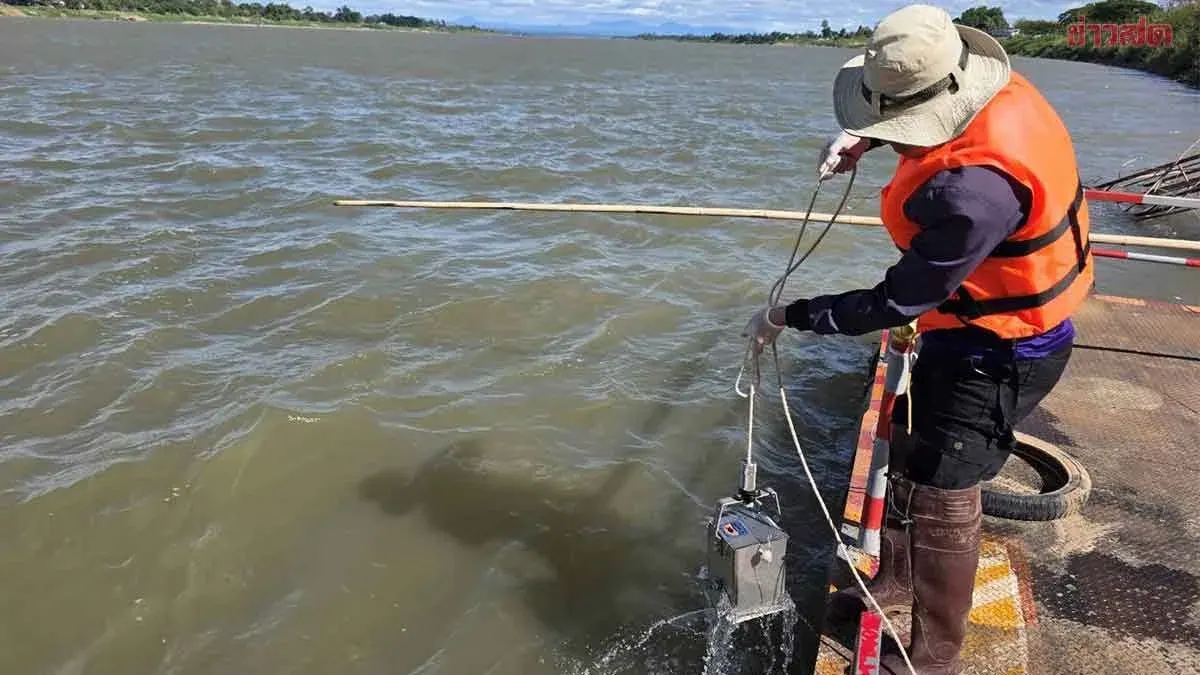
The Pollution Control Department (PCD) is closely monitoring Mekong River water quality after reports of cyanide and heavy metal contamination in the Huay Hin Lai stream in Chiang Khwang district, Laos, where large numbers of dead fish were found. This monitoring aims to assess risks and potential impacts on the Mekong River in Thai territory.
On November 8, 2026, residents between Ban Yuan and Ban Phon Ngam Nuea in Mueang Pak, Chiang Khwang district, Laos, discovered unusually large numbers of dead fish floating in Huay Hin Lai. Analysis of water and soil samples from over 20 points revealed cyanide levels many times above standards, as well as fluoride and lead contamination exceeding standards.
Huay Hin Lai originates in the mountains of Mueang Pak, Chiang Khwang district, flows into the Nam Ngum reservoir, then connects to the Nam Ngum River before joining the Mekong at the Pak Ngum area in Vientiane Capital, directly opposite Pon Phisai district in Nong Khai province.
The PCD has continuously collected water and sediment samples from the Mekong in Nong Khai province. The Region 9 Environmental Office (EEC 9) collected samples in Pon Phisai and Mueang districts, Nong Khai, on November 9-10, 2026. The Water Quality Management Division collected additional samples from Pon Phisai and Mueang districts, Nong Khai, extending to Bueng Kan and Nakhon Phanom provinces, focusing on the Nam Ngum-Mekong confluence and downstream areas potentially affected, from November 23-27, 2026, to test for cyanide and various heavy metals.
Preliminary data assessment revealed key points: the fish kill site in Huay Hin Lai is approximately 285 kilometers from where the Nam Ngum River flows into the Mekong, based on Google Maps distance. News reports indicate water tests in Huay Hin Lai on November 12, 2026 (four days after the fish kill) showed contamination levels within national standards. Water from Huay Hin Lai flows into the Nam Ngum reservoir before connecting to the Nam Ngum River and then the Mekong.
Generally, cyanide can transform and degrade in the environment, but if it reacts with certain metals such as iron, copper, and zinc, it may form complex compounds that degrade more slowly and could settle in sediment or groundwater.
Based on this information, the PCD preliminarily assesses that the Mekong River in Pon Phisai district, Nong Khai province, is unlikely to be affected by cyanide contamination in Huay Hin Lai. However, the Pollution Control Department will continue to monitor Mekong water quality continuously and use analytical results to assess the situation, to monitor environmental impacts and build confidence among residents along the Thai Mekong River.