Small-Scale Gold Mining Poisons Mekong with Mercury
Small-scale gold mining operations in the Mekong River near Chiang Rai are releasing mercury and other toxins directly into the waterway, threatening communities on both the Thai and Lao banks. Activist Niwat "Teacher Tee" Roi-kaew warns that backhoe dredging disperses accumulated mercury from riverbed sediments, creating a health crisis comparable to large industrial mines. He urges the Mekong River Commission and Thai-Lao authorities to act urgently, especially before the planned Pak Beng Dam floods existing mine sites and spreads contamination further.
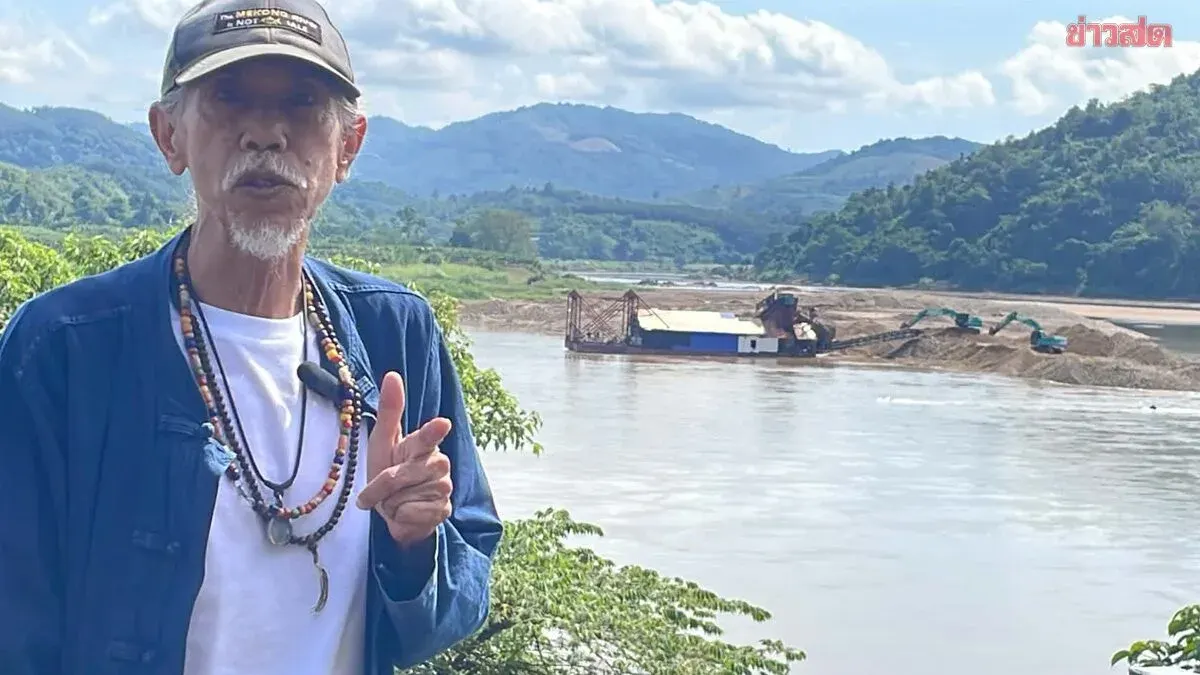
On November 4, 2026, reporters at the Huay Sai Man viewpoint in Chiang Khong district, Chiang Rai province, documented the Mekong River at low water levels, revealing extensive sandbars. In the middle of the channel, heavy machinery — two backhoes and one tractor — continuously excavated sand near the mouth of the Ngao River on the Lao side at Ban Pak Ngao, opposite Ban Muang Kan in Thailand. Gold-panning rafts were anchored mid-stream, with excavation stretching across nearly half the river's width. Backhoes dug deeper from the sandbar edges into the channel, creating deep pits. This mining site lies about 12 kilometers from Chiang Khong town toward Chiang Saen district, visibly altering the river course. The area is upstream from densely populated water-intake points on both the Thai and Lao banks.
Niwat Roi-kaew, known as "Teacher Tee," chairman of the Rak Chiang Khong conservation group, revealed the cross-border pollution situation. He stated that Ban Muang Kan hosts small-scale mining operations in the Mekong that release toxins around the clock. "These are small mines operating in the middle of the Mekong — not just one, but many examples downstream all the way to the planned Pak Beng Dam site, where there are over ten mines together. This is the ultimate danger for the river because this type of mining releases chemicals directly into the water. Mercury and other toxins disperse from the backhoe excavation," Teacher Tee said.
He added that dredging riverbeds for gold releases mercury accumulated in sediment directly into the stream continuously, posing risks comparable to large mountain mines. He expressed deep concern for the future when the Pak Beng Dam is completed: "What is frightening is that when the Pak Beng Dam is finished, water levels will rise and flood these mines. The mercury from old excavations will disperse into the new reservoir. This is a major future fear. Dumping toxins into the river continuously increases mercury concentrations. It affects not only people on the Thai side but both banks — health, water consumption, and usage — including mines in Muang Ngern and Udomxai districts."
The Rak Chiang Khong chairman urged relevant agencies managing the Mekong as an international river to seriously intervene. "This is the most critical thing for people living along the Mekong to realize: the danger from small-scale mining that many still overlook. Agencies involved in river management must act, because this affects the health of people on both sides, not just Thailand but our Lao brothers and sisters too. We share this water."