Prachinburi River Tests Show Low Heavy Metals After Fish Deaths
Thailand's Pollution Control Department reports low heavy metal levels in the Prachinburi River and fish samples following a mass die-off in Sri Maha Phot district. Dissolved oxygen and ammonia levels vary, while aluminum detection warrants further study. Officials suspect widespread flooding diluted contaminants and plan sediment testing after waters recede to pinpoint pollution sources.
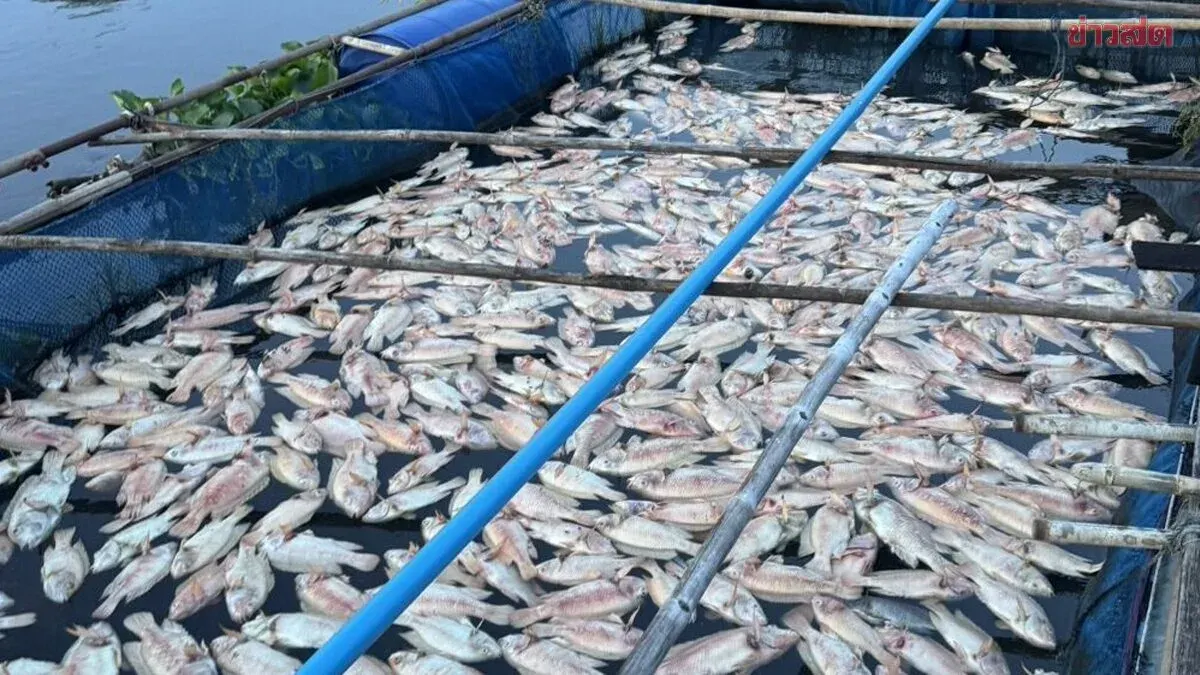
Water quality tests on the Prachinburi River reveal low levels of heavy metals in both water and fish samples following a mass fish die-off in Sri Maha Phot district. Officials suspect widespread flooding may have diluted pollutants, and plan to expand sediment testing to identify contamination sources once floodwaters recede.
On October 23, 2026, Dr. Surinthorn Warakijthamrong, Director-General of the Pollution Control Department (PCD), announced that the department, through the Regional Environmental Office 7 (Saraburi), has been urgently investigating a fish kill affecting cage aquaculture in Tha Tum, Ban Tham, and Had Nang Kaeo subdistricts of Sri Maha Phot district, Prachinburi province. In collaboration with the Prachinburi Provincial Natural Resources and Environment Office and the district office, teams collected water samples and environmental data to systematically analyze the cause and trace pollution sources.
Dr. Surinthorn stated that on October 12, 2026, the regional office collected surface water samples from four tributary points flowing into the Prachinburi River and five points along the main river, covering Kabin Buri, Sri Maha Phot, Mueang Prachinburi, and Ban Sang districts. Samples were analyzed for water quality and potential contaminants related to the incident.
Latest results show dissolved oxygen (DO) levels ranging from 2.5 to 7.5 milligrams per liter, and ammonia levels between 0.559 and 3.547 milligrams per liter. Heavy metal analysis in water samples — including lead, cadmium, and mercury — showed concentrations below 0.01 milligrams per liter. Similarly, heavy metal testing in fish (lead, cadmium, mercury) conducted by the Prachinburi Provincial Fisheries Office during the same period also found low levels.
The widespread flooding may have diluted pollutants in the water. However, officials cannot yet conclude that this dilution caused the low contaminant readings. Aluminum was also detected in the water, requiring further monitoring to assess its source and possible link to the fish deaths.
The PCD plans to collect sediment samples from the Prachinburi River and its tributaries, focusing on areas receiving runoff from industrial estates, communities, and agricultural zones, once flood conditions normalize. This will help evaluate pollutant accumulation in sediments and support cause analysis.
"The PCD will closely monitor water and sediment quality, coordinating with relevant agencies to gather scientific data, analyze causes, and link pollution sources. This will lead to targeted prevention and remediation measures, including legal action against polluters based on evidence, to reduce impacts on the environment and local communities. Progress will be continuously communicated to the public," Dr. Surinthorn said.