Public Hearing on Sugar Mill Project Erupts Into Violence
Clashes between supporters and opponents of a proposed sugar mill and biomass power plant in Buriram's Nong Plong subdistrict turned violent on September 25, forcing officials to cancel the public hearing after rocks were thrown and an elde
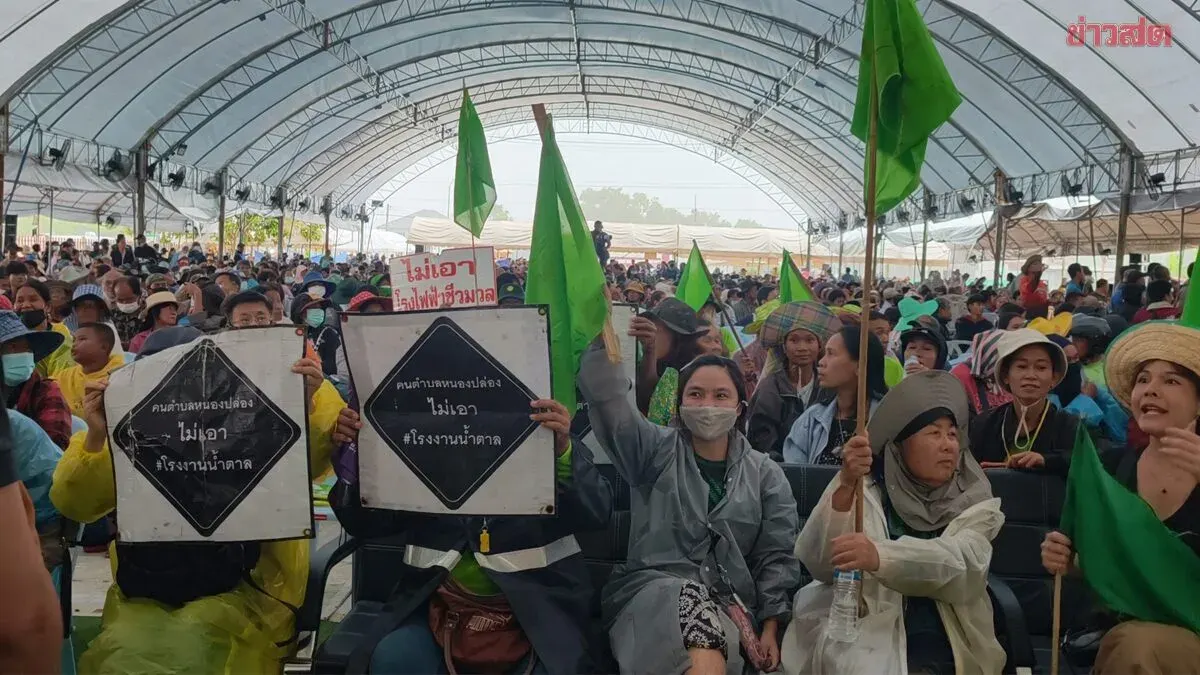
A public hearing on September 25 for a proposed sugar mill and biomass power plant project in Nong Plong subdistrict, Chamnai district, Buriram province descended into chaos as opposing and supporting groups clashed. Around 800 supporters of the project and members of the Ozone Homeland Lovers group, which has consistently opposed the development, attended the event. Tensions escalated during the hearing's setup when the two groups began throwing rocks and dirt at each other near the stage. Police and crowd-control units attempted to intervene, but one person was struck in the head and injured, and an elderly resident collapsed and was transported to hospital. District officials, including Prachaya Suvannatha, Subdistrict Chief of Nang Rong, decided to cancel both morning and afternoon sessions to prevent further violence.
Nopdon, 25, from Chakarat district in Nakhon Ratchasima, who came to support the project, said opposition groups threw rocks and dirt at supporters, injuring him on the head. Prapasri, 62, a Nong Plong resident and member of the opposition group, expressed concern about the public hearing process, stating the first hearing lacked transparency and adequate public notification. She and other residents worry about potential impacts on water sources, the environment, and local livelihoods from the industrial projects.
Sompong Songkul, a leader of the Ozone Homeland Lovers group, stated they came to oppose the second public hearing and demanded a review of the consultation process. The group had announced plans to protest both morning and afternoon sessions—the morning addressing the sugar mill project and the afternoon covering the biomass power plant. Thanathornpol Khaiwphan, deputy district chief for security at Nang Rong, noted that participants came from both Nang Rong and Chamnai districts in large numbers.