Scientists Create Cyborg Cockroaches That Breathe Underwater For 3 Hours
Asian researchers have created cyborg cockroaches equipped with 3D-printed diving suits that can breathe underwater for up to three hours, potentially enabling rescue missions in flooded disaster zones and hazardous environments humans cann
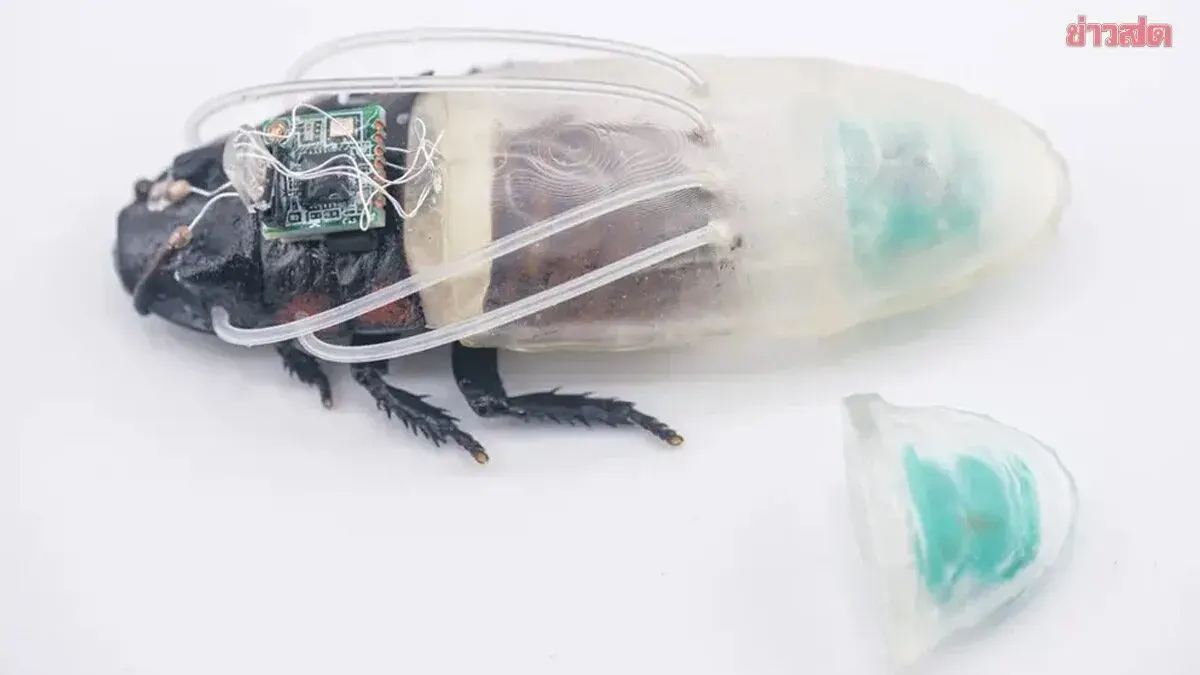
Asian researchers have accelerated development of cyborg cockroaches—semi-robotic life forms capable of breathing underwater for three hours—to explore hazardous areas and conduct rescue missions in place of humans. Scientists have elevated these resilient insects into "tiny explorers" by developing a 3D-printed diving suit that allows cockroaches to survive submerged for extended periods, with potential applications in rescue operations, disaster zones, and possibly future space exploration.
Research published in Nature Communications reveals that the suit functions similarly to a human scuba tank. Professor Hirotaka Sato from the Department of Mechanical and Aerospace Engineering at Nanyang Technological University (NTU Singapore) leads the research team, explaining that this technology expands the capabilities of cyborg insects to operate in environments inaccessible to humans.
Previously, Sato's team successfully controlled Madagascar hissing cockroaches remotely by implanting electrodes into their sensory systems, achieving precise movement control and enabling multiple insects to coordinate collaborative tasks. Their ultimate goal is creating "biological rescue drones" using living organisms to locate survivors in dangerous areas.
A major limitation of cyborg insects was their inability to function underwater, as flooded environments hindered their mobility. Researchers designed a waterproof resin suit using 3D printing technology that generates oxygen and delivers it to the insect's respiratory opening, allowing operation on land and underwater.
Instead of human oxygen tanks, the suit uses a mixture of hydrogen peroxide and manganese dioxide to create oxygen for the cockroach's respiration. Trials showed cockroaches could move underwater for up to three hours at depths near one foot with minimal bodily impact, maintaining maximum speeds of 78.4 millimeters per second—comparable to their land speed.
Researchers believe this technology could assist search and rescue operations following floods, heavy rain, or structural disasters, since cockroaches can navigate tight spaces, drainage pipes, and areas difficult for humans and robots to access.
However, the research team's ambitions extend beyond Earth. Sato revealed that their ultimate dream involves bringing this technology to space to create "space suits for cyborg insects" that could potentially explore Mars's surface. The team plans additional testing in extreme environments mimicking conditions near space vacuum.
Compared to robots, cockroaches offer advantages: they can operate extended periods without recharging and naturally forage for energy. Sato's cyborg cockroaches have previously demonstrated remarkable resilience and adaptability.