Senate Urges Government to Reconsider Land Bridge Project, Cites Major Obstacles and Questions SEC Law as a Silver Bullet
Senate lawmakers questioned the viability of Thailand's Land Bridge project, citing operational challenges and warning that legal reforms alone cannot guarantee success of the ambitious southern transport corridor scheme.
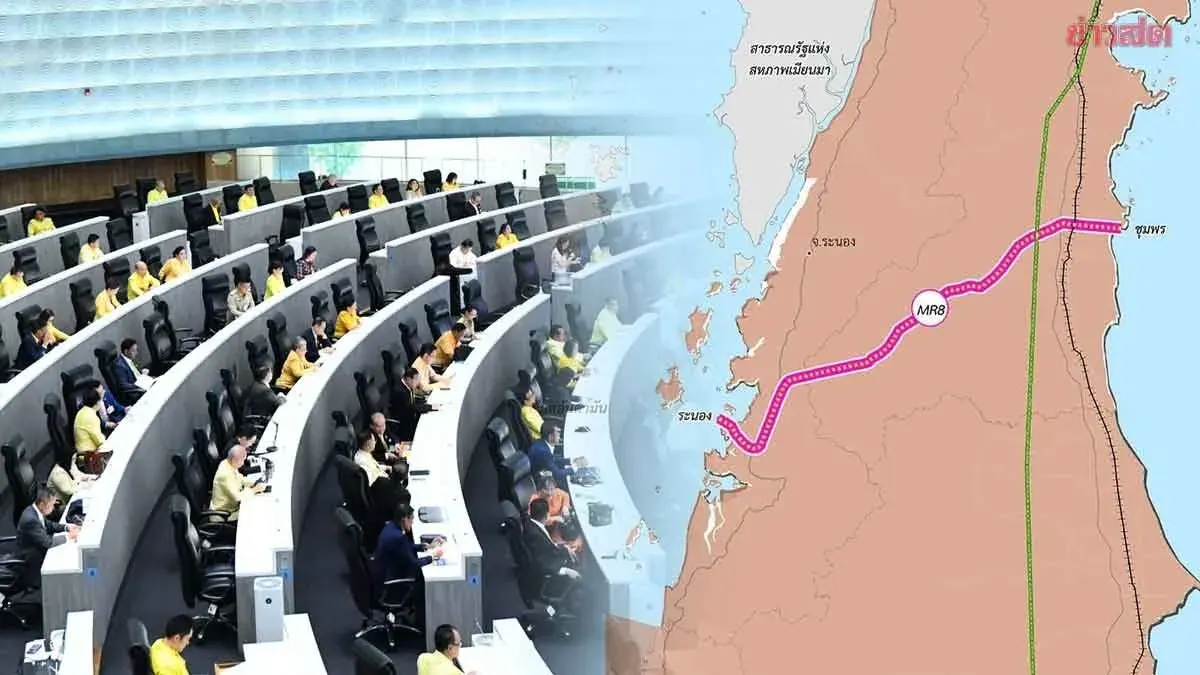
The Senate met on May 12, 2025, to review a feasibility study on the Land Bridge project, which aims to develop transportation infrastructure connecting the Gulf of Thailand and the Andaman Sea to boost the southern economic corridor. Senator Norrasetr Pratchyakorn proposed a motion requesting the government to reconsider the project's advancement. Senate Transportation Committee Chair Wuthichai Kalyanamit reported that the committee found the Land Bridge significant and has monitored its development comprehensively across policy, technical, economic, and operational feasibility dimensions to ensure maximum national benefit.
Senator Phamornchai Chaosirikul, chairing the water transport and maritime commerce subcommittee, noted the project has been pursued since 2001 under former Prime Minister Thaksin Shinawatra, aiming to bring prosperity to the southern region. The committee gathered input from government agencies, private sector, academics, logistics operators, and stakeholders. They determined that the Land Bridge is not merely a port construction or transport route but a comprehensive logistics system requiring integrated operations across multiple timeframes and economic assumptions, with consideration of infrastructure readiness and real-world operational constraints.
Project success depends not only on infrastructure investment but also on system management efficiency, transport process continuity, and competitive standards compared to international ports and logistics hubs. Senator Praphan Lohaviriyasiree, another subcommittee member, emphasized that proposing the Land Bridge requires analyzing costs, time savings, and competitiveness from shippers' and shipping lines' perspectives, along with identifying project limitations and projecting cargo volume. Multiple study scenarios are needed to ensure feasibility, with approximately 80% of cargo being transshipment cargo, making smooth transshipment operations critical to success.