Six Japanese Automakers Commit 1.34 Trillion Baht Investment in Thailand
Thailand's Board of Investment announced that six major Japanese automakers — Toyota, Honda, Isuzu, Mitsubishi, Mazda, and Nissan — have committed over 1.34 trillion baht in new investments over the next five years. The pledges came during a government-led roadshow to Tokyo, where officials also secured cooperation agreements on semiconductors, AI infrastructure, clean energy, and SME financing, aiming to upgrade Thailand from a production base to a full technology and investment partner under the "Made with Thailand" strategy.
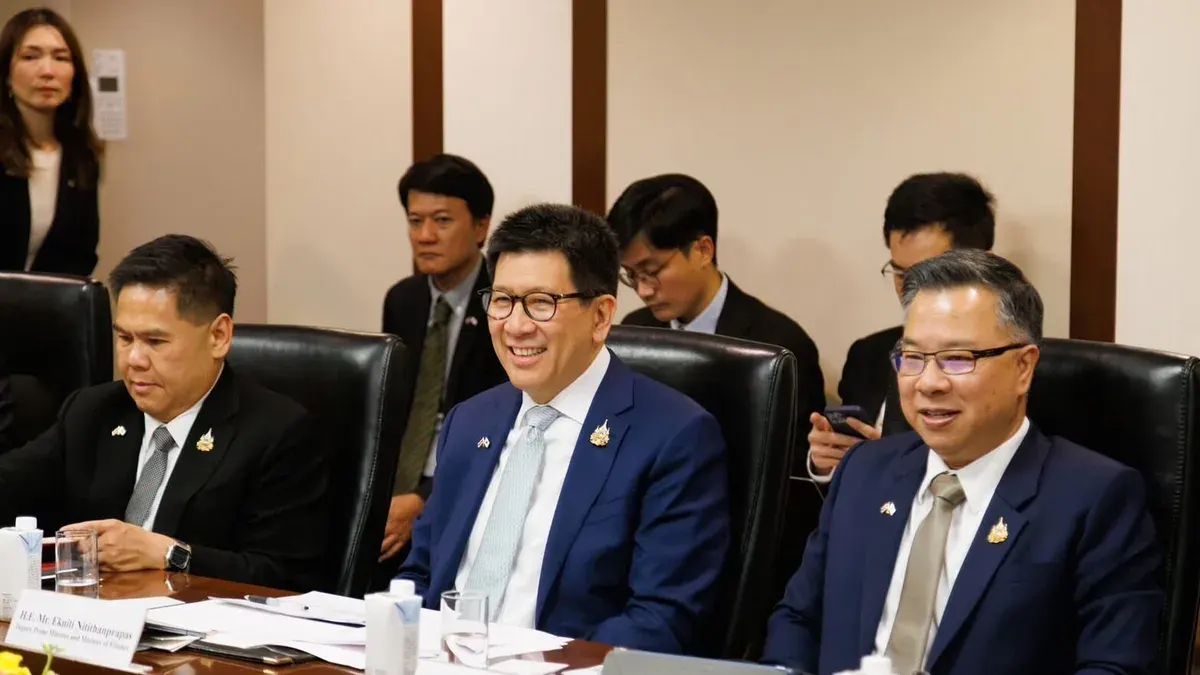
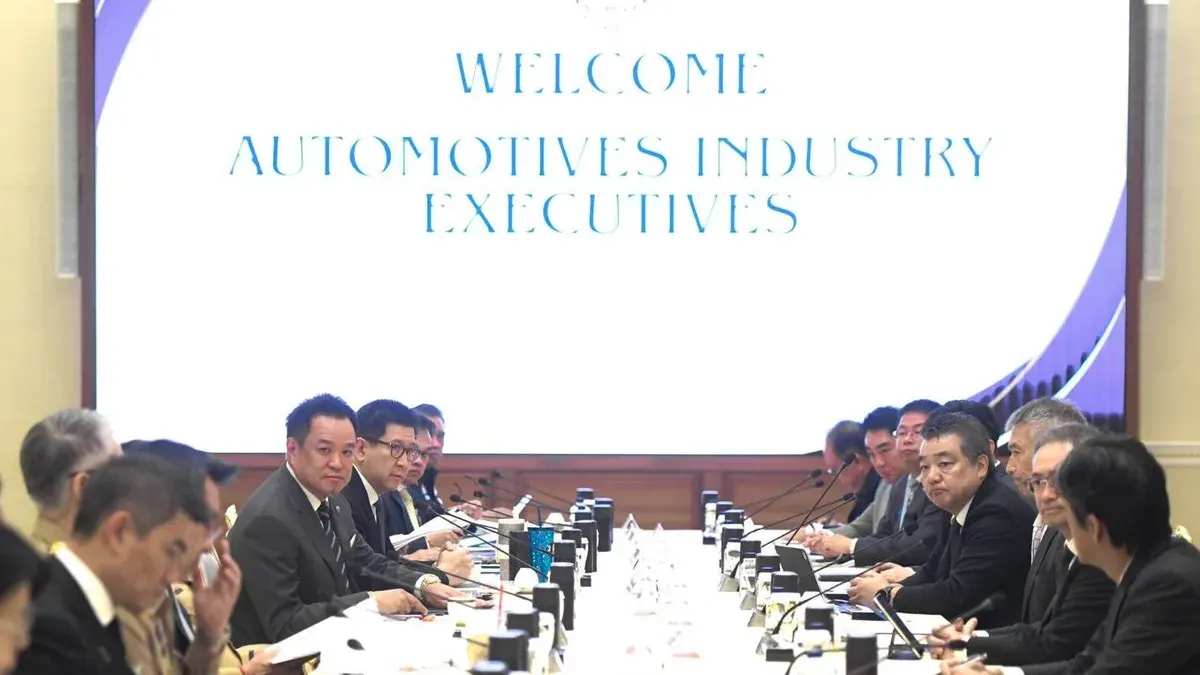
The BOI showcased the success of its Japan roadshow, paving the way for a new investment wave in "Automotive-Chip-AI-Energy." Six Japanese auto giants are preparing to invest over 1.34 trillion baht in Thailand over five years. BOI Secretary-General Narit Therdsteerasukdi disclosed the results of the Thai delegation's visit to Tokyo from November 17-20, 2026, led by Deputy Prime Minister and Finance Minister Pichai Chunhavajira and Industry Minister Warawut Silpa-archa, together with heads of the Federation of Thai Industries, the Thai Chamber of Commerce, and the Joint Standing Committee on Commerce, Industry and Banking. Thailand has set a direction to升级 cooperation with Japan from a manufacturing base to a partner in investment, technology, and human resource development under the "Made with Thailand" concept. The major outcome is that Toyota, Honda, Isuzu, Mitsubishi, Mazda, and Nissan confirmed investment plans in Thailand totaling over 134 billion baht during 2026-2030, covering multiple EV types, hybrid technology, biofuels, automation systems, and key component production. The Thai side explained the new automotive excise tax direction aimed at encouraging domestic production and use of local parts.
On semiconductors, the BOI organized a dialogue with Japanese chip manufacturers, promoting investment opportunities in photonics, power semiconductors, and sensors to expand Thailand's role in technology design and development. Simultaneously, the delegation studied NTT Data's data center management practices — covering security, system continuity, and energy efficiency — to apply lessons to Thailand's AI infrastructure development.
The Thai team also met with Japan's Ministry of Economy, Trade and Industry (METI) and JETRO to expand cooperation into biofuels, circular economy, space technology, and quantum technology. A joint session with the Japan Business Federation (Keidanren) involved executives from 38 companies and produced three memoranda of cooperation targeting next-generation vehicles, AI infrastructure, advanced electronics, and modern power grids.
Deputy Prime Minister Pichai also discussed with Japan's Finance Minister the improvement of the Thailand-Japan Economic Partnership Agreement (JTEPA), a review of the tax treaty, and cooperation on clean energy and carbon credit markets. Talks with LY Corporation, the operator of LINE, focused on using AI to enhance Thai SME capabilities, prevent online fraud, and improve disaster communications. Meetings with SMBC, MUFG, and Mizuho banks aimed to connect investor networks and increase Thai SME access to financing within Japanese supply chains.
Narit stated that following the roadshow, the BOI will collaborate with the three private-sector institutes and relevant agencies to monitor the six automakers' investment plans against their timelines, link Thai parts manufacturers to new vehicle production, conduct in-depth negotiations with Japanese chip companies, and apply data center insights to develop Thailand's AI infrastructure — ensuring the talks translate into actual investment, employment, and domestic technology transfer.