Thailand Advances SMR Nuclear Plans with IAEA Partnership
The user wants a short summary of the article about Thailand advancing SMR nuclear plans with IAEA partnership. The summary must be 1-2 sentences, 120-220 characters, max 240. Output in English only, plain text, no quotes, no labels, no mar
As the world grapples with energy security and greenhouse gas reduction, low-carbon power generation technologies are gaining attention. One such option is the Small Modular Reactor (SMR), which many countries are studying and developing as a long-term energy security solution.
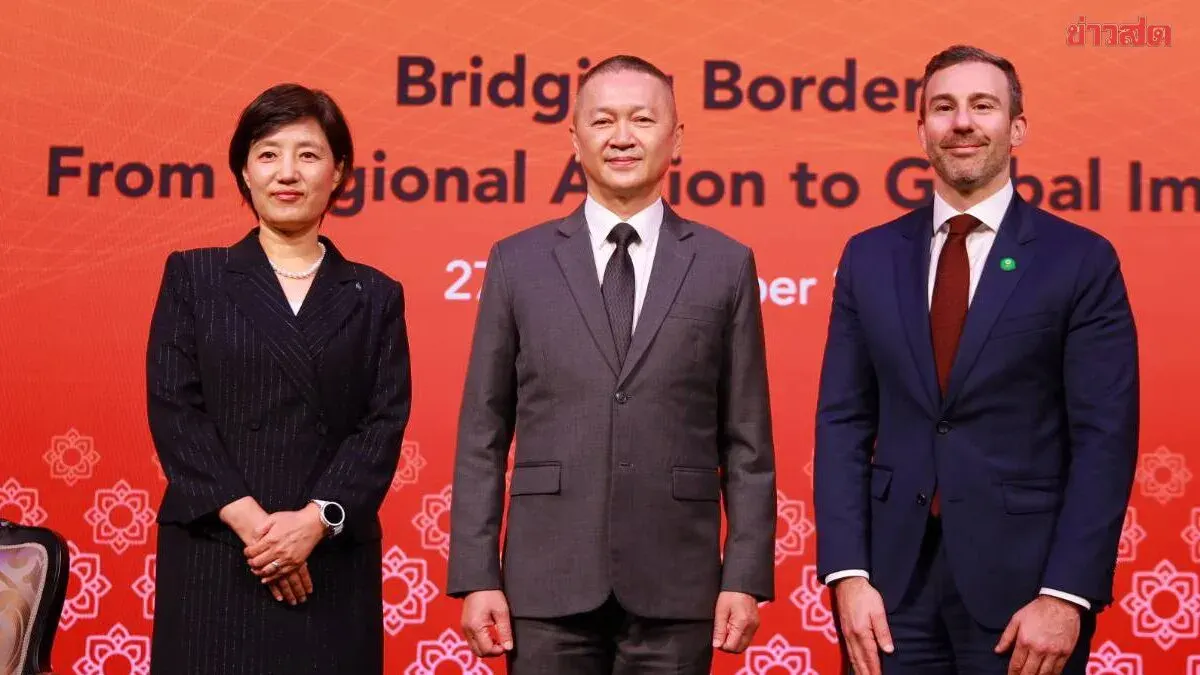
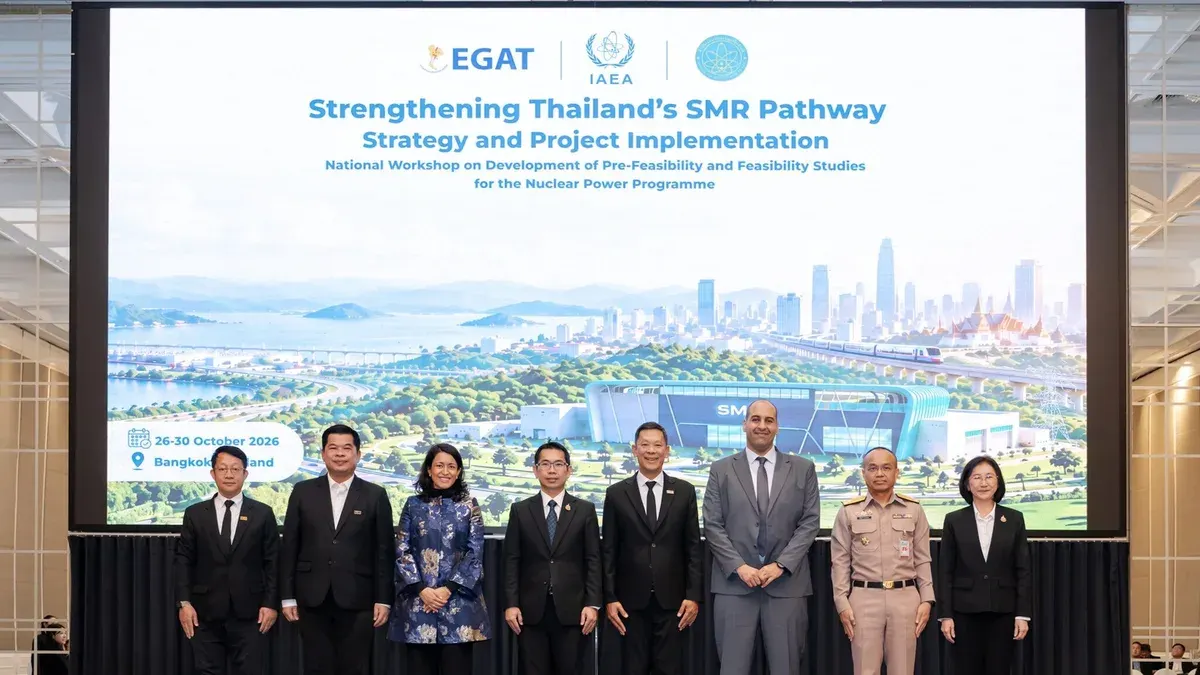
However, before SMR technology can be deployed, Thailand must still study and prepare in many areas — personnel, laws, regulatory systems, and safety standards. Recently, the Electricity Generating Authority of Thailand (EGAT) partnered with the International Atomic Energy Agency (IAEA) to hold an academic seminar under a technical cooperation project titled "Strengthening Thailand's SMR Pathway: Strategy and Project Implementation" to exchange international knowledge and best practices, which will serve as vital information for Thailand's future preparedness.
Mr. Somphop Phatthanariyangkun, Deputy Permanent Secretary of the Ministry of Energy, stated that the global energy sector is undergoing a critical transformation. Many nations are accelerating energy security efforts, enhancing economic competitiveness, and driving climate goals alongside the evaluation of clean energy technologies that can generate electricity reliably, sustainably, and affordably. Selecting appropriate technology is therefore crucial to meeting energy demand and transitioning to a low-carbon system.
For Thailand, SMR technology is considered a key option under national strategy with potential to strengthen long-term energy security, support economic growth, and drive the country toward a low-carbon society. However, considering this technology must be done cautiously. The Ministry of Energy aims to systematically develop knowledge and capabilities of relevant agencies to ensure sufficient information for evaluating energy options and informing future decisions.
"The Ministry of Energy is committed to setting clear policy direction and creating an enabling environment for responsible nuclear energy consideration. We are accelerating the country's readiness across all dimensions — infrastructure, personnel, legal frameworks, and international cooperation — to ensure that policy decisions for future generations are based on accurate and comprehensive empirical evidence," Mr. Somphop said.
Mr. Sirawat Chetsee, EGAT Deputy Governor for Power Plant Development and Renewable Energy, on the preparation front, revealed that energy security coupled with the transition to clean energy is a critical national challenge. SMR technology has drawn interest from many countries as a potential stable low-carbon power source. EGAT therefore aims to build knowledge, develop expert personnel, and enhance organizational capabilities so that relevant agencies are ready to study feasibility and assess key conditions of the technology before feeding information into the next decision-making phase.
The direction for SMR power plant development also appears in the draft of Thailand's Power Development Plan (PDP2026), which sets a target of 9,000 megawatts of total SMR capacity and aims for the first SMR plant to begin commercial operation by 2037. However, as this is still a draft plan...