Thailand and US Partner on Small Nuclear Reactor Projects
Thailand and the US signed a funding agreement to study small modular reactor projects as Thailand seeks clean energy alternatives to meet rising electricity demand and carbon neutrality goals.
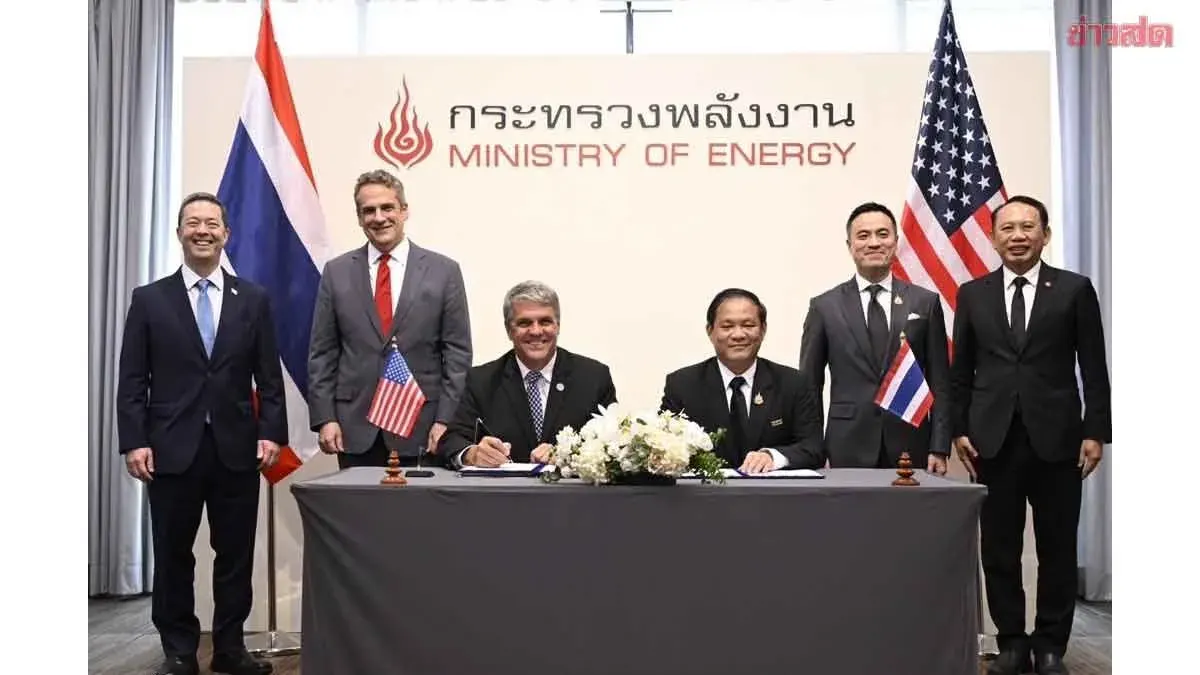
Energy Minister Eknath Promphand announced on September 14, 2026, that he and US Deputy Energy Secretary James Danly, Energy Ministry Permanent Secretary Prasert Sinsukprasert, and US Ambassador Sean K. O'Neill witnessed the signing of a funding agreement to support preliminary feasibility studies for SMR power plant projects. The agreement was signed between the US Trade and Development Agency (USTDA) and Thailand's Electricity Generating Authority (EGAT) during the Gastech 2026 conference at Bangkok International Trade and Exhibition Centre. USTDA Acting Director Thomas R. Hardy and EGAT Governor Narindh Phaovanic signed the accord.
Thomas Hardy stated that for the United States, the partnership reflects commitment to promoting American innovation and leadership in peaceful nuclear energy and advanced nuclear technology. He noted this cooperation is part of revitalizing and advancing the US nuclear energy sector, creating new opportunities to deploy advanced technologies both domestically and globally, while strengthening energy security across the Indo-Pacific region through partnerships with trusted allies.
EGAT Governor Narindh said Thailand is at a critical juncture in transitioning to clean energy. Exploring SMR technology is essential for reinforcing energy security, ensuring stable electricity production, and achieving the nation's carbon neutrality goals. The support represents a foundation for Thailand to evaluate SMR feasibility while learning from US expertise and experience. As Thailand's electricity demand continues to rise, integrating SMR technology into the country's long-term power generation mix will enhance grid resilience and stability, supporting sustained economic growth and industrial development. The agreement will enable EGAT to assess potential sites, costs, and regulatory requirements needed to deploy SMR technology in Thailand, marking another pathway toward developing a diverse and secure energy portfolio.