Thai Air Force to Monitor Chinese Airbase in Laos
BANGKOK – Thailand’s air force will monitor and analyse developments surrounding a Chinese airbase in Laos, including its potential economic, political and military uses, the air force chief said on Monday. Air Chief Marshal Seksan Khantha, commander-in-chief of the Royal Thai Air Force, cited the airbase in Ban Keun, Laos, as an example of major […]
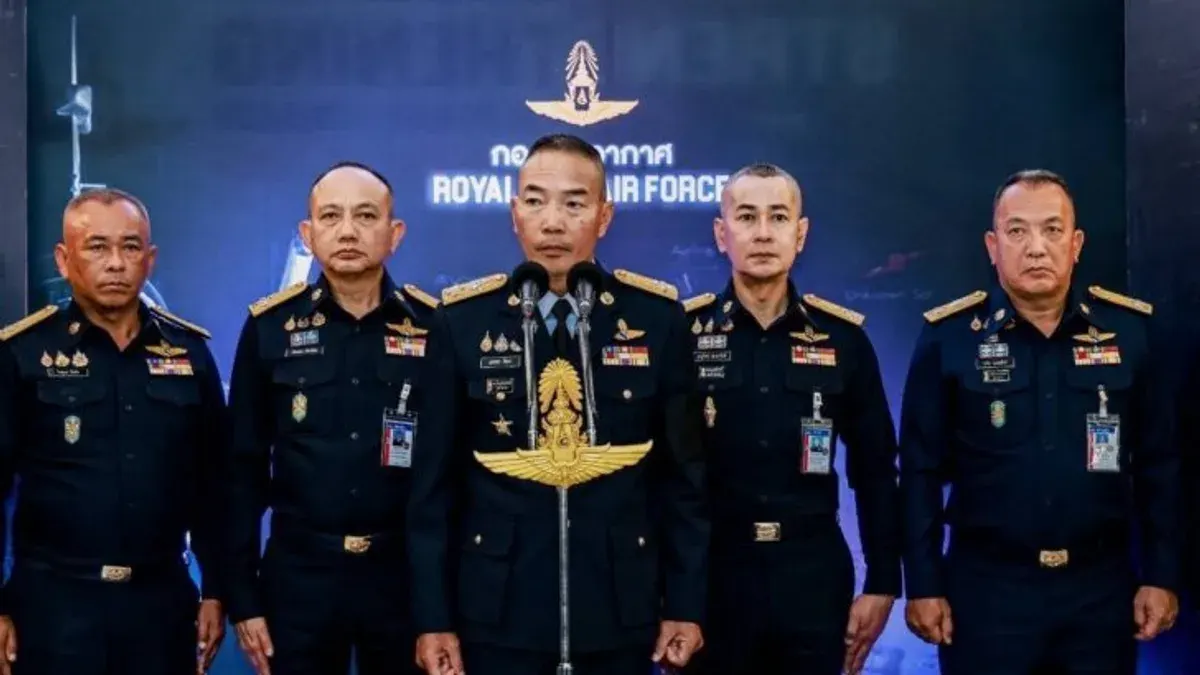
BANGKOK – Thailand’s air force will monitor and analyse developments surrounding a Chinese airbase in Laos, including its potential economic, political and military uses, the air force chief said on Monday. Air Chief Marshal Seksan Khantha, commander-in-chief of the Royal Thai Air Force, cited the Ban Keun airbase as an example of major powers expanding their influence in neighbouring countries. Speaking at the presentation of his policy priorities for 2027-2028 at the Navaminda Kasatriyadhiraj Royal Air Force Academy on 12 October, Seksan said Thailand needed to observe such projects and analyse the intentions behind them. "We will observe developments from the outside and analyse the various signals," he said, adding that facilities built with major-power involvement could serve economic, political and military purposes. The airbase officially opened on 29 September alongside the China-Laos Friendship Aviation Academy. China’s Ministry of National Defence said the China-Laos Joint Support and Training Centre would be jointly operated and maintained by the two countries to help train Lao air force pilots, stressing that the facility is not directed against any third party. Security analysts have questioned the facility’s potential role in expanding China’s military presence in Southeast Asia, while China and Laos describe it as a joint training and support centre. The site also has a history linked to earlier regional conflicts, having been used by the United States during its operations in Laos, Vietnam and Cambodia in the 1960s and 1970s. Seksan noted the issue reflects broader geopolitical shifts over the past five to ten years as major powers seek to protect and expand their interests. He urged Thailand to coordinate with the government, the Ministry of Foreign Affairs and other agencies to manage relations with major powers, stressing that the country cannot isolate itself from its neighbours. While describing Laos as a friendly, peace-loving neighbour that also needs economic development, he warned that economic, military and political influence can grow together, making it essential for Thailand to monitor developments and assess the intentions of the involved countries. He added that Thailand’s foreign and military relations should be guided by national interests and mutual benefits, avoiding dependence on any single power. "In seeking intelligence cooperation, we must be allies without being dominated, competitors without becoming adversaries, and friends who show sincerity," he said. Seksan acknowledged that Thailand sometimes must make compromises or negotiate exchanges to secure benefits, but stressed that military diplomacy must remain aligned with the government’s foreign policy and the Ministry of Foreign Affairs.