Thai Army Rejects Cambodia Claims Over Crater Damage
Thailand's military rejected Cambodia's accusations of unlawful strikes, saying its operations follow international law with verified targets and that Cambodia has used temples for military purposes, changing their protected status.
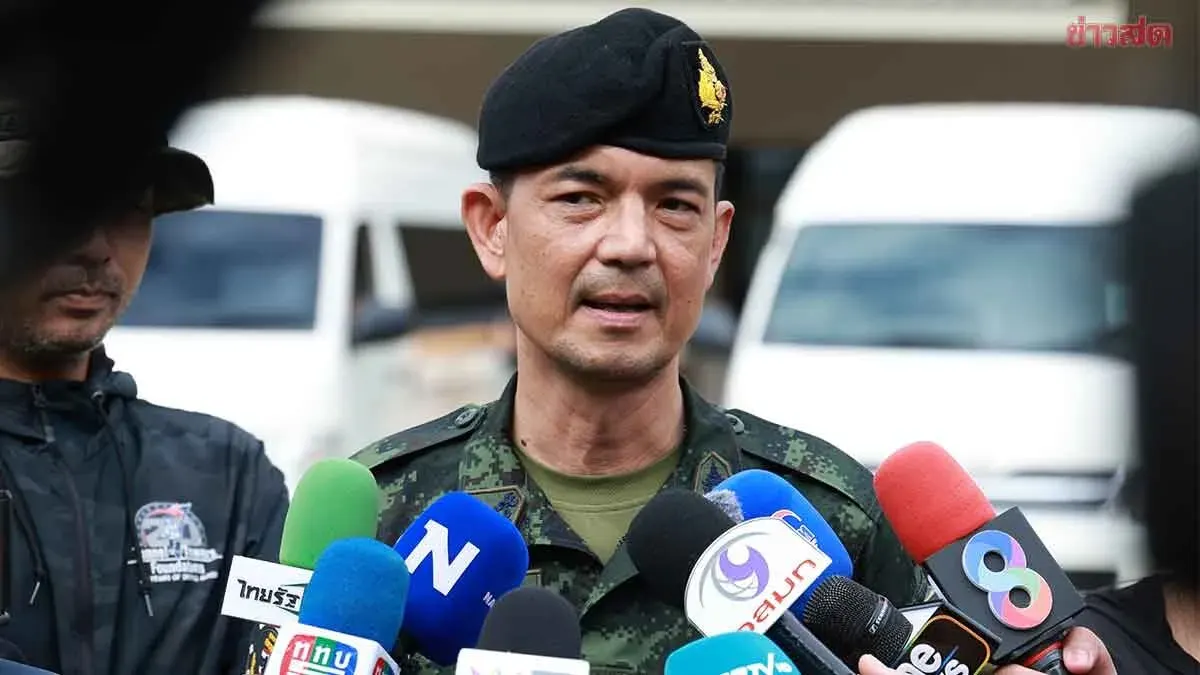
The Royal Thai Army has rejected Cambodian claims that bomb craters and damage to archaeological sites prove Thai military strikes violated international law. Army Spokesman Lieutenant General Windhyai Suvaree responded to Cambodia's Information Minister Neth Pichitra, who posted on Facebook claiming that craters, damaged temples, destroyed homes, and Cambodian civilian deaths were evidence of Thai attacks.
The army stated that Thai military operations always follow international law frameworks, with clearly defined and verified targets based on necessity and proportionality, not indiscriminate weapons use. This contrasts with Cambodia's use of weapons that have affected Thai civilian areas, causing deaths, injuries, and property damage.
Thailand's air operations target military threats or positions used to attack Thai forces and civilians, with targets verified before strikes and measures taken to minimize civilian harm. Regarding temple damage, Thailand respects international law protecting archaeological sites but notes that Cambodia has used certain temple areas, including Prasat Ta Kwaai, for military purposes—as firing bases, weapons storage, drone launch sites, and attack positions. When archaeological sites are used for military purposes, their protected status changes under international law, and Thailand has the right to take necessary action to counter threats while minimizing damage.
Containers and barbed wire serve as security barriers to prevent infiltration and reduce confrontations. Past smuggling of explosives by Cambodia led to these preventative measures, not escalation.
General Windhyai emphasized that images and evidence of damage to Thai civilian lives, homes, and property caused by Cambodian weapons are undeniable facts that cannot be erased by propaganda. He called on Cambodia to stop spreading misleading or distorted information and said Thailand welcomes impartial fact-checking using the same standards for both sides.