Thailand Cracks Down on Illegal E-Waste Imports With 3,000 Factory Checks
The user wants a short summary of the article about Thailand cracking down on illegal e-waste imports. I need to write 1-2 sentences, 120-220 characters max (never more than 240). Must be in English only. No filler, no "this article discuss
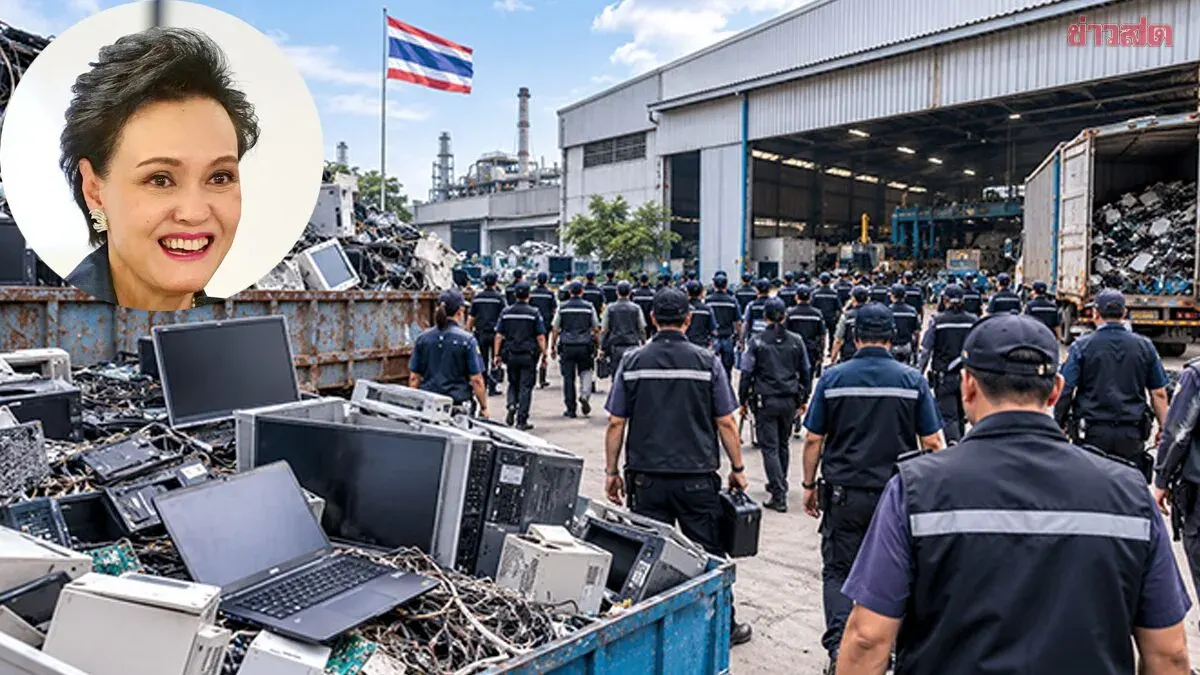
On October 31, 2026, Deputy Prime Minister and Commerce Minister Supamas Isarabhakdi spoke after the first meeting of the committee to resolve electronic waste problems, joined by Industry Minister Pimphattra Wichaikul, Natural Resources Minister Chalermchai Sri-on, and relevant agencies such as the Customs Department and the Department of Foreign Trade. The meeting followed the Prime Minister's order to integrate efforts on electronic waste management to ensure Thailand does not become a dumping ground for waste or scrap from other countries, protecting the environment and public health.
In the short term, two task forces will operate: the first, led by Minister Pimphattra with 50 teams, will inspect existing factories for compliance regarding licenses and goods on site; the second, under Minister Chalermchai, will investigate public complaints.
In the medium term, the Customs Department Director-General and the Foreign Trade Department Director-General have been appointed co-chairs to review import and export measures for electronic waste, tightening controls at the source.
For the long term, another committee chaired by Deputy PM Advisor Wira Sak Kowsurat will examine whether current laws are sufficiently strict and what additional measures are needed.
Minister Pimphattra stated that field inspections begin Sunday, November 1. Thailand has 3,049 factories licensed to handle hazardous or industrial waste registered with the Department of Industrial Works, with about 1,500 located in five provinces: Chonburi, Rayong, Chachoengsao, Prachinburi, and Samut Prakan. Complaint-driven factories will be prioritized, aiming for 100 inspections per day.
Violations will result in license revocation, and cases will be referred to the Anti-Money Laundering Office for asset seizure and criminal prosecution.
Authorities are also considering banning waste traders from importing, and reviewing standards for metal scrap imports such as car wrecks that may contain electronic waste — setting allowable contamination percentages and ensuring compliance with international standards to prevent de facto acceptance of e-waste.
Meanwhile, the Factory Act will be amended to hold local officials accountable — including kamnan, village heads, provincial and subdistrict administrative organizations — since they are best positioned to monitor local activities such as unauthorized factory operations and can serve as community watchdogs.