World Bank and IMF to Meet in Bangkok Amid Thai Criticism
Article by Kheetanat Wannaboworn and Walden Bello. The views expressed are those of the authors and do not necessarily reflect those of Khaosod English. Perhaps the two international agencies that would score lowest in popularity among Thais would be the International Monetary Fund and the World Bank. This is why many Thais have greeted with […]
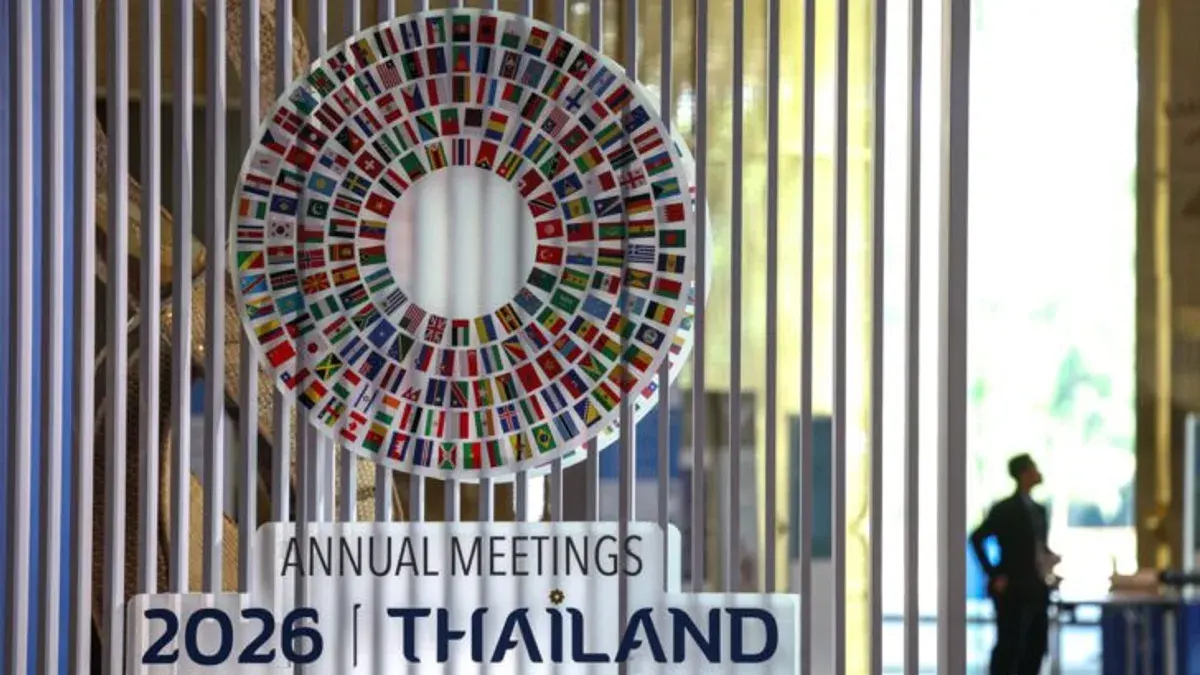
Article by Kheetanat Wannaboworn and Walden Bello. The views expressed are those of the authors and do not necessarily reflect those of Khaosod English. Perhaps the two international agencies that would score lowest in popularity among Thais would be the International Monetary Fund and the World Bank. This is why many Thais have greeted with consternation the news that these sister agencies will be holding their 2026 fall meeting in Bangkok from October 12 to 18. The Bank and the Dam Mention the World Bank, and the first thing that comes to mind in this country is the Pak Mun Dam. In December 1991, the Bank provided a $24 million loan to help fund the $250 million hydroelectric dam constructed by the Electricity Generating Authority of Thailand (EGAT). To build the massive structure, about 1700 households were dislocated. After it went into operation, the dam ended up blocking fish migration from the Mekong River, causing a catastrophic 60% to 80% loss of fish species and destroying the livelihoods of over 20,000 local fisherfolk. Over the last three decades, the balance of costs and benefits have been clearly weighted towards costs, so that the affected communities continue to advocate decommissioning it. The Pak Mun Dam is just one example of the mega-dam projects that have displaced millions and earned the Bank a bad name in international civil society. According to the International Rivers Network, until around 1993, the Bank had made 527 dam-related loans for the construction, expansion, or rehabilitation of dams in 93 countries. The Bank has also come under fire for the billions it has spent supporting fossil-fuel projects throughout the Global South. Over the last few years, the Bank has extended at least $21 billion for coal, oil and gas energy projects despite the worsening impact of climate change. The Pak Mun debacle is not the only problem associated with the Bank in Thailand. In 1997, during the Asian Financial Crisis that was caused partly by their pressure to liberalize the country’s capital account, the Bank and the IMF contributed $5.5 billion towards a $17.2 billion “rescue fund,” not to rescue Thais suffering from the crisis but to reimburse foreign investors and speculators that had lost their money. To pay off the loan consortium, the government raised the value added tax (VAT) from seven to ten percent, causing severe economic suffering, provoking a deep recession, and plunging one million Thais below the poverty line in a few short weeks. “Attacking” Poverty While Living in the Lap of Luxury In recent years, the Bank has defined its mission as ending poverty in the developing world. To fulfill this goal, its lending has risen from nearly $55 billion in 2015 to $123 billion in 2026. But if ending global poverty is universally regarded as a worthy cause, why is the World Bank so controversial? To manage its operations, the Bank’s full-time staff rose from nearly 12,000 in 2015 to over 20,758 full-time staff globally in 202