Thailand Launches Moral Credit System to Reward Good Deeds
Thailand's government is launching a moral credit system that tracks and rewards good deeds with tangible benefits like scholarships and job opportunities, while also prioritizing moral development programs for children under 13 as part of
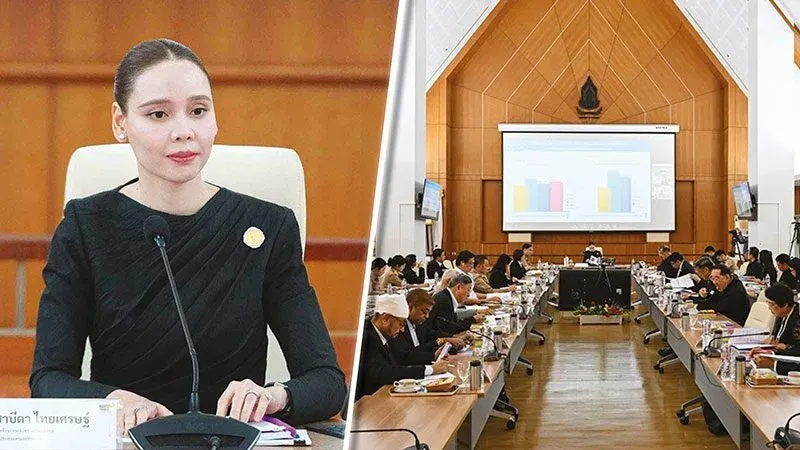
Recently, Ms. Sabeeda Thaisetrach, Minister of Culture, chaired the second 2025 meeting of the National Committee for the Promotion of Moral and Ethical Development, attended by experts and representatives from various agencies at the Ministry of Culture's eighth floor conference center.
Ms. Sabeeda reported that the meeting reviewed past accomplishments across multiple fronts: establishing integrity standards for political office holders and independent organizations, increasing transparency in selecting provincial and Bangkok "good citizens," and integrating five core values—sufficiency, discipline, integrity, volunteerism, and gratitude—into good governance frameworks across the country. The meeting prioritized three key initiatives going forward:
(1) Drafting the third-phase National Moral Promotion Action Plan (2028–2032), emphasizing development of life capital in children under 13, a critical period for behavioral cultivation and learning. The plan will employ age-appropriate mechanisms and create safe, constructive environments enabling children to internalize values from all dimensions—home, temple, school, and community. It will mobilize all sectors to model good behavior, building children's moral foundations and social resilience to grow into quality citizens.
(2) Establishing a concrete moral credit system to build a society that honors good people. The initiative will develop standardized good-deed recording systems, converting abstract moral behavior into measurable "social capital." Research will link good deeds to tangible benefits from multiple sectors—such as scholarships, faster public assistance access, and job opportunity consideration—making moral credit valuable life capital. This creates incentives for sustained goodness across all ages.
(3) Standardizing the moral province assessment mechanism to unify standards and strengthen governance at grassroots levels. The committee assigned a subcommittee to lead assessment across three tiers: moral promotion, moral development, and exemplary moral province, with outstanding exemplary province selection beginning in fiscal year 2027. This will systematize provincial moral data collection and develop local potential as better models.
The meeting also reviewed progress from four policy subcommittees implementing the second-phase National Moral Promotion Action Plan (2022–2026), showing significant advancement.