Thailand Proposes Three AI Governance Principles at Global Summit
Thailand's Prime Minister proposed three AI governance principles—protecting people, unlocking potential, and shared prosperity—at a global summit in Shanghai, emphasizing the need for international cooperation on responsible AI development
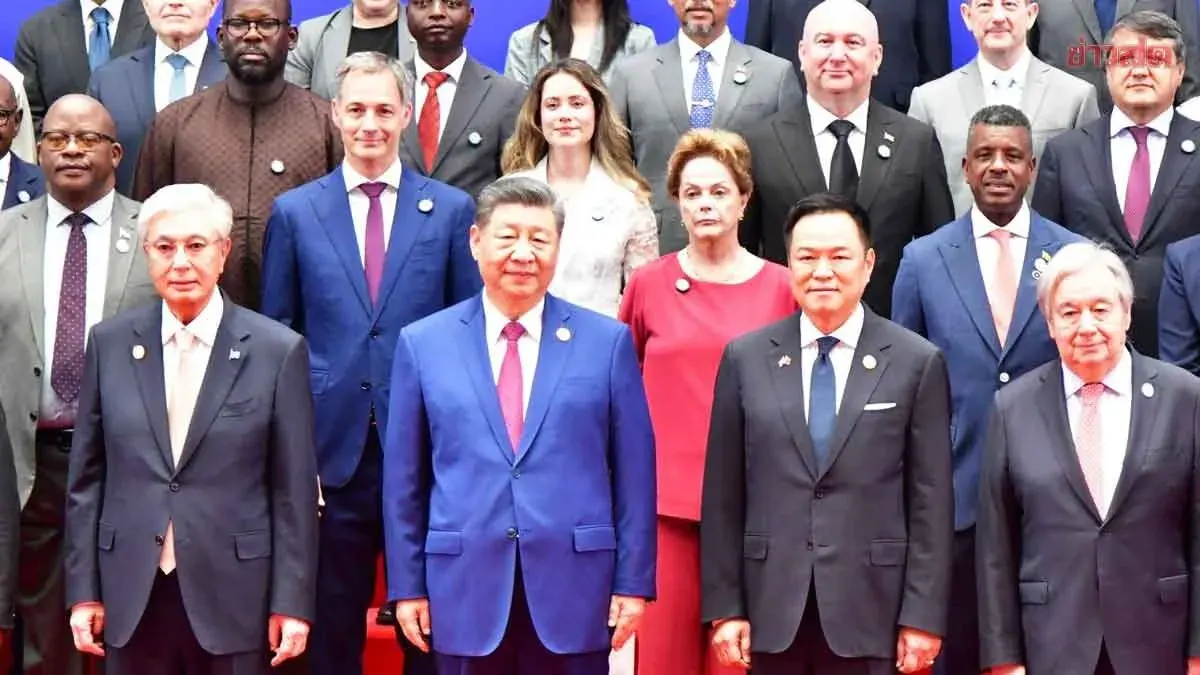
Prime Minister Anutin Charnvirakul delivered remarks at the opening of the 2026 World Artificial Intelligence Conference in Shanghai on July 17, 2026, proposing three core principles for AI governance: protection of people, unlocking potential, and shared prosperity. The conference, themed "AI Partnership for a Brighter Future," was attended by Chinese President Xi Jinping and senior representatives from numerous countries, international organizations, businesses, and academia.
The Prime Minister emphasized that while the world faces major technological change driven by AI, its benefits depend on countries working together to set responsible development directions and rules. He commended China for initiating international cooperation on AI governance, including the proposed World Artificial Intelligence Cooperation Organization and supporting the United Nations Global Dialogue on AI Governance.
Regarding people protection, the Prime Minister stressed that AI must serve humanity while safeguarding human rights, privacy, and dignity. It must mitigate risks from bias, hate speech, misuse, misinformation, and illegal applications. Thailand has collaborated with the UN Office on Drugs and Crime to develop the SHIELD platform for cross-border information sharing on cybercrime and human trafficking, reflecting that AI governance requires functional cooperation mechanisms, not just rule-setting.
On unlocking potential, he advocated that good AI governance must not hinder development, trusted institutions, skilled populations, and infrastructure—with shared prosperity as the ultimate goal of an AI future that leaves no one behind.