Thailand Rejects Cambodia's Claim Over Preah Khan
Thailand's border coordination center rejected Cambodia's claim that Koh Kuna temple belongs entirely to Cambodia, insisting that sovereignty disputes must be resolved through bilateral mechanisms and international law, not unilateral state
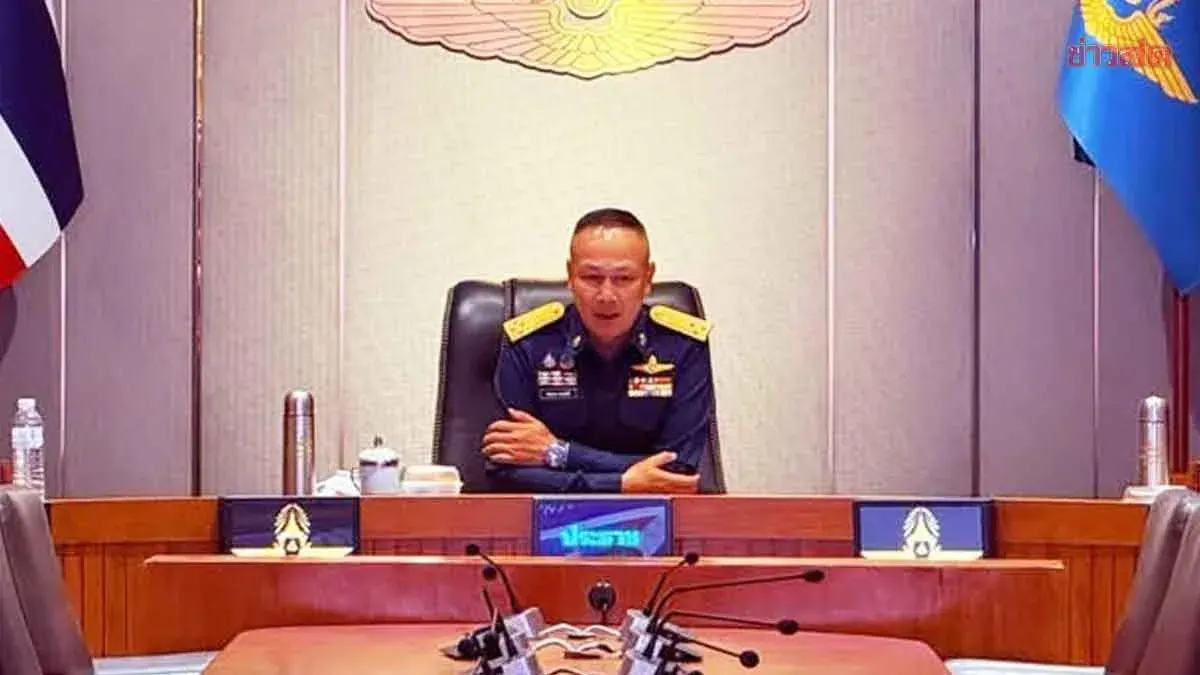
On June 30, 2025, the Thailand-Cambodia Joint Information Committee (JIC) Director General Praphas Saonjai issued a statement refuting Cambodian officials' claims that Preah Khan temple belongs 100 percent to Cambodia and allegations that Thai forces occupied the area, altered the ancient monument, and damaged the temple stairway.
Thailand rejected such one-sided assertions as having no legal standing under international law. The JIC emphasized that border disputes with differing positions must be addressed through bilateral mechanisms mutually agreed upon by both nations, relying on legally binding evidence including treaties, historical documents, and previous border demarcation records—not unilateral map interpretations.
Director General Praphas stated that map references alone cannot determine sovereignty issues. Even if Cambodia claims that Preah Khan falls within Cambodian territory according to maps at scales of 1:200,000 or 1:50,000, these remain only one-sided assertions. Under international law, both Thailand and Cambodia must jointly conduct surveys and establish border markers through bilateral channels, making it impossible to conclude sovereignty status from single-sided map interpretations.
Regarding Cambodia's allegations that Thailand occupied the territory, Praphas said Thailand's security measures, area control, and monument preservation operations are conducted within areas Thailand considers under its control and consistent with joint statements by both countries. He denied accusations of territorial seizure.
On Cambodia's claim that Thailand burned or destroyed the temple stairway, the JIC director stated such accusations require verifiable evidence. Thailand is prepared to verify facts based on empirical evidence and cannot accept conclusions from one-sided claims.
Praphas reaffirmed that Thailand remains committed to resolving the Thai-Cambodian border dispute through bilateral mechanisms under international law and joint statements, prioritizing reduced tensions, avoiding provocations and use of force, and preventing escalation.
"The JIC calls on all parties to exercise care in public communications based on facts, avoiding information that could create misunderstandings or heighten tensions," Praphas said. "Thailand is ready to work constructively on the basis of international law, good faith, and good relations with neighboring countries to maintain lasting peace and stability along the Thai-Cambodian border."