Thailand Secures 18% US Tariff, Beats Vietnam's 35%
Thailand has negotiated a maximum 18% US tariff under Section 301 investigations, significantly lower than the 35% proposed for Vietnam. The rate matches Malaysia, Indonesia, and Cambodia, all of which have signed Agreements on Reciprocal Trade with the US. The deal protects Thailand's position as a competitive exporter to its largest market, worth 2.37 trillion baht annually, while safeguarding 1.25 million jobs and agricultural exports. The draft ruling is not yet final, with a public comment period and hearing scheduled before the final determination.
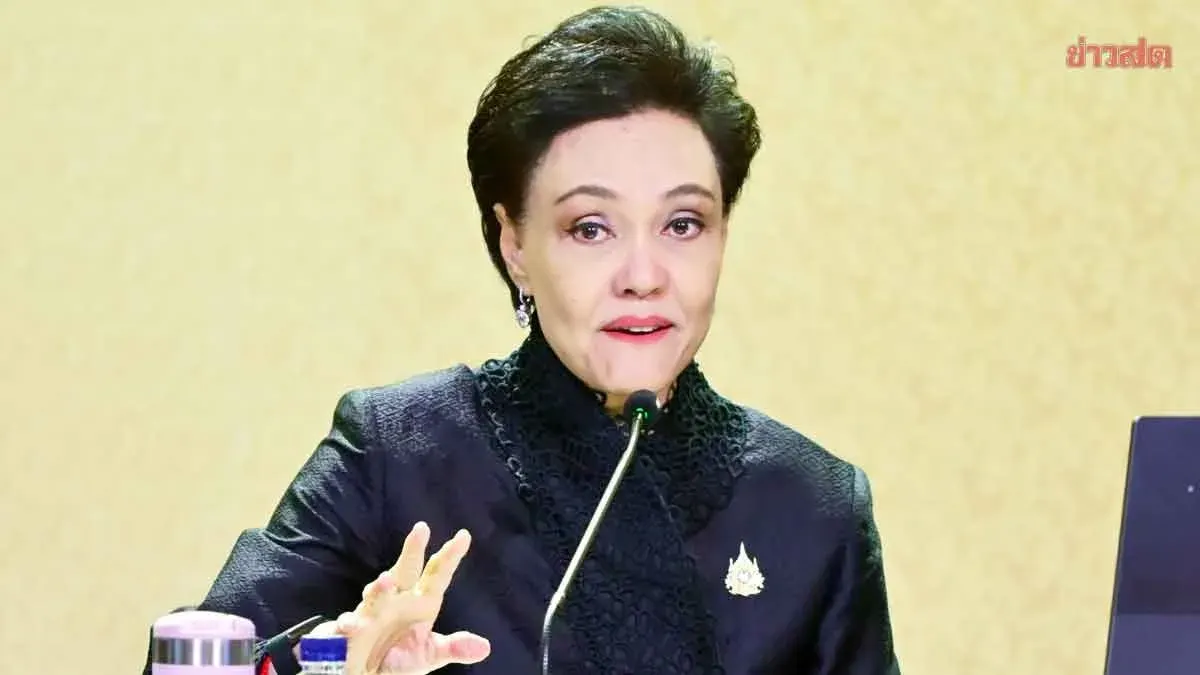
Deputy Prime Minister and Commerce Minister Supachai revealed that Thailand-US tariff negotiations yielded an 18% rate, sharply lower than Vietnam's 35%, aimed at safeguarding Thailand's exports, investment, and employment growth. She explained that US Section 301 tariffs cover just 20% of Thai exports, while 2,121 exempted items account for 60% of vulnerable products, with comprehensive monitoring measures ready.
At 12:00 on November 26, 2026, at the Naree Samosorn Building, Government House, Deputy PM Supachai addressed the US Section 301 tariff case. The US proposed a maximum 18% tariff on Thai goods, matching the rates for Malaysia, Indonesia, and Cambodia, which have already signed Agreements on Reciprocal Trade (ART). This preserves Thai competitiveness in the United States, Thailand's number one export market.
Supachai added that the US Trade Representative (USTR) released draft findings from the Section 301 investigation into structural excess capacity, covering 14 countries and economies. The proposed maximum 18% tariff on Thailand includes the existing Section 301 forced labor tariff, with no additional increase, reflecting Thailand's successful negotiation strategy.
The outcome validates Thailand's policy decision to finalize ART negotiations and sign a Joint Statement between the Thai Prime Minister and the US President on November 17, 2026, at the ASEAN Summit in the Philippines. Thailand now sits alongside ASEAN ART signatories Malaysia, Indonesia, and Cambodia, all receiving the same maximum 18% rate.
The draft findings note the US could impose up to 25% tariffs if negotiations or compliance prove unsatisfactory. Without an ART deal, Thailand could face tariffs 7% higher than neighbors. Vietnam, which has not concluded an ART agreement, faces a proposed 35% rate, while Singapore faces 20%, with reductions possible if they reach deals with the US — confirming that concluding agreements is a key factor in US tariff determination.
Supachai stated the proposed US tariff rate will maintain Thai competitiveness in the United States, Thailand's top export market worth 2.37 trillion baht in 2025 (about 25% of total exports), projected to reach 3 trillion baht in 2026. It also protects agricultural exports worth 170 billion baht (excluding rubber and products worth another 160 billion baht) and over 1.25 million jobs. Preserving Thai competitiveness in the US market remains a top ministry priority.
Supachai noted the draft findings are not yet effective, meaning Thai exports continue at the current 12.5% tariff until the final determination. The USTR will accept written comments until January 5, 2027, and hold a public hearing on January 25, 2027, before the final ruling. Thailand will use this process to present facts for the lowest possible applied rate, alongside accelerating ART ratification.