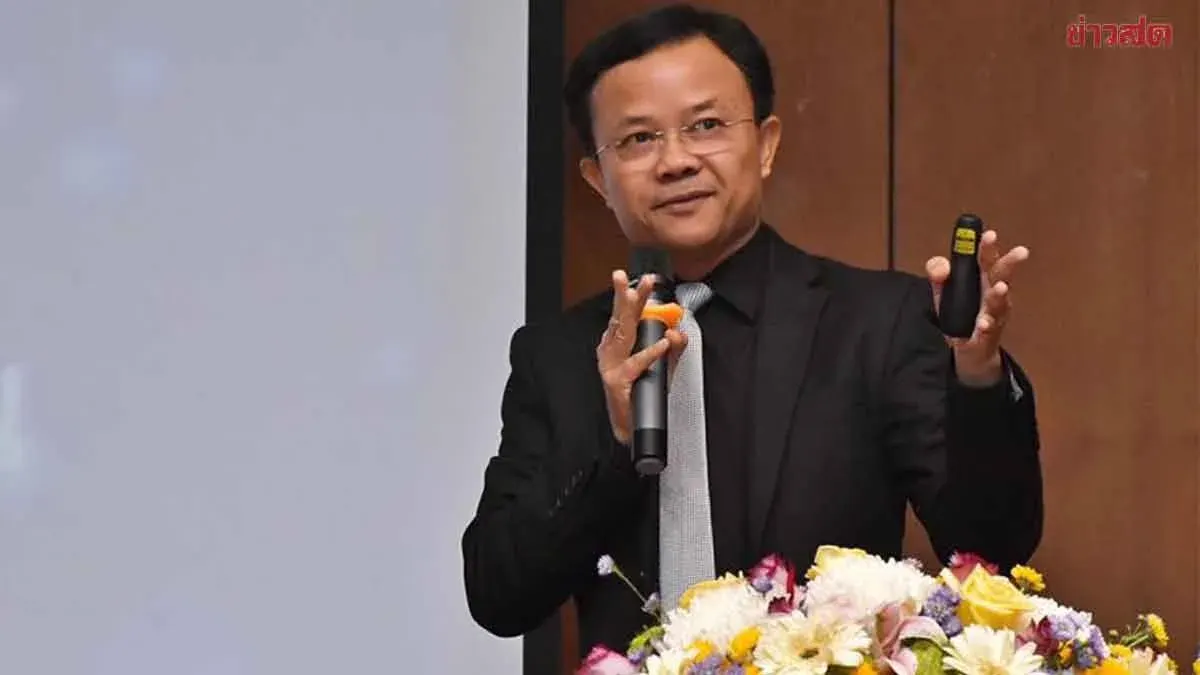
Thai universities face a severe shortage of students and mismatch in academic disciplines as birth rates decline and enrollments shift away from needed STEM fields toward teacher education and social sciences. Nakhon Ratchasima Rajabhat Uni
Rattakarn Kidkarn, Deputy Rector for Human Resources and Law at Nakhon Ratchasima Rajabhat University, revealed on August 12 that universities are facing a major crisis driven by continuous decline in birth rates, which conflicts sharply with rapid technological change. This has become an unavoidable challenge for Thai higher education institutions, forcing all universities to adapt for survival.
Historically, university seats were insufficient to meet demand, but today many programs have surplus capacity. Simultaneously, the number of school-age children and state budget allocations have both shrunk, forcing universities to generate their own revenue. The more concerning problem, however, is the mismatch in academic disciplines. While the nation needs graduates in science, technology, and mathematics, enrollments in these fields are declining. Conversely, social sciences—such as political science, law, social studies, and sports science—are gaining popularity.
Teacher education programs present another puzzle. Despite a labor market oversupply of teachers, students continue applying in large numbers, particularly in the northeastern region. This reflects a social value system rooted in the 1997 Asian financial crisis, when private-sector employees lost high-paying jobs while government teachers remained secure with stable income and benefits. This mentality has persisted across generations, even though teacher recruitment opportunities are shrinking due to school consolidations.
To address these challenges, Nakhon Ratchasima Rajabhat University has undertaken major organizational restructuring, including curriculum integration and establishing a Lifelong Learning Office to serve all age groups, particularly working adults and retirees. The university has also compressed degree programs into shorter, modular courses that students can apply immediately in their jobs, supported by a credit bank system allowing learners to accumulate credits toward future degrees.
Survey findings show secondary students prefer on-site learning, while working adults and alumni reject in-classroom attendance, opting instead for online or hybrid formats. Universities must adapt accordingly.
A major structural challenge is an oversupply of faculty relative to students, a legacy of large-scale teacher hiring around 2007 when enrollments were robust. With student numbers now falling, teachers cannot easily transfer between departments or leave. The solution involves structural management through hiring freezes—when professors retire, they will not be replaced in low-enrollment programs. Undergraduate programs require a minimum of five faculty members and graduate programs at least three, a mandatory standard. When these cannot be met, universities hire temporary or hourly staff, or partner with the private sector. New Ministry of Higher Education, Science, Research and Innovation regulations from 2022 allow private-sector professionals to serve as lead instructors. Nakhon Ratchasima Rajabhat University, for example, has partnered with the automotive industry.