Thailand-US Trade Deal Sparks Transparency Concerns
An editorial questions the transparency of the new Thailand-US trade agreement signed by PM Anutin and President Trump. Critics highlight the absence of published details, conflicting claims about tariff eliminations, and the opposition's demand for full disclosure of impacts on agriculture, industry, and farmers. The government asserts the deal benefits Thailand but faces calls to prove it with verifiable data.
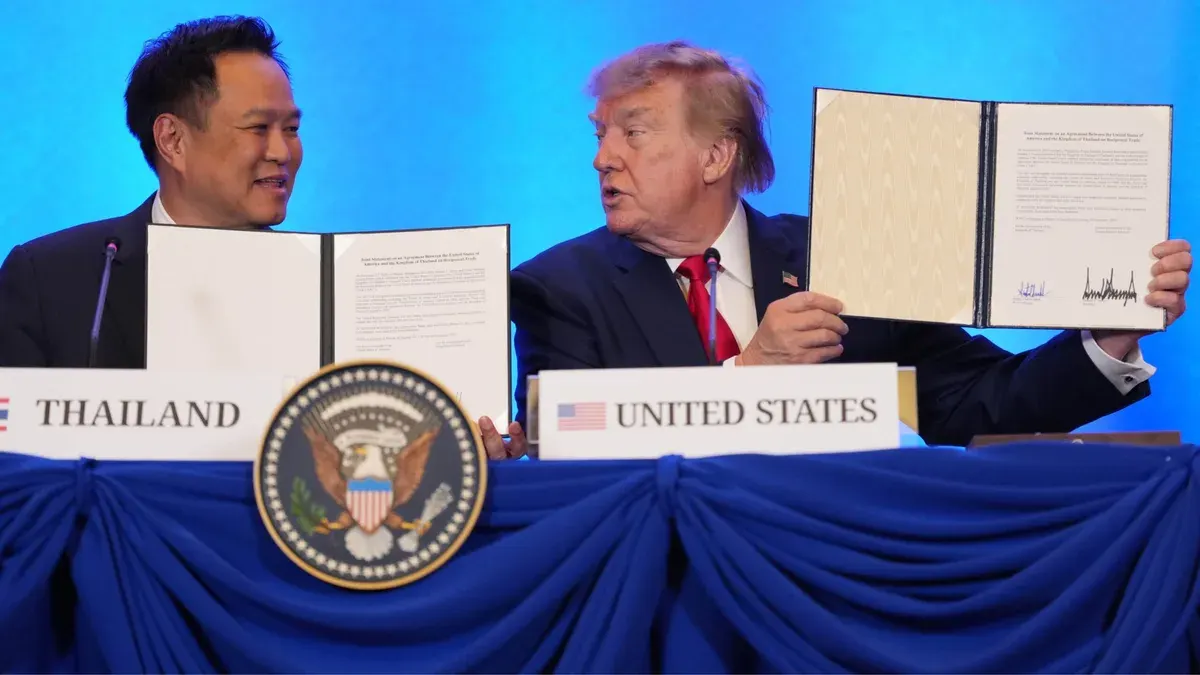
The signing of a reciprocal trade agreement between Thailand and the United States by Prime Minister Anutin Charnvirakul and President Donald Trump has raised numerous questions in society. Although the government insists Thailand benefits, the public's key questions remain unanswered: what exactly does Thailand gain, and what must it concede? The abnormality lies in the lack of disclosure of crucial details on both US and Thai websites, unlike US agreements with Malaysia and Bangladesh that published key points for the public. More worrying is Trump's claim that Thailand will eliminate all import tariffs, but the Thai government denies this is true, creating doubt about what was actually agreed upon and which side's explanation the public should trust. PM Anutin firmly asserts that negotiations prioritized Thai interests, including expanding opportunities for agricultural and food exports to the high-purchasing-power US market, creating clarity in trade regulations, and reducing risks from import tariff changes so Thai entrepreneurs can plan their businesses with greater confidence. However, assurances from government leaders alone are not enough to make the public confident without detailed supporting data. Saying Thailand receives maximum benefits requires explaining what those benefits are and whether they are worth the concessions. The demand from Sirikanya Tansakul, deputy leader of the People's Party and opposition leader, hits the mark: why does the signing of this trade agreement lack public disclosure of details like previous ones, even though it involves important matters such as tariff reductions on agricultural products, industrial goods, vehicles, pharmaceuticals, and digital services, as well as impacts on Thai producers and farmers? The opposition also views international trade negotiations as normal affairs requiring reciprocal exchange of benefits, but the crucial point is that the Thai government must comprehensively assess impacts and prepare appropriate assistance and compensation measures for those affected. Because international agreements affect the economy and livelihoods of people nationwide, the phrase maximum benefit for Thailand should not be merely a government assertion but must be backed by facts the public can verify. Therefore, regardless of whether this deal gives Thailand an advantage or disadvantage, what the government should do is disclose key points and facts for the public to know, without needing to release information subject to legitimate confidentiality conditions. But overall, the outcome of these negotiations must be disclosed as much as possible to alleviate concerns and build confidence among the Thai people nationwide.