Transport Ministry Backs Laem Chabang Smart Port Upgrade
Deputy Prime Minister Phiphat Ratchakitprakarn inaugurated Terminal D at Laem Chabang Port, a new automated facility capable of handling 3.5 million TEUs annually. The project marks a major public-private partnership aimed at transforming the port into a Smart Port and increasing its transshipment share from under 1% to 10% in the future. Phase 3 development plans target an additional 7 million TEUs of capacity and deeper drafts to accommodate larger vessels within four years.
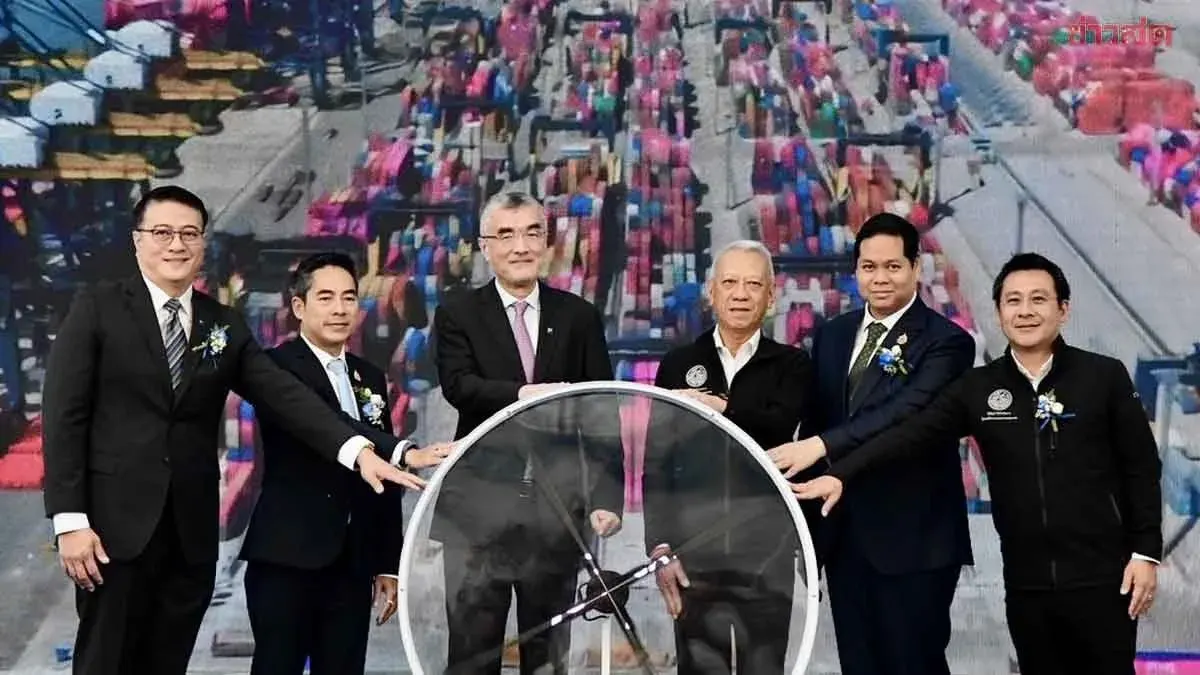
The Ministry of Transport is supporting private investment to upgrade Laem Chabang Port into a Smart Port, highlighting Terminal D's capacity to handle 3.5 million containers annually and create new revenue streams for the country. On November 26, 2026, Deputy Prime Minister and Transport Minister Phiphat Ratchakitprakarn presided over the ceremony celebrating the completion of Terminal D, operated by Hutchison Ports Thailand, at Laem Chabang Port in Chonburi province. Attendees included Transport Deputy Minister Surapong Piyachote, Permanent Secretary Piyapong Jiwattanakulpaisal, Port Authority of Thailand Director-General Jiraphong Theppitak, Hutchison Ports Southeast Asia and Australia Managing Director Stephen Ashworth, the Chonburi Governor, and representatives from the international freight forwarding industry.
Phiphat stated that the government and the Ministry of Transport prioritize supporting private-sector investment in infrastructure development and upgrading the maritime transport industry. He described Terminal D's success as a significant step in public-private cooperation that generates economic opportunities for Thailand. The terminal has been fully operational since March 2026, with a capacity of 3.5 million TEUs per year. It employs automated systems, including remote-controlled quay cranes, autonomous guided vehicles, and electrically powered machinery, enhancing efficiency, accuracy, and safety while reducing environmental impact, aligning with Smart Port and Green Port development strategies.
Phiphat added that a key future direction for the ministry is to increase Laem Chabang's role from a national import-export gateway to a major transshipment hub. Currently, transshipment cargo accounts for less than 1% of volume, and the ministry plans to consult with the Port Authority and operators to raise this to 3-5%, targeting 10% in the future. Thailand also has an opportunity to become an alternative port of call for international shipping lines, especially when major regional ports face congestion, attracting more cargo volume and increasing revenue from port and logistics services while adding economic value.
Laem Chabang Port currently operates at about 97% capacity. The Phase 3 development project is therefore crucial to accommodate international trade growth. Phiphat projected that within four years, if development proceeds as planned, the port will add approximately 7 million TEUs of capacity and deepen its draft from 16 meters to 18.5 meters, keeping pace with the trend toward larger container ships and preparing infrastructure for future shipping industry demands.
Regarding private-sector support, Phiphat noted that the Prime Minister conveyed congratulations to Hutchison Ports Thailand and affirmed the Ministry of Transport's policy to support all operators investing and doing business in Thailand. The ministry will advance seamless connectivity across road, rail, water, and air transport networks to reduce logistics costs, support the Eastern Economic Corridor (EEC) development, and enhance overall capacity.