TTB Forecasts 3% Growth, Rate Hikes to 1.75% in 2027
TTB forecasts 2.7% growth in 2026 and 3.0% in 2027, with policy rates rising to 1.75% as structural adjustments and inflation pressures build.
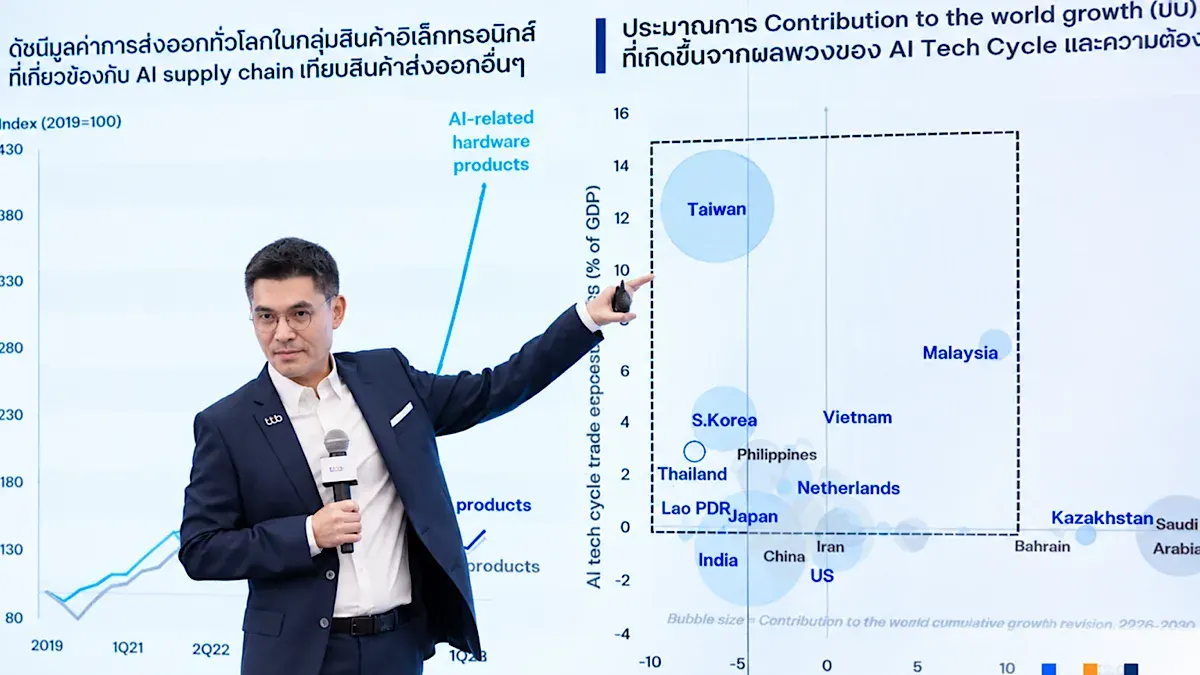
TTB assesses the economy in 2026-2027 expanding 2.7% and 3.0%, expects structural adjustment next year, with the policy rate trending toward 1.50-1.75%. On November 9, 2026, Naris Sathapholdeja, Head of TTB's Data and Analytics Group, revealed that the economy in 2026 will expand 2.7% and in 2027 by 3.0%, supported by positive drivers from government stimulus measures and AI-linked activities, plus additional support from the rebasing of the industrial production index. Furthermore, the "Reinvent Thailand" initiative — a national collaboration joining government, private sector, and financial institutions to restructure and propel the Thai economy — will help enhance growth potential in six key industrial groups. If implemented according to government targets, this will become a new growth engine lifting the Thai economy to 3-4% within five years. "We expect the Thai economy in 2027 to undergo structural adjustment and may see the policy rate rise to 1.50-1.75% by year-end, as an improving economy reduces the need to maintain the current accommodative monetary stance, especially since the policy rate remains low compared to many regional peers while inflationary pressure is expected to stay elevated at least in early 2027, driven by energy prices reversing as the fuel fund faces tighter constraints, and broad-based price increases for goods and services." Investment in new industries such as data centers and electric vehicles is seen as a key engine to drive growth amid multifaceted challenges, with technological progress — particularly AI — accelerating structural transformation in Thai manufacturing and becoming a new economic driver. However, growth remains uneven and benefits pass through to only a limited circle of businesses, posing the critical challenge of developing new growth engines that not only attract foreign investment but also translate investment into domestic value creation and long-term elevation of Thailand's economic potential. Meanwhile, the global economy still has tailwinds from the technology and AI investment cycle, but the risk balance is shifting from growth concerns toward greater inflationary pressure under a changing global context. In this environment, the Thai economy in 2027 will face both opportunities from new growth engines and constraints from economic stability, which will shape the trajectory of growth and economic policy going forward.