US Seeks Sanctions Against 28 in Scam Ring Linked to Thai Ex-Minister
US lawmakers are seeking sanctions against 28 individuals and entities tied to a massive scam operation in Southeast Asia that exploits thousands of trafficking victims to defraud Americans through romance scams and cryptocurrency schemes.
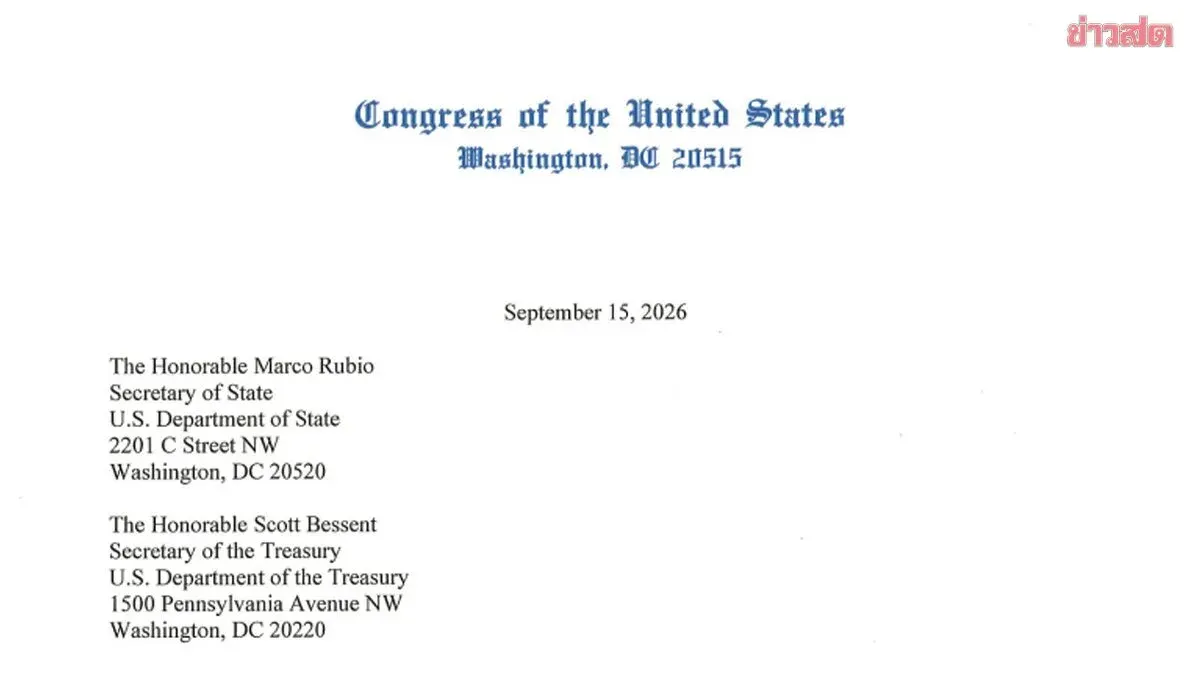
Two senior US House members—Brian Mast, chairman of the House Foreign Affairs Committee, and John Mulenar, chairman of the House Select Committee on China—have written to Secretary of State Marco Rubio and Treasury Secretary Scott Bessent requesting a 180-day investigation into whether 28 individuals and foreign entities listed in their letter should be sanctioned under the Global Magnitsky Act and other laws.
The letter states that Americans are being defrauded at alarmingly high and steadily increasing rates, driven primarily by Chinese transnational criminal networks based in Southeast Asia. These criminal groups have established large-scale industrial-level compounds dedicated to complex online fraud schemes, including cryptocurrency investment fraud commonly called "pig butchering." These operations exploit American goodwill and good intentions through romance scams and other psychologically damaging schemes. The scam centers can hold thousands of workers, many of whom are human trafficking victims lured into prison-like compounds through force, fraud, or coercion and forced to defraud Americans online or face severe beatings, torture, and sometimes death. Experts estimate approximately 400,000 trafficking victims from over 70 countries are held in scam centers across Southeast Asia.
Senior government and regime officials in Myanmar, Cambodia, and Laos have turned a blind eye to these criminal activities on a staggering scale. Experts estimate that profits from cybercrime fraud represent nearly 40 percent of the Mekong subregion's combined GDP in 2024. Law enforcement efforts in these countries have been largely performative. In February 2025, The Economist reported that scammers are wealthy and powerful enough to corrupt entire governments, effectively transforming these countries into cyber-scam narco-states, and that global revenue from online fraud likely matches illegal drug trafficking—one of the world's largest illegal industries.
In Myanmar, the military conducted highly publicized operations to destroy two large scam centers, Shwe Kokko and KK Park, but simultaneously allowed scam centers to proliferate along the Myanmar-Thailand border at alarming rates. The Associated Press reported in June 2025 that at least 25 new scam facilities have emerged since last autumn.
The letter also notes that in Cambodia, scam profits may equal 60 percent of the country's official GDP. A May 2025 report identified clear patterns of state officials benefiting from scam operations, finding that chronic corruption, reliable government protection, and complicity by senior party members are the main drivers of the link between human trafficking and cybercrime in Cambodia. Another June 2024 report found that Cambodian government investigations of scam compounds were inadequate.