Water Agency Says Upper Water Down, Dam Discharge Up
The Department of Water Resources says that while northern water levels are beginning to fall, the Chao Phraya Dam must still increase discharge because water from earlier rains is still moving downstream and upstream storage remains high. It is managing releases gradually to balance storage, irrigation intake, and flood risk, while warning communities both above and below the dam to stay alert. Officials urge residents in low‑lying areas to monitor announcements for any changes in water levels.
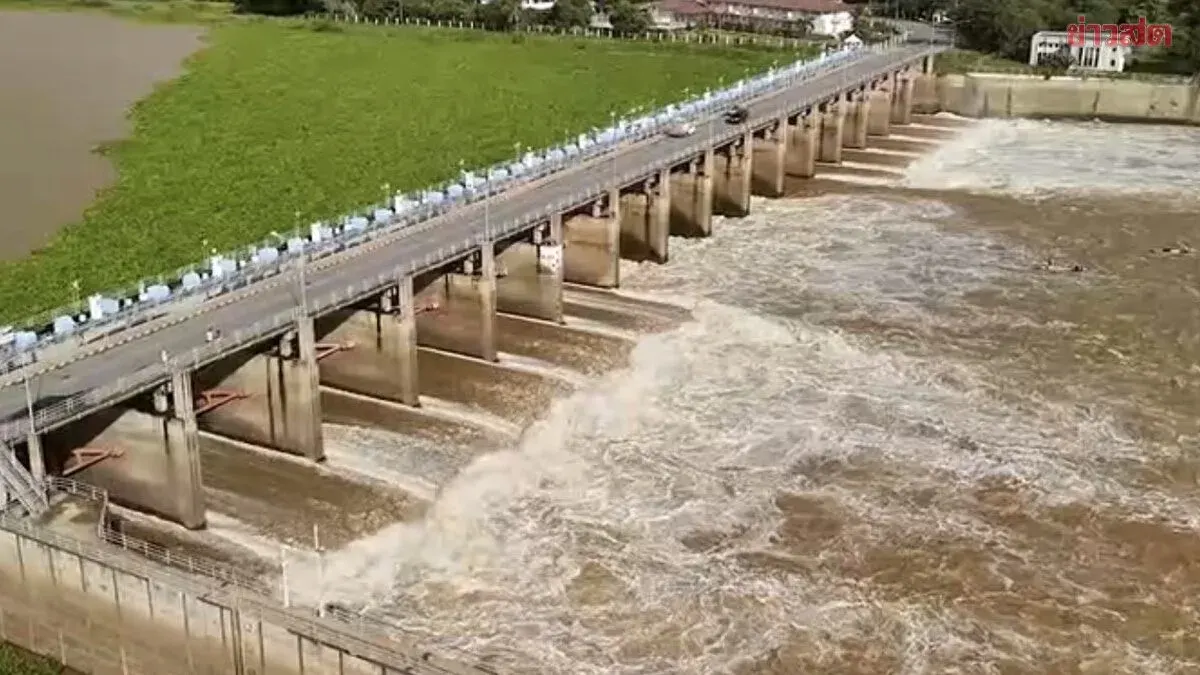
The agency noted that it is managing water by storing and distributing according to capacity, operating both east and west irrigation systems to reduce the volume passing through the dam to downstream areas, while monitoring impacts upstream. Both banks have limits on how much water they can absorb, so intake into irrigation schemes must consider rainfall, existing water in the system, and each area’s discharge capacity. Despite some upstream declines, large volumes of water are still arriving at the dam and there is accumulated storage upstream, necessitating a gradual increase in outflow to control levels and reduce risk upstream. The release must also account for main‑channel levels, tributary inflows, local rainfall, and tidal effects downstream, as all influence water levels and discharge in the lower reaches. In short, although some northern spots have seen drops, water that moved earlier is still arriving and upstream storage remains, so the agency balances storage, dual‑bank intake, and phased releases. Residents in low‑lying areas upstream and downstream, especially outside embankments, should follow official announcements closely to prepare for changing water levels.