World Bank Unveils New Thailand Partnership Framework Through 2575
The World Bank is launching a new partnership framework with Thailand for 2570–2575 to boost economic growth and job creation through private sector development and infrastructure investments in water, transport, and energy.
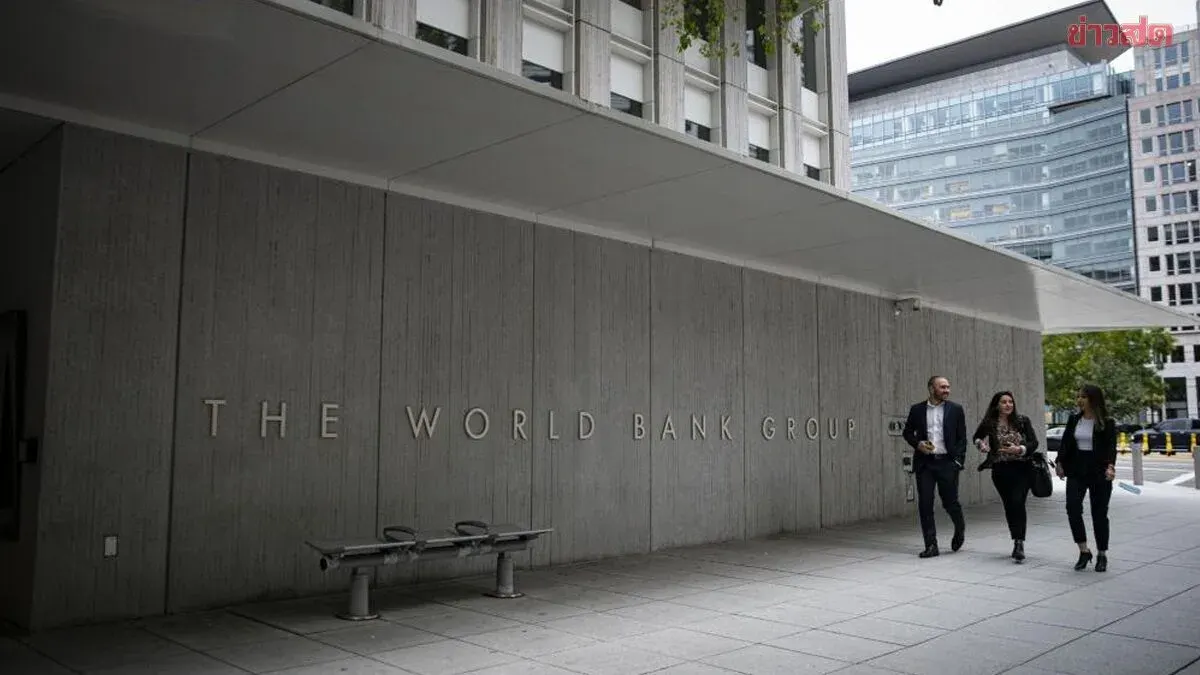
The World Bank is moving forward with a new Country Partnership Framework for Thailand for the 2570–2575 fiscal years, targeting rapid economic growth and job creation through two main pillars: boosting private sector capability and strengthening infrastructure in water, transport, energy, public finance, and disaster resilience, while supporting Thailand's advancement to upper-middle-income status.
On September 18, 2569, the World Bank's board of directors discussed the new Country Partnership Framework for Thailand covering 2570–2575, designed to accelerate economic growth and job creation for Thailand's next phase of development, based on a competitive and resilient economy capable of managing change. The World Bank has partnered with Thailand for over 75 years across all stages of national development. The new framework will deepen this cooperation by integrating reform knowledge and support with targeted public financing and private investment to advance Thailand toward high-income status.
The framework aligns with long-term development objectives and priorities of the incoming 14th National Economic and Social Development Plan (2571–2575, currently in preparation). It builds on momentum from the Bangkok Business Summit 2026, where public and private leaders jointly promoted Thailand's economic reform agenda, and reflects priorities gathered from consultations with Thai stakeholders for the World Bank's report "Building Thailand's Future Today."
The framework aims to translate these priorities into concrete reforms and investments through existing public-private cooperation mechanisms such as the Joint Public-Private Committee. "The Bangkok Business Summit clearly demonstrated shared commitment to move from problem analysis to action," said Stephen N. Ndegwa, World Bank Country Director for Thailand and Myanmar.
The partnership framework will convert this momentum into tangible investment, higher-quality job creation, strengthened business resilience, and improved capacity to manage uncertainty. It focuses on two complementary outcomes: first, enhancing private sector competitiveness by supporting productivity, innovation, digital technology adoption, and regional and global market competition, while expanding finance access for small businesses in high-potential sectors including advanced manufacturing, sustainable tourism, digital value chains, and agriculture, alongside skills development, sustainable finance, and innovation promotion.
Second, it strengthens foundations for growth through infrastructure investment in water, transport, and energy; fiscal resilience; climate disaster preparedness; and social protection systems, including support for flood and drought management in the Chao Phraya basin and transport infrastructure linking regional business and labor markets.