Thai Car Buyers Loyal to Brands but Hesitant on Powertrains
Thai car buyers are increasingly loyal to established brands, with 64 percent planning to repurchase, but nearly 40 percent remain uncertain about which powertrain technology—electric, hybrid, or traditional—to choose for their next vehicle
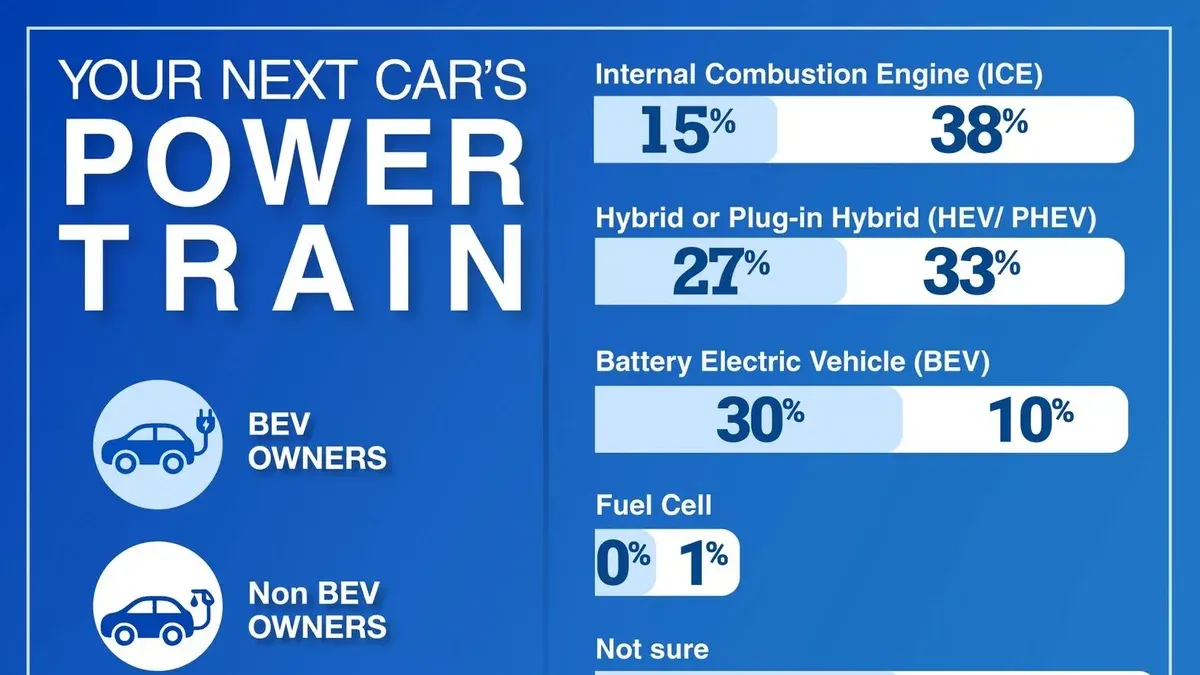
Research confirms that brand loyalty in Thailand's automotive sector is bouncing back, with 64 percent of car owners intending to repurchase the same brand. However, the real shift has moved to how buyers choose their next vehicle's powertrain technology.
Siris Satrabhaya, managing director of Differential (Thailand) Limited, presented findings from the 2026 Thailand Service and Product Customer Experience Index studies based on 2,651 car owners. The data tracks purchasing intent from 2567 to 2569 and reveals continuous behavioral change. In 2568, buyer willingness to switch brands peaked, with intent to repurchase the same brand dropping from 46 percent in 2567 to just 36 percent in 2568, then rebounding to 64 percent in 2569.
Meanwhile, the proportion of undecided buyers fell sharply from a high of 61 percent in 2568 to 31 percent in 2569, below the 48 percent recorded in 2567. Despite clearer brand choices, competition remains fierce, with 5 percent of owners planning to switch—nearly matching the 6 percent from 2567. Nearly four in ten car owners still cannot decide which powertrain technology to choose next: internal combustion engines, electric motors, hybrids, or plug-in hybrids. The central question for buyers has shifted from "Which brand should I buy?" to "Which technology will best suit my real-world needs?"
Brand loyalty is recovering across all segments, though each faces distinct challenges. Japanese brands remain strongest, with 69 percent of owners intending to repurchase, followed by American brands at 60 percent and Chinese brands at 46 percent. While Chinese brands show year-on-year improvement in repurchase rates, 44 percent of their owners remain uncertain and 11 percent plan to switch—the highest defection rate among the three regions.
Chinese brands must now move beyond brand awareness and trial to transform early ownership experiences into lasting brand confidence. They need to strengthen quality, after-sales service, price stability, resale value, and service network availability. Japanese and American brands, meanwhile, must leverage their reputation advantage by combining it with innovation and lifestyle solutions relevant to today's consumers.
Brand reputation has reemerged as the primary driver of loyalty. Among owners planning to repurchase the same brand, 30 percent cite brand image and reputation, 25 percent cite past positive experience, and 22 percent cite product satisfaction. Notably, resale value has grown as a factor from 2 percent to 6 percent, underscoring that brand loyalty now depends on multiple dimensions beyond reputation alone.