New Meditation Book Launched at Thailand's National Book Fair
Dr Suphachai Veeraphuchong and Dr Alongkot Chukaew will launch their new book 'Meditation as Living Practice' at the 31st National Book Fair in Bangkok on 29 October. The book, first presented at an international gathering in Krabi, explores how mindfulness can drive ethical decision‑making and social harmony. The launch will take place from 11:00 to 11:50 AM at the Queen Sirikit National Convention Centre, moderated by Thuanporn Asawawiwat.
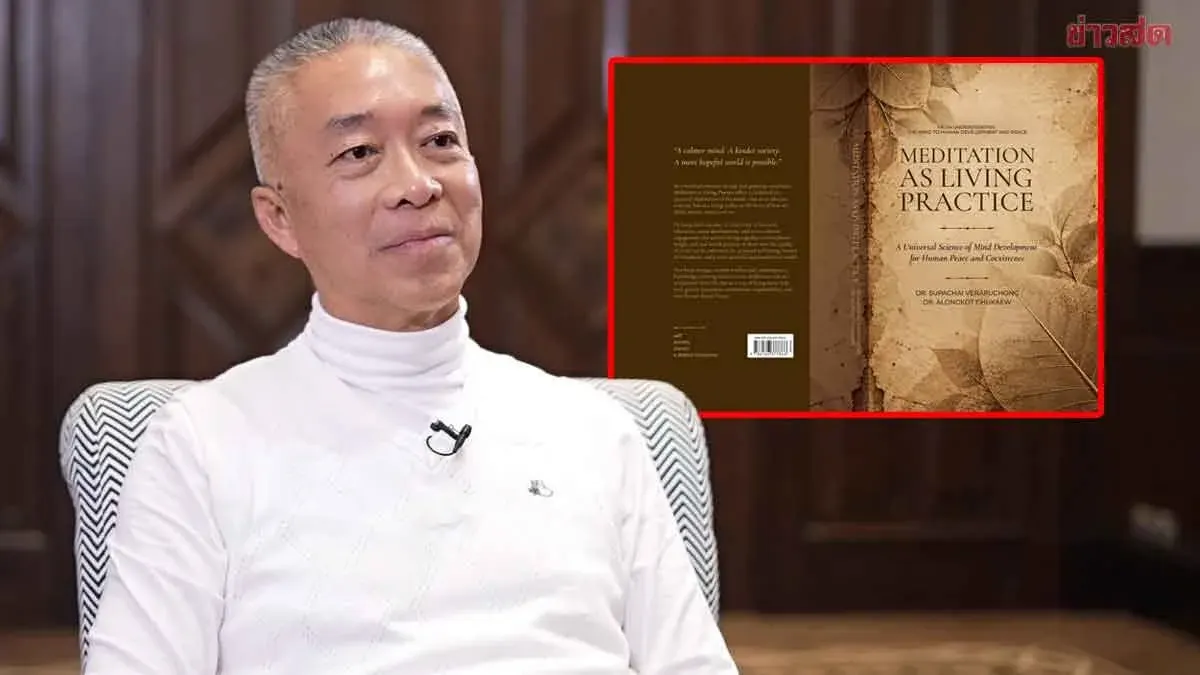
On 19 October 2026, reporters announced that the book 'Meditation as Living Practice: From Mental Development to Social Change' will be launched on 29 October at 11:00 AM at the Queen Sirikit National Convention Centre, Hall 5-7, LG floor, as part of the 31st National Book Fair (BOOK EXPO THAILAND 2026). The book is co‑authored by Dr Suphachai Veeraphuchong, secretary‑general of the Bodhicitta Wisdom Institute 980 (BGVI), and Dr Alongkot Chukaew, assistant secretary‑general. The launch will feature both authors on stage, with Thuanporn Asawawiwat, assistant secretary‑general of BGVI, serving as moderator from 11:00 to 11:50 AM.
The book was first introduced during the Second United and Present International Gathering held 12‑14 October 2026 at the Sofitel Krabi Phokeethra Golf and Spa Resort in Krabi Province, organized in cooperation with the UN Office of the High Commissioner for Human Rights (OHCHR), BGVI, and the Dharma Alliance. Participants from many countries and professions exchanged views on mental quality development, compassion, human rights, and peaceful coexistence.
The work poses a critical question for humanity’s future: despite rapid advances in science, technology, economics and knowledge, have we given sufficient attention to the quality of mind—a fundamental factor in how we use knowledge, make decisions, and shape society? The authors argue that mindfulness should not be limited to personal calm or relaxation; it must be cultivated as a way of life to enhance awareness, compassion, listening skills, and responsibility for the impacts of our actions at individual, community and societal levels.
Under the framework of Inner Transformation and Outer Engagement, the book explains how inner change relates to social participation, emphasizing that mental quality is essential for ethical decision‑making, respect for human dignity, acceptance of difference, and peaceful conflict resolution. It does not suggest that mental development should replace laws, institutions or human‑rights mechanisms, but rather that inner change can support the meaningful implementation of human‑rights principles, justice and collective responsibility.
The launch at the international gathering aligns with its theme 'Contemplative Practices, Compassion and Collective Well‑Being,' highlighting the role of mental training, compassion and shared well‑being, as well as the link between inner human values and building societies that respect human rights and live together in peace. The forum also provided an opportunity for international participants to discuss how to apply principles of compassion, mental‑quality development and social responsibility in practice.