Seven Industries Commit 5.4 Trillion Baht to Drive Thai Growth Above 3%
Thailand's private sector has pledged 5.4 trillion baht in new investment across seven strategic industries under the "Reinvent Thailand" plan, aiming to lift annual GDP growth above 3% by 2030. The sectors — medical and wellness, creative economy, agriculture and food, retail, automotive, smart electronics, and tourism — each set specific revenue targets and will coordinate with the Board of Investment and the Joint Public-Private Consultative Committee to turn the proposals into a national action plan.
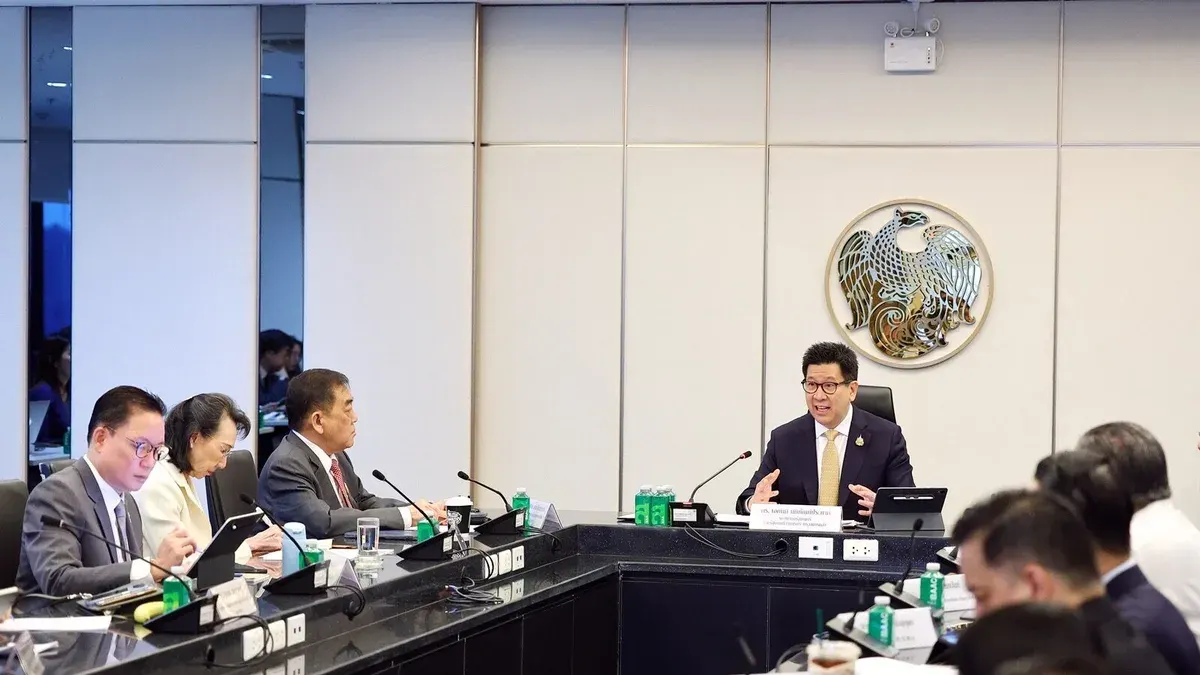
The private sector across seven industries has pledged 5.4 trillion baht in investment to push the Thai economy to grow over 3%, unveiling the "Reinvent Thailand" plan targeting additional revenue by 2030. Narit Therdsteerasukdi, Secretary-General of the Board of Investment (BOI), disclosed that joint discussions between Deputy Prime Minister and Finance Minister Pichai Chunhavajira, the three-institute Joint Private Sector Committee, and representatives of seven industry groups aimed to track progress on the Reinvent Thailand strategy in order to formulate a national action plan before submitting it to the full Joint Public-Private Consultative Committee chaired by the Prime Minister.
"The private sector targets combined additional revenue exceeding 5.4 trillion baht by 2030 from seven industry groups, aiming to serve as a new economic engine driving Thai growth above 3%, raising the investment ratio to 30% of GDP, and elevating the country's competitiveness ranking into the world's top 20," he said.
The revenue targets by industry are: 1. Medical and Wellness: 1.1 trillion baht — expanding medical and wellness services to global markets, targeting foreign patient revenue of at least 100 billion baht annually, while promoting Thai pharmaceuticals, herbal products, and high-value health products. 2. Creative Economy: 970 billion baht — building on gems and jewelry plus Thai content industries including series, dramas, games, and performances, using technology and AI to add value to intellectual property and take Thai brands global. 3. Agriculture and Food Processing: 860 billion baht — increasing productivity, reducing production costs, upgrading agricultural and food products to premium markets, and developing high-value products and new industries. 4. Retail and Commerce: 800 billion baht — pushing Thai products and brands through new domestic and international channels, alongside raising Thai product standards and harmonizing import standards, while developing distribution and cold-chain systems. 5. Automotive: 640 billion baht — extending vehicle production to support diverse technologies including both electric and internal combustion vehicles, targeting 1.95 million units produced in 2030, increasing local parts content, attracting new automakers, and developing the electronics parts industry. 6. Smart Electronics: 500 billion baht — leveraging AI and data center demand to drive domestic investment and production, developing electrical components, smart grid systems, and positioning Thailand as a testbed and co-development base. 7. Tourism: 500 billion baht — elevating Thailand to a world-class destination, linking primary and secondary cities through festivals, tourism routes, and transport systems, while developing five pilot areas: Bangkok, the Eastern Economic Corridor (EEC), Phuket, Chiang Mai, and Nakhon Ratchasima.
Narit said the seven groups' revenue targets reflect their potential to become new engines for the Thai economy, adding that the BOI and JPPCC mechanism must translate private-sector proposals into actual investment and results — including raising agricultural productivity, building automotive and electronics production bases with more local content, expanding health services and Thai products to global markets, and creating value from brands and intellectual property.
As secretariat to the subcommittee on new investment development, the BOI will coordinate with the JPPCC secretariat and all four subcommittees to incorporate the proposals into a national action plan before presenting it to the next full JPPCC meeting.