Luang Pu Du Prommapanio, Creator of Revered Luang Pu Thuad Amulets
The article profiles Luang Pu Du Prommapanio (1894-1990), the revered former abbot of Wat Sakae in Ayutthaya, renowned for consecrating highly sought-after Luang Pu Thuad amulets. It details his monastic education, strict ascetic practices, humility, and dedication to meditation, noting that he believed Luang Pu Thuad guided him in visions. His most famous amulet, the 'World-Opening Coin,' was issued in 1989 in various metals.
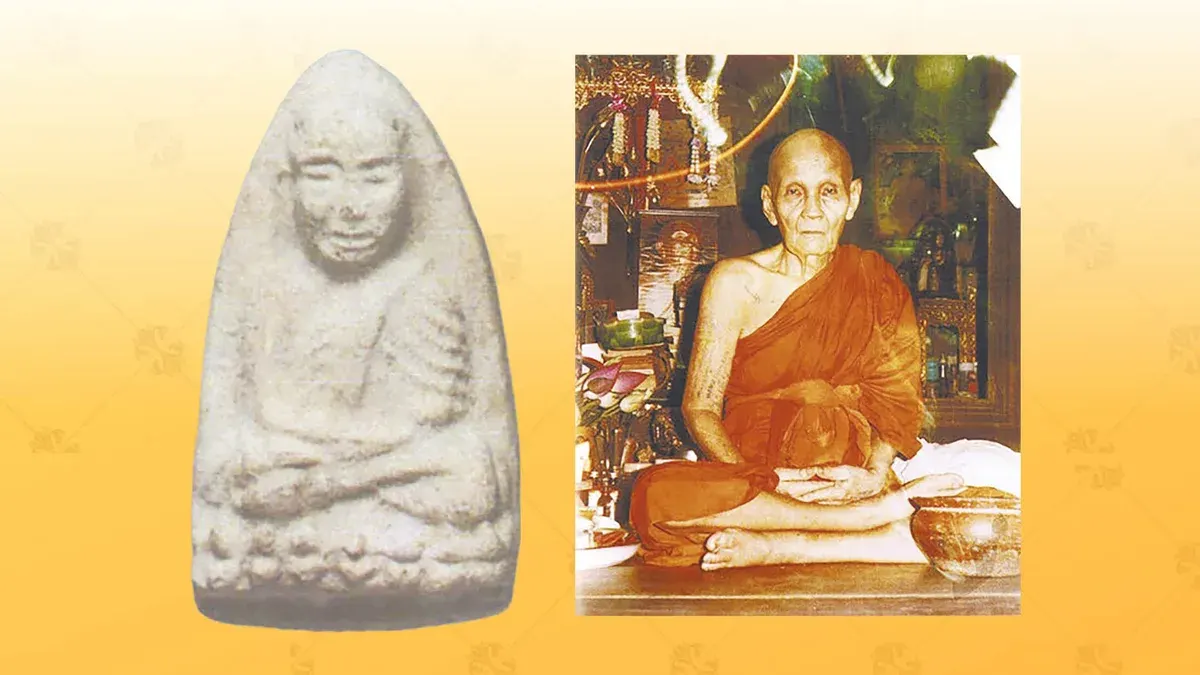
Luang Pu Thuad is one of Thailand's most venerated monks, with amulets created in his image nationwide. Among the most sought-after are those from Wat Chang Hai in Pattani, made by Luang Pu Thim Thammatharo, and those from Wat Sakae in Ayutthaya, consecrated by the famed former abbot Luang Pu Du Prommapanio. Born into the Nu Sri family on Friday, May 10, 1894 (B.E. 2447) in Ban Khao Mao, Uthai District, Ayutthaya, he was the son of Nai Phud and Nang Phuang Nu Sri.
At age 21, he was ordained at Wat Sakae with Luang Por Klan of Wat Phra Niyati Karam as preceptor and Luang Por Chai of Wat Khlong Bua as witness. In his first rains retreat, he studied Dhamma at Wat Pradu Thongtham (then called Wat Pradu Rong Tham) with teachers including Khun Khru Nueng, Phra Khru Chim, and Luang Por Rod (Suea). For meditation practice, he learned from Luang Por Klan and Luang Por Phao, the latter being a relative, as well as from various texts and other masters in Suphan Buri and Saraburi.
In his third rains retreat, he went on a three-month pilgrimage from Ayutthaya to Saraburi to pay homage to the Buddha's Shadow and Footprint, then continued to Sing Buri, Suphan Buri, and Kanchanaburi, until illness forced him to stop. He resolved not to accept outside invitations from before B.E. 2490 and observed the one-meal-a-day practice from before B.E. 2500. In B.E. 2525, disciples persuaded him to accept two meals daily. Thereafter, he left his quarters only three times a year: for the start of the rains retreat, the end of the rains retreat, and the Kathina robe-offering ceremony.
He exemplified contentment and simple living. When devotees offered goods, he mostly refused, accepting only what was modest so as not to compromise his monastic demeanor, and would later redistribute offerings to needy rural temples. He placed great emphasis on meditation, allowing his personal quarters to be used by disciples and visitors for practice, and he encouraged serious practitioners.
Beyond his patience and endurance, he was a model of humility, never elevating himself above others. Regarding sacred objects, he did not present himself as a guru creating amulets for gain, but acknowledged their benefit for those lacking spiritual anchors, once saying, "Clinging to auspicious objects is still better than clinging to inauspicious ones." He received visitors daily from B.E. 2500 until late B.E. 2532, when his health declined due to severe diabetes, yet he endured with remarkable composure.
On Tuesday, January 17, 1990 (B.E. 2533), he passed away peacefully from heart disease at age 85, with 65 rains retreats. Luang Pu Du deeply revered Luang Pu Thuad, always referring to him as his teacher, and told disciples that during meditation, when obstacles arose, Luang Pu Thuad would appear in visions to guide him. Consequently, the amulets he consecrated were predominantly Luang Pu Thuad images, each individually blessed. The most famous is the 'World-Opening Coin' issued in B.E. 2532, produced in multiple metals including gold, silver, bronze, and lead.