Luang Pu Khong Biography Highlights Amulet Legacy
This article profiles the life of Luang Pu Khong Thammachoto (1864-1943), the revered former abbot of Wat Bang Kapom in Samut Songkhram province. It details his ordination, studies under famous monk-masters in meditation and occult sciences, his revival of the dilapidated temple, and his reputation for craftsmanship and sacred amulets — particularly the highly sought 1941 Hanuman carrying disciple coins.
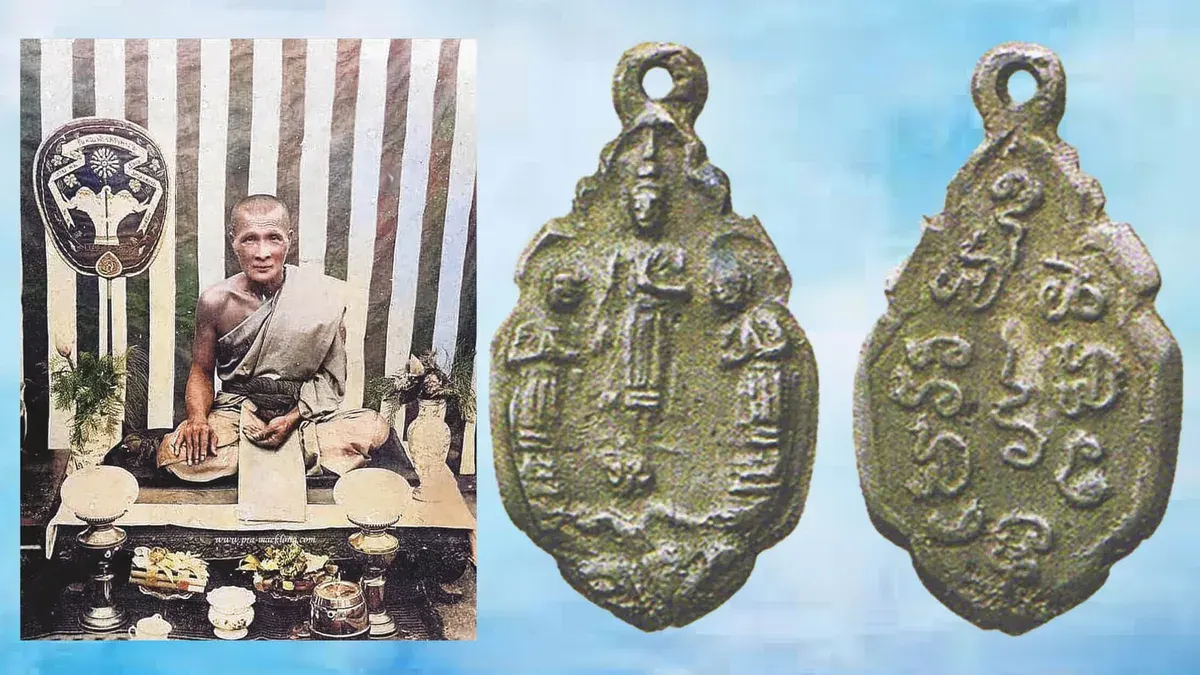
Luang Pu Khong Thammachoto, former abbot of Wat Bang Kapom in Amphawa, Samut Songkhram, was a revered monk of the Mae Klong River basin known for his strict practice. Born into the Chanthaprasert family on April 3, 1864 in Bang Samrong, Bang Khonthi, Samut Songkhram, his parents were Nai Ket and Nang Thongyu Chanthaprasert. Legend says he was born in a raft house, and belief held that anyone born in the small room beneath the raft would become a man and ordain as a monk for life. His parents bought this raft house specifically. At age 12, he ordained as a novice at Wat Mueang Mai in Amphawa to study Dhamma. As a novice he took interest in Metta Maha Niyom (loving-kindness magic). At 19 he left monkhood to help his family, then at 20 re-ordained as a monk at Wat Mueang Mai on Friday, the 6th waning moon of the 8th month in 1884. Phra Ajarn Duang served as preceptor, Phra Athikan Chui as kammavaca acariya, and Phra Athikan Thim of Wat Mueang Mai as anusavana acariya. He received the monastic name Thammachoto, meaning 'one who prospers in Dhamma.' He spent the rains retreat at Wat Mueang Mai attending to his preceptor. With a love for learning, he studied both Khammathana (meditation) and Vipassana with his preceptor as foundation, later studying with many famous monks of that era. He studied the Mula Kaccayana, an ancient Pali grammar text, with Ajarn Nok, a layman in that area, for 13 years until he became fluent in translating Dhamma texts. He also studied Vijā (occult sciences) with famous monk-masters: first with Phra Ajarn Duang, expert in special powder-blowing techniques; then with Luang Pu Tad of Wat Bang Wan Thong, a monk of great occult knowledge, especially the Napat technique; and with Luang Pu Run of Wat Chang Phueak, expert in Kammathana. In his 19th rains retreat he fell ill and paused to teach disciples Samatha, Kammathana and Vipassana Kammathana. He focused on maintaining and constructing monastery buildings, using his craftsmanship skills to repair the dilapidated scripture hall and molding a Pa Lelai Buddha image by hand. In his 21st rains retreat in 1905, villagers of Bang Kapom invited him to be abbot. At that time Wat Bang Kapom had no Sangha administrator and was in ruins. He restored the decayed temple structures and objects, and with his development skills succeeded in revitalizing the temple quickly. In 1921 he was appointed Sangha Chief of Bang Kapom subdistrict and appointed as a preceptor. Despite administrative duties, every 4th month he would retreat in the forest beside the temple for about a month, called 'Rukkhamula beside the temple,' to purify his mind after a year of worldly affairs. Near the end of his life he suffered age-related ailments, with many Sangha duties including building Buddha images and creating sacred objects leaving no time for rest. On February 6, 1943, while sitting on a scaffold decorating a new principal Buddha image, after putting on the Buddha's headdress he experienced darkness like a wind attack, but with mindfulness coordinated his body in seated meditation until the wind passed to his passing in a peaceful state. Disciples saw him sitting long and approached, lowering his body from the scaffold to find he had passed away. Age 78, 58 rains retreats. His sacred objects, especially the first edition 1941 Pam coins, are considered top-tier.