Activists Demand Thai-Chinese Action on River Pollution
River activists in Chiang Rai held a press conference after members were injured delivering a pollution complaint to China's consulate, demanding action against Chinese-backed mining operations in Myanmar and Laos contaminating the Mekong R
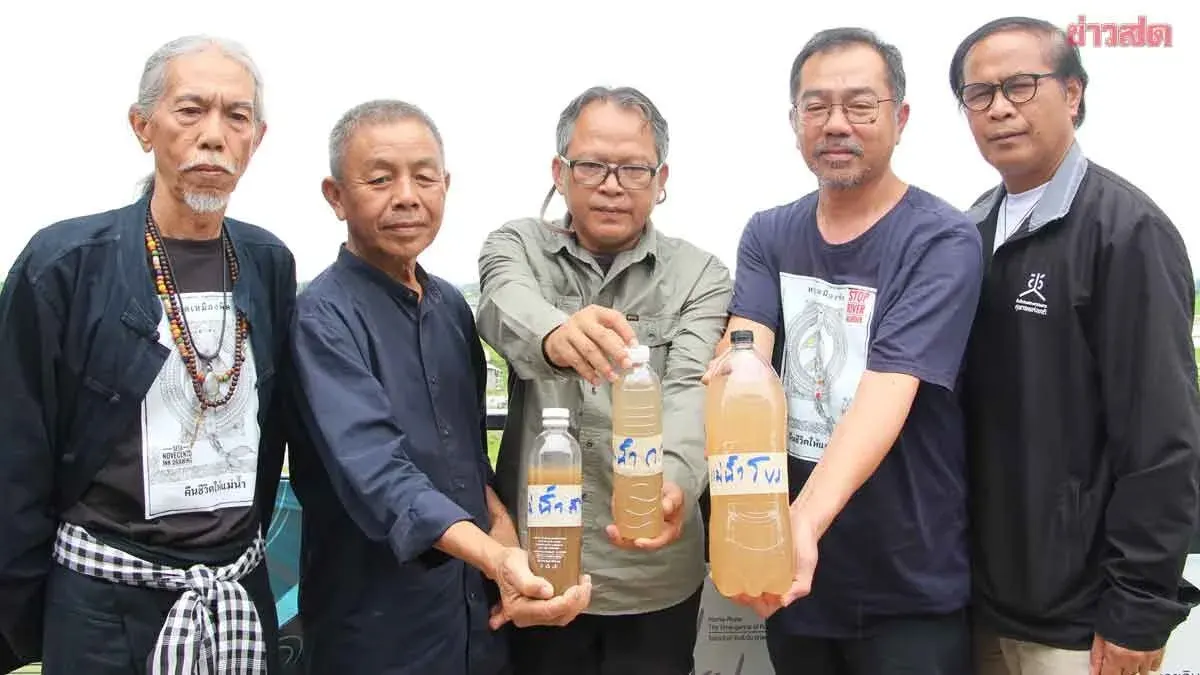
A civil society network protecting the Kok, Sai, Ruak, and Mekong rivers held a press conference on July 8, 2569 at the Chiang Rai Contemporary Art Museum (MOCA Chiang Rai) to affirm their constitutional right to peaceful assembly. The statement came after a July 6 incident in which participants were injured while delivering a letter to China's Consulate General in Chiang Mai. The network confirmed the gathering was conducted openly and peacefully, and called for an investigation into official conduct and pressure on the Chinese government, as well as Chinese-backed mining companies in Myanmar and Laos, to address pollution in the Kok, Sai, Ruak, and Mekong rivers affecting Chiang Rai residents.
The press conference was led by Dr. Sueksakul Kitanukon of Mae Fah Luang University, alongside community leaders including Nivatthana Roiaew, chairman of the Chiang Conservation Group; Somkiat Kheuanchangsai, president of the Rivers for Life Association; Pranorm Chemchaipoomi, chairman of the Chiang Rai Community Organization; Dr. Kietkhun Chankean, chairman of the Chiang Rai Million Baht Happiness Assembly; and Dr. Nermit Chitraksa of Chiang Rai Rajabhat University, who highlighted the cross-border pollution impacts and human rights concerns.
Nivatthana Roiaew stated that delivering the letter to the Chinese Consulate was a transparent and peaceful action to demand pollution solutions, not violent protest, yet force was used against protesters, warranting investigation by the Royal Thai Police. He noted the contamination originated from gold and rare earth mining operations in Myanmar and Laos with Chinese investment, affecting the Upper Mekong River basin.
Somkiat Kheuanchangsai described the situation as "environmental injustice" undermining food security and community livelihoods, calling for global scrutiny of electric vehicle supply chains to ensure rare earth minerals do not come from sources damaging the environment and human rights. Pranorm Chemchaipoomi viewed the July 6 incident as reflecting state power concentration and public participation neglect, urging officials and police to respect democratic expression rights.
Dr. Kietkhun Chankean and Dr. Nermit Chitraksa emphasized the network's peaceful approach aimed at demanding government action on cross-border pollution and river protection. In concluding remarks, Dr. Sueksakul Kitanukon announced the network's six positions: demanding solutions to mining source problems in Myanmar and Laos; opposing protest violence; calling Chinese government accountability for Chinese corporate impacts; urging Thailand to strengthen measures, including possible restriction of Myanmar ore imports; inviting global scrutiny of rare earth sourcing for electric vehicles; and demanding Chinese EV manufacturers disclose raw material origins for environmental and human rights responsibility.