Agricultural Service Provider Model Expands Machinery Access for Aging Farming Workforce
Thailand's Agriculture Ministry is expanding an Agricultural Service Provider model that allows farmers to rent machinery seasonally rather than buy equipment, addressing labor shortages as the farming workforce ages dramatically. The shari
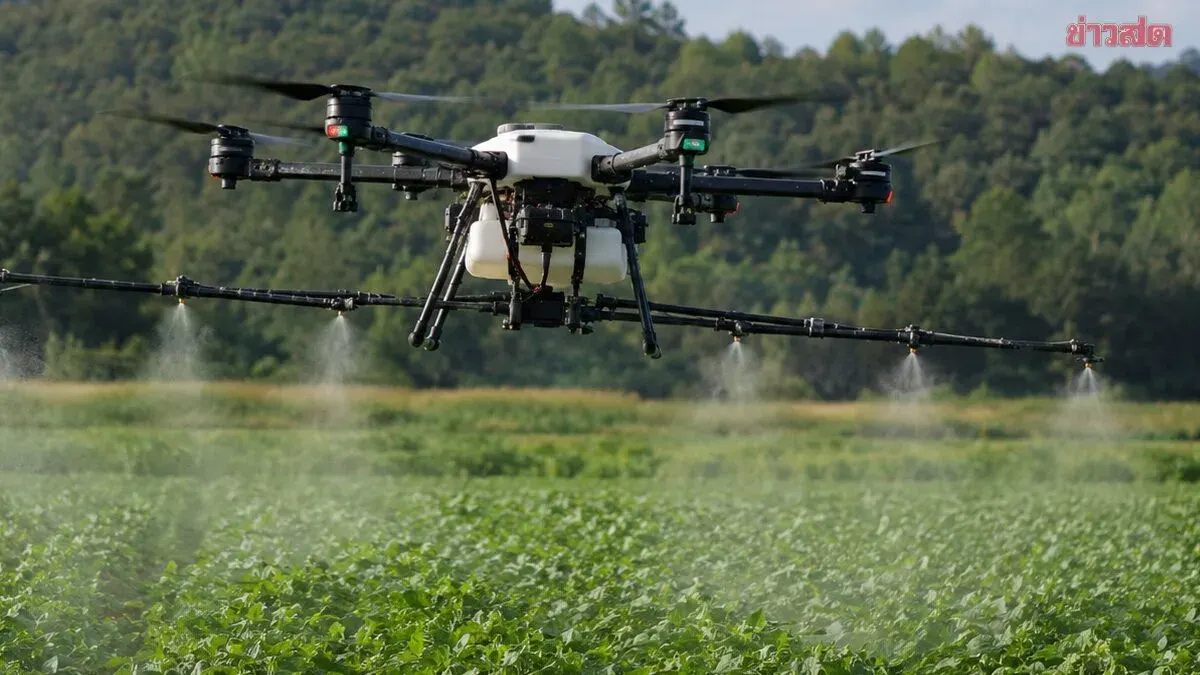
Peeraphan Korthong, Secretary-General of the Office of Agricultural Economics (OAE), stated that the Ministry of Agriculture and Cooperatives prioritizes elevating Thai agriculture through technology and innovation to help farmers increase production efficiency and tackle labor constraints as the sector enters an aging society. The ministry is promoting agricultural machinery use alongside the development of Agricultural Service Providers (ASP), a model that allows farmers convenient access to machinery services aligned with seasonal demands, reduces capital investment burden for individual purchases, and enables machinery owners to generate supplementary income from local service provision.
The key advantage of the ASP model is making agricultural machinery more cost-effective and widely accessible. Small-scale farmers can select machinery services as needed for specific production activities—from soil preparation and planting to maintenance, drone spraying, harvesting, and product transport—reducing reliance on manual labor, cutting work time, minimizing production losses, and improving accuracy in input use. Service providers gain opportunities for continuous income from existing machinery, stimulating local economic circulation and broadening machinery service distribution to more farmers in their areas.
Thailand's agricultural sector currently faces clear labor constraints. The average age of agricultural household heads has risen to 59.44 years as of 2022, while the proportion of farm workers over 60 increased from 13% in 2003 to 22% in 2018, while workers aged 15-40 dropped from 48% to 28% in the same period, underscoring the necessity of deploying machinery and technology to lighten labor burdens and boost efficiency.
The OAE supports a sharing economy approach in agriculture, encouraging farmers, agricultural cooperatives, and machinery-owning entrepreneurs to develop as ASP operators and serve other farmers lacking their own equipment. This enables cost-effective shared machinery use, expands technology access for small-scale farmers, and creates supplementary income for local machinery owners.
This aligns with the Department of Agricultural Extension's Agricultural Service Provider registration system via https://emachine.doae.go.th/, supporting farmers, cooperatives, and entrepreneurs to formalize service provision and tailor machinery management to regional farmer needs during each production season.
The OAE Secretary-General noted that when ASP machinery services are delivered appropriately to the area, crop type, and production period, farmers gain opportunities to raise yields and income, while service providers earn supplementary revenue from machinery service fees.
For 2025, the OAE will expand these efforts by collecting agricultural machinery service-rate data from 296 nationwide samples through its regional offices to build geographic datasets supporting cost-analysis studies, policy development, and improved agricultural machinery service planning responsive to local farmer needs.