Agriculture Seeks 1 Billion Baht to Expand School Milk Program to Grade 9
Thailand's Agriculture Ministry seeks 1 billion baht to expand its school milk program to Grade 9 students, potentially distributing 90 tons of raw milk daily while addressing the country's dairy surplus crisis.
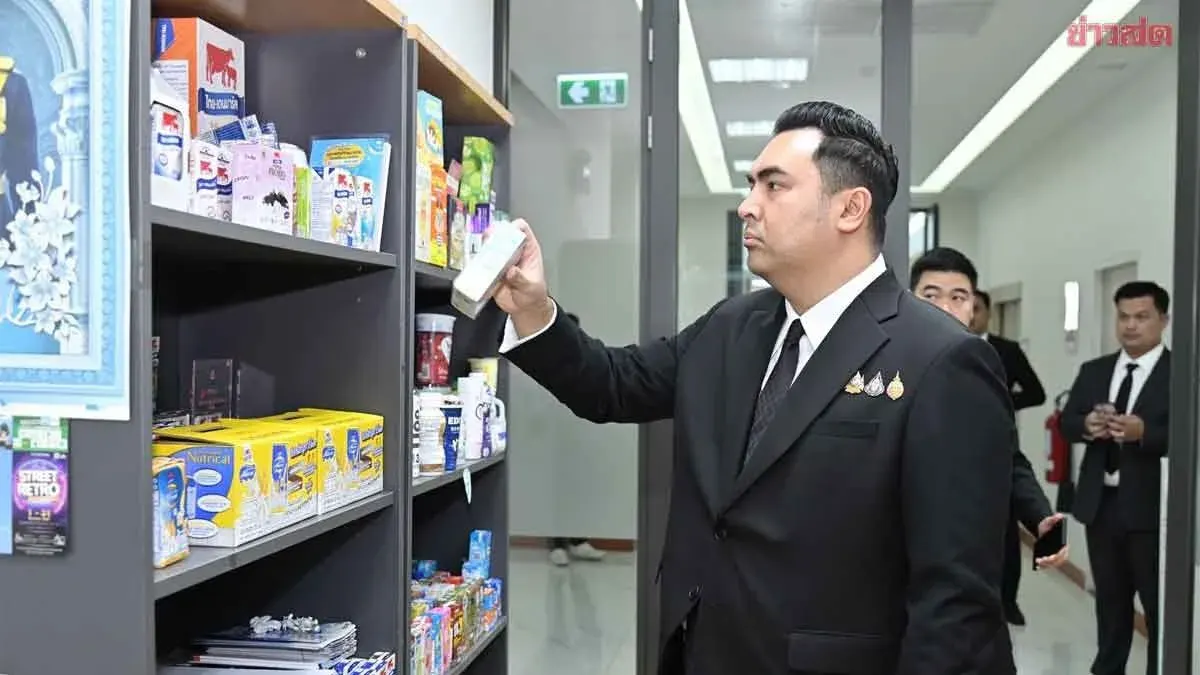
Deputy Agriculture Minister Watcharapol Khaokhram revealed the results of a meeting to address Thailand's dairy industry problems, held with representatives from the Thai Dairy Cooperative Federation across five regions. The meeting discussed four main issues: clearing excess school milk from storage, expanding the school milk supplementation program to Grade 9, managing powdered milk imports under free trade agreements, and reviving the Thai Dairy Sector Organization (TDSO). The Agriculture Ministry will coordinate with relevant agencies to determine solutions promptly based on farmer proposals.
To address the excess school milk problem, the Department of Cooperative Promotion, Department of Livestock Development, and TDSO have been tasked with surveying remaining milk quantities, product shelf life, and updating related data to develop a milk inventory management plan and handle raw milk production from farmers. The ministry will also discuss adjusting school milk allocation proportions with government officials and relevant agencies to increase channels for dairy cooperatives and TDSO to distribute their products.
Khaokhram stated that regarding the proposal to expand the school milk program to Grade 9, he has been pushing the initiative since taking office. The Department of Livestock Development has updated details and submitted information to the Prime Minister's Office after revising figures based on observations. The cabinet will be urged to consider the proposal soon, with an estimated budget of approximately 1 billion baht and the ability to handle about 90 tons of raw milk daily.
As for the proposal to provide school milk year-round 365 days, the Agriculture Ministry is reviewing it. However, preliminary assessment shows it would require approximately 14 billion baht, exceeding the current budget framework. The ministry will discuss this with the Agriculture Minister and government to determine appropriate approaches, potentially starting with increasing milk distribution during school holidays or summer breaks.
Regarding concerns about powdered milk imports under trade agreements, Khaokhram confirmed the ministry is developing farmer capacity, enhancing competitiveness under free trade frameworks, and reducing production costs while increasing farmer incomes to minimize impacts.
The meeting also acknowledged collaboration between TDSO and the Rubber Authority of Thailand to process excess raw milk into "amino milk" nutrient products for plants, adding value to raw milk and managing excess supplies. The Rubber Authority plans to expand operations to create more channels for milk utilization and increase returns to cooperatives and farmers.
On reviving TDSO, Khaokhram stated the goal is sustainable organizational recovery, not just addressing immediate problems. Plans include accelerating organization revival, appointing relevant committees, and securing funding to improve management efficiency, develop products, enhance production processes, and strengthen raw milk procurement from farmers.
"Farmers are my priority, and I have no vested interests in any sector," Khaokhram said. "Issues that can be resolved will be expedited. For issues requiring time, I will closely coordinate with all agencies and continuously update farmers. The goal is concrete, tangible problem-solving."