Ban Chang Data Center Adopts Community Oversight Model
A major data center in Rayong Province has adopted a community oversight model, pledging transparent monitoring of water use, power systems, waste management, and labor practices through public verification rather than assurances alone.
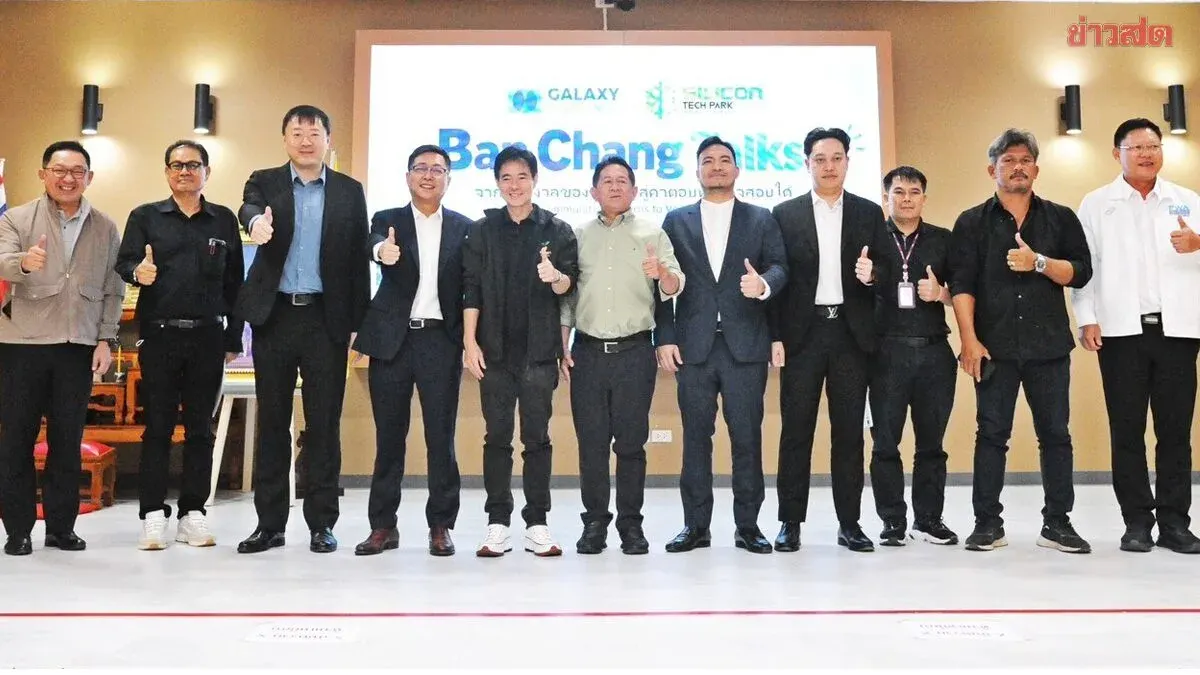
Ban Chang Talk: From Community Concerns to Verifiable Solutions
As Thailand enters the AI era and pursues major digital infrastructure investment, Ban Chang District in Rayong Province faces a critical question: how can large data centers operate alongside communities while efficiently managing electricity, water, and resources, and returning value to the area?
Silicon Tech Park and Galaxy Data Center answered by hosting the Ban Chang Talk forum, which brings together residents, community leaders, government agencies, academics, and project developers to address concerns directly and transform worries into measurable, verifiable actions.
Korwat Sukwat, Director of Government and Public Relations at Galaxy Data Center, stressed that the project will not dismiss community concerns with blanket assurances or blame contractors, but will instead provide data, engineering principles, measurement results, and transparent systems enabling public verification.
Addressing Six Key Concerns
1. Water: The project allocates over 37 million baht to support the Ban Chang branch of the Regional Waterworks Authority in upgrading water distribution infrastructure. It will use approximately 35% municipal water and 65% from private sources, with dry-season reserves in place. Liquid cooling technology recycles water back into circulation, with actual consumption and water use efficiency (WUE) metrics disclosed for public inspection. The principle is clear: data center growth must not undermine the community's water security.
2. Backup Power and Fuel Tanks: Diesel fuel tanks for backup generators are currently empty and will only be filled after obtaining permits and passing safety inspections. Emergency response plans, leak prevention systems, odor and vapor containment, and firefighting systems are all being finalized.
3. Noise and Electromagnetic Radiation: Additional sound-absorbing panels and barriers will be installed around generators. Electromagnetic radiation will comply with standards set by relevant authorities and experts, with measurement results disclosed at points affecting the community. The project follows Environmental Impact Assessment requirements and applicable laws.
4. Construction Waste: The principle is clear—outsourcing work is allowed, but outsourcing responsibility is not. The project terminated a contractor's contract over waste management failures and now coordinates with Ban Chang Subdistrict Municipality on collection, sorting, and transportation, with tracking systems from source to final disposal.
5. Labor: Standards are raised to individual-level control. Subcontractor workers must register, submit documents, undergo health checks, and use proper PPE. The project prioritizes Thai workers and aims to develop Thai technical and advanced technology talent long-term.
6. Communications Networks: Details were not fully provided in the source material.