Bangkok Approves Fourth-Phase Development Plan With Nine Key Strategies
Bangkok's governor approved a revised development strategy for 2028-2032 that shifts the city's vision from merely being "livable" to creating economic opportunities and hope through nine core strategies spanning transportation, safety, env
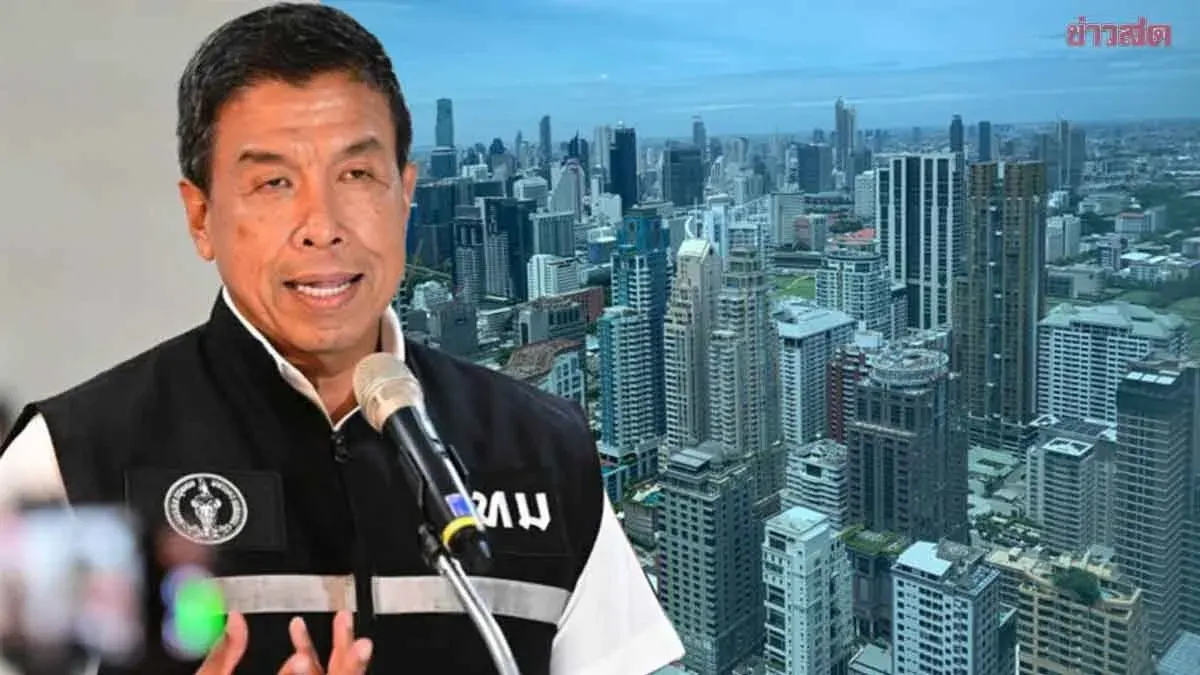
At Bangkok City Hall on August 21, Governor Chadchart Sittipunt chaired the third meeting of the Bangkok Metropolitan Administration Strategic Development Committee, with senior city officials in attendance. The committee reviewed the draft 20-year Bangkok development plan for the fourth phase (2028–2032), prepared by Thammasat University's research and consulting institute, and approved a revised city vision statement. The vision shifts from "Bangkok, a livable city for everyone" to "Bangkok, a city that creates opportunities and hope for all," positioning the city for greater challenges and progress.
Chadchart explained that the updated vision and development strategies now encompass broader and clearer working dimensions. The original "livable city" concept emphasized residents' quality of life, but review revealed that cities need two driving forces working together: people and business. Cities function as labor markets and economic systems that generate income to circulate and improve residents' quality of life. The development strategy therefore combines economic opportunity creation with productivity and quality of life improvements, giving people hope. A livable city alone may not be enough; it must also attract talented individuals through business opportunities.
The fourth-phase strategy framework rests on three pillars: the 20-year national strategy framework, the draft 14th national economic and social development plan, and the Sustainable Development Goals (SDGs). Implementation proceeds through nine core strategies: (1) Good Transportation—convenient, safe, seamless, and accessible systems friendly to the environment; (2) Good Safety—building a resilient city with disaster and emergency preparedness; (3) Good Transparency—reducing corruption through preventive mechanisms, strong governance, and integrity assessments at all levels; (4) Good Environment—pursuing low-carbon status, climate resilience, and integrated waste, wastewater, air, and energy management to reduce pollution and environmental risk; (5) Good Health—prioritizing primary healthcare services enhanced with digital technology for seamless patient care in a "high-tech, high-touch" model; (6) Good Education—advancing lifelong learning for all ages through digital curricula addressing life and job skills, supported by teacher and student development; (7) Good Economy—positioning Bangkok as a gateway to ASEAN through creative business, high-value services, and health economics, creating premium urban experiences and investment; (8) Good Society—building fairness and harmony, raising quality of life and welfare especially for vulnerable groups; and (9) Good Management—elevating organizational performance through data-driven operations centered on public outcomes.
The committee also approved revisions to Bangkok's integrated annual action plan for 2028, shifting from "developing a disaster command center and linking emergency data systems" to "developing block-by-block infrastructure aligned with local context," emphasizing area design and development responsive to community needs.