Bank of Thailand Holds Key Rate at 1%
The user wants a short summary of the article about the Bank of Thailand holding its key rate at 1%. The summary must be in English, 1-2 sentences, 120-220 characters (max 240), factual, no filler, lead with what happened then the most impo
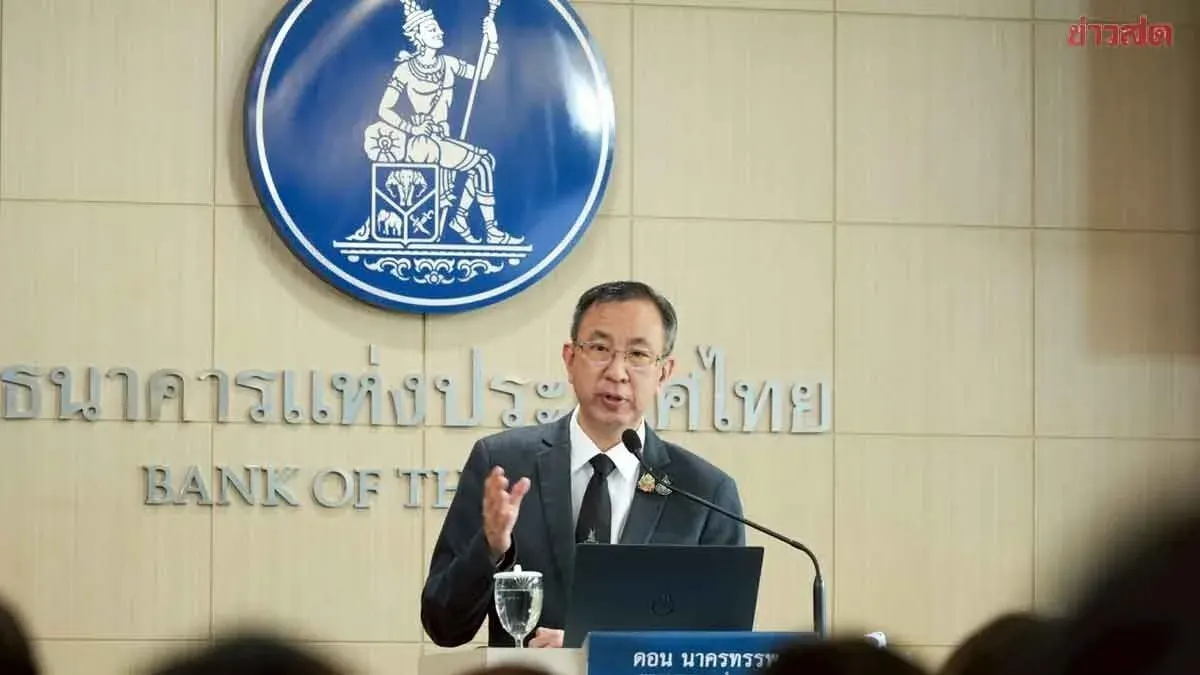
Bank of Thailand Secretary Don Nakornthab revealed that at its October 28, 2026 meeting, the Monetary Policy Committee voted unanimously to maintain the policy rate at 1.00% per annum, with one member absent. The committee viewed the current rate as appropriate to support Thailand's uneven economic recovery while monitoring inflation risks and long-term financial stability.
"The Thai economy is projected to expand 2.4% in 2026 and 2.1% in 2027, driven by exports and stronger-than-expected technology and AI investment cycles. However, benefits remain concentrated in certain businesses and labor groups, while overall growth stays below potential."
Private consumption remains pressured by high household debt, a fragile labor market, and weak purchasing power, especially among low-income households facing high living costs. Small and medium enterprises (SMEs) face adaptation constraints and intense competition, while foreign tourist numbers trend downward due to higher oil prices.
Headline inflation is forecast to average 2.1% in 2026 and 1.3% in 2027, trending higher through the remainder of this year into early next year due to energy prices and El Niño effects, before declining on base effects and weak domestic demand. Core inflation is projected at 1.2% and 1.3% respectively.
The meeting warned of upside inflation risks from Middle East conflict uncertainty, energy price cap limitations, and cost pass-through by businesses, which could affect both core inflation and medium-term inflation expectations.
On credit, total lending expanded driven mainly by large firms — for liquidity, rising costs, and new investment — while SME credit continued contracting across nearly all sectors as financial institutions remain cautious about risky borrowers. The MPC stressed close monitoring of SME and vulnerable household repayment capacity.
However, the committee judged that accommodative monetary policy alongside targeted financial measures continues to support the economy, but risks from oil prices, El Niño, and the impact of low interest rates on long-term economic and financial stability must be monitored.