Thailand Leads 62 Nations Adopting Bangkok Space Declaration
The user wants a short summary of the article, 1-2 sentences, 120-220 characters max, never more than 240. Output in English only, plain text, no markdown, no labels. Key points from article: - Thailand led 62 Asia-Pacific nations adopting
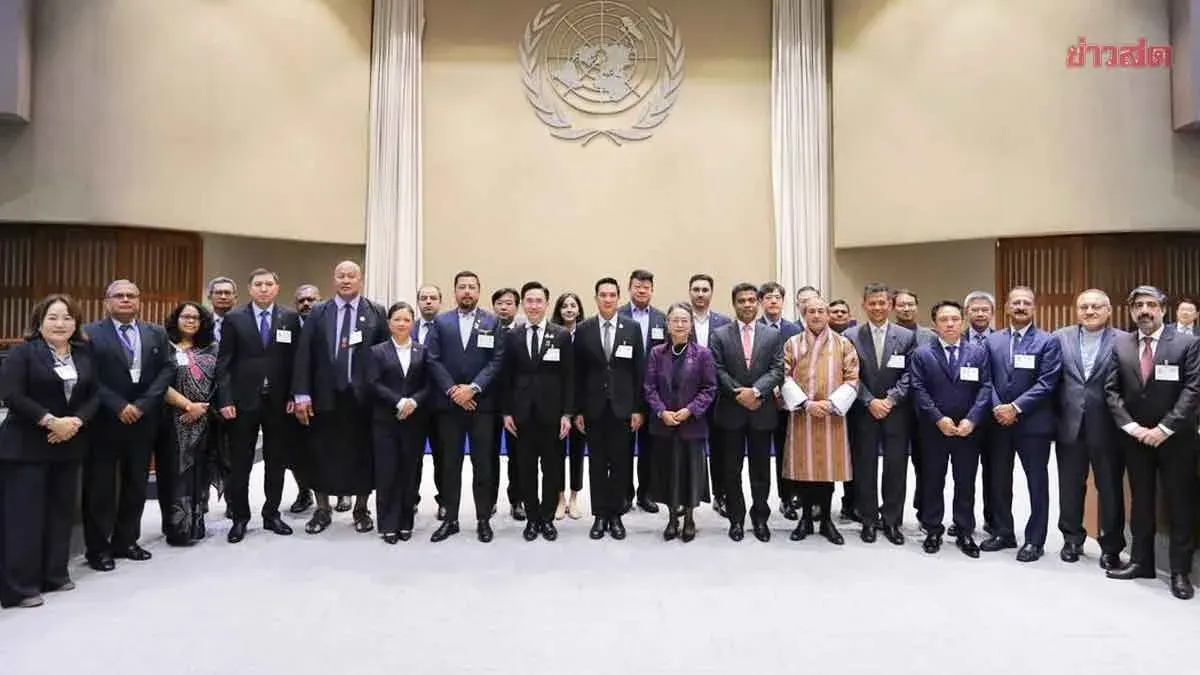
Deputy Prime Minister Yotsakorn Wongsawat led 62 Asia-Pacific nations in endorsing the Bangkok Declaration, integrating advanced space technology to achieve sustainable development goals. At the UN Conference Centre in Bangkok on October 28, 2026, Yotsakorn, in his capacity as Deputy Prime Minister and Minister of Higher Education, Science, Research and Innovation, delivered a ministerial statement at the 5th Ministerial Conference on the Use of Space Technology for Sustainable Development in Asia and the Pacific.
Thailand demonstrated its regional leadership in space technology as co-host alongside the UN Economic and Social Commission for Asia and the Pacific (ESCAP), driving the formal adoption of the Bangkok Declaration on the Use of Space Technology for Sustainable Development in Asia and the Pacific. The consensus agreement from all 53 ESCAP member states and nine associate members will serve as a key milestone guiding regional space cooperation through 2030.
The declaration underscores the global challenge that only 15-17% of Sustainable Development Goals (SDGs) are on track for 2030, compelling member states to jointly expand space technology and geospatial information capabilities. It focuses on integrating advanced technologies such as AI, Big Data, cloud computing, quantum technology, and satellite communications into space applications to eliminate technology disparities.
The framework opens participation to the private sector, startups, SMEs, educational institutions, and research bodies, aiming to establish voluntary data-sharing mechanisms under national laws and interoperable data standards. Priority objectives include enhancing disaster response, climate change monitoring, environmental surveillance, and strengthening agricultural capacity and food security.
The Bangkok Declaration will serve as the primary framework for the Third Asia-Pacific Plan of Action (2026-2030), leading to the 6th Ministerial Conference in 2030.
Yotsakorn highlighted that collaboration among optical satellites, radar satellites, and AI now enables more precise tracking of floods, droughts, and cross-border haze. The critical challenge, he said, is converting these datasets into actionable decisions that help people during crises.
He presented a "3P" strategy: People - upgrading early warning systems to directly assess impacts on communities; Prosperity - building end-to-end space value chains by linking universities, the Geo-Informatics and Space Technology Development Agency (GISTDA), and industry; and Partnership - integrating regional data systems into a unified platform.
The value of satellites, Yotsakorn emphasized, is measured not by what they see but by the lives and livelihoods they protect. He stressed that turning space technology into an economic engine, backed by credible science and interconnected systems, is the key.