Thailand EV Sales Forecast to Top 210,000 in 2026
Kasikorn Research Center forecasts Thailand's BEV sales will exceed 210,000 units in 2026, a 71% year-on-year jump, driven by a rush of imports ahead of a new 35% excise tax on imported BEVs taking effect January 2027 and China's cut to VAT rebates for NEV exports. The tax changes are expected to accelerate imports in late 2026 as consumers and dealers stock up before prices rise an estimated 25%. The impact will vary: pure importers face the biggest challenge, brands with local production gain competitive advantage, and those with partial local investment await clarity on import quotas.
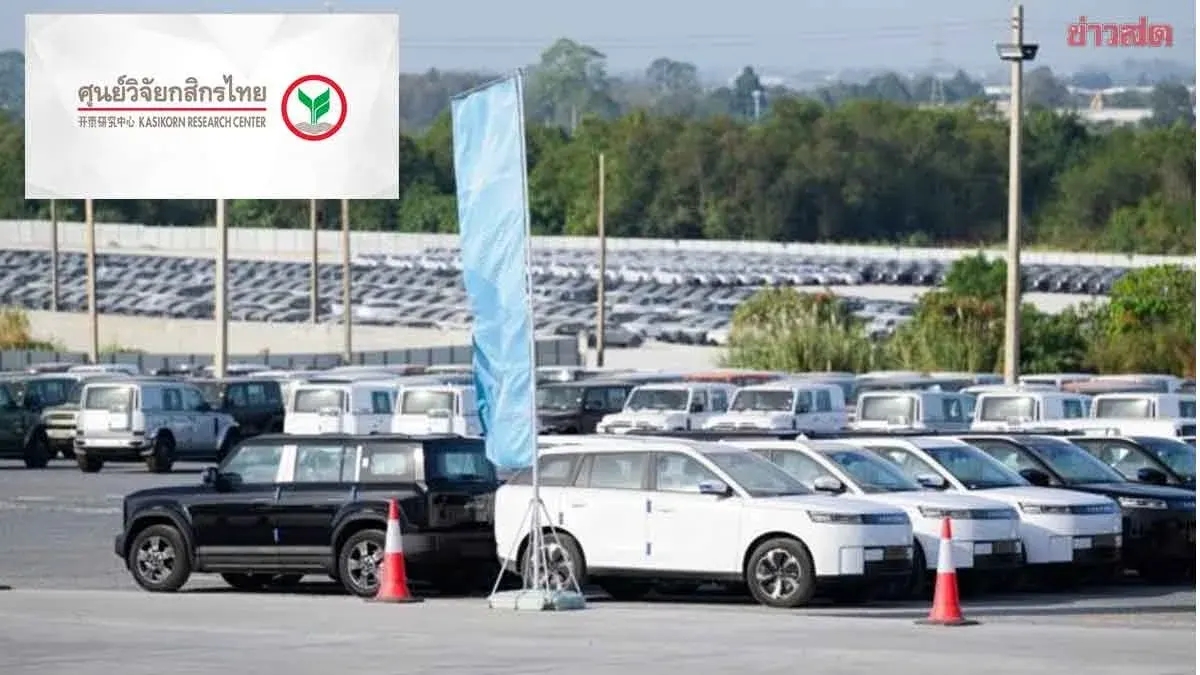
New excise taxes drive a surge in Chinese BEV imports in the final quarter, with carmakers expected to use a 'buy this year before prices rise next year' marketing strategy. Kasikorn Research Center states the government's BEV import excise tax hike will likely push some BEV brands to invest more in local production. However, for this year Thailand's BEV market will still be dominated by imported BEVs, particularly in the final quarter when imports from China are expected to accelerate further from many BEV brands selling in Thailand, both those relying solely on imports and those with investments in Thailand but still needing to import certain models to supplement their lineup.
Specifically, (1) Thailand's announcement to raise excise tax on imported BEVs from 10% to 35%, effective January 1, 2027, may cause average selling prices of imported BEVs next year to rise roughly 25%. Combined with (2) China's announcement to cut the VAT rebate rate for new energy vehicle exports (including BEVs) from 13% to 9%, effective April 1, 2027, making Chinese BEV exports costlier. The combined effect of both factors suggests BEV sales in 2026 could accelerate to exceed 210,000 units, growing over 71% year-on-year, to meet the 'buy this year before prices rise next year' demand that carmakers are expected to leverage for marketing.
Regarding the new BEV excise tax measures, Kasikorn Research Center expects differing impacts based on each brand's revenue dependence. The group likely most affected is pure importers selling only imported BEVs (about 23% of total BEV sales), whose prices will rise to uncompetitive levels. Coping strategies may include some brands considering local production bases while others exit the market.
The second most affected group is BEV brands with parent company investments in Thailand but still importing some models (about 42% of total BEV sales). Their additional investment plans will likely depend on the import quota issue still awaiting clarity. The government must therefore carefully consider import quotas and domestic economic value creation to offset imports.
The least affected group is BEVs already produced in Thailand (about 35% of total BEV sales), where the excise tax remains unchanged at 2%. Besides avoiding price hikes, they may benefit from price wars as competitors facing higher taxes cannot price as aggressively. However, the extent of price reductions depends on rival brands' pricing strategies.
Key issues to monitor closely include local content criteria that must be carefully crafted, including setting appropriate minimum thresholds such as significantly exceeding the previous 40% local content, especially since BEVs use far fewer parts than internal combustion engine (ICE) vehicles. Calculation methods should also reach Tier 2 and 3 component levels to ensure domestic parts makers truly benefit, plus a continuous long-term monitoring system to verify brands maintain required local content levels.
Another issue to watch is the investment equation for each nationality's car brands, which likely won't change after the new excise tax adjustment, with opportunities...