Thailand Raises Excise Tax on Imported EVs to 35%
Thailand's Cabinet has approved raising the excise tax on fully imported electric vehicles from 10% to 35%, effective January 1, 2027, which is expected to increase retail prices by about 49%. The Excise Department aims to reshape the tax structure to encourage local production and strategic parts manufacturing, targeting a 70% domestic market share for Thai-made EVs. Current data shows imports still dominate the market by a 70-30 margin despite rapid EV adoption.
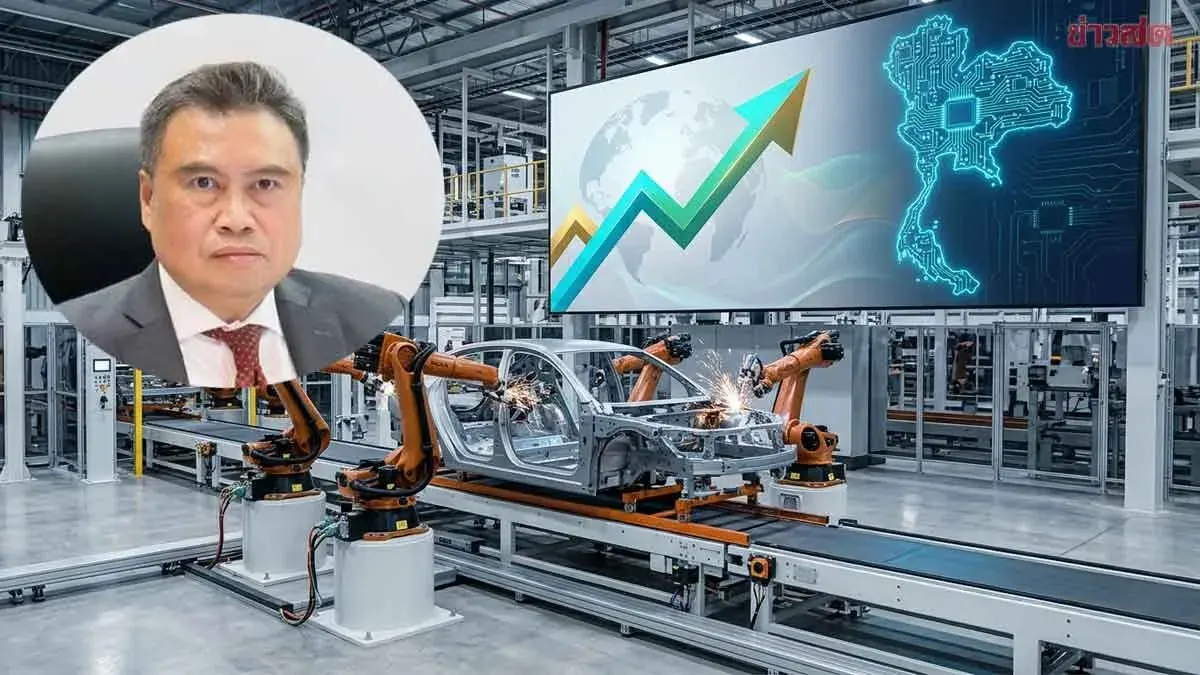
Excise Department Director-General Phornchai Thiravej revealed that following the Cabinet's approval on November 3, 2026, the excise tax rate for fully imported battery electric vehicles (BEV) and range-extended electric vehicles (REEV) will increase from 10% to 35%. Calculated under the inclusive tax principle — where tax is treated as part of the cost base for retail pricing — this is expected to push retail prices up by approximately 49%.
The ministerial regulation takes effect on January 1, 2027, providing a transition window for automakers to adapt their production plans, investment, and stock management.
Phornchai noted that current excise rates vary widely: 2% for domestic producers using strategic Thai-made components such as batteries, versus 35% for imports that do not use local strategic parts. However, qualifying for the 2% rate is very difficult under present conditions.
Therefore, the Excise Department has collaborated with the Federation of Thai Industries (FTI) to apply the "Made in Thailand" (MiT) guidelines for a new local content assessment, evaluating both the variety of strategic parts and the actual domestic investment value to create genuine added value for the Thai economy.
The department is also preparing to revise tax rates in two additional tiers, including a 10% rate for investors producing other strategic components beyond batteries — such as drive motors, reduction gears, electronic control units, or high-voltage wiring systems. This will shift the overall EV excise structure to a "1+3 tier" system: Tier 1 — domestically produced EVs meeting local content rules and using approved strategic parts taxed at 2%; Tier 2 — EVs not using Thai-made strategic parts but meeting other criteria, currently taxed at a flat 35%, will be split into three sub-tiers.
Phornchai said the department is in continuous talks with more than 8-10 foreign investors and automakers from China, Europe, and Japan regarding tax direction and local content rules. The goal is to maintain a market share ratio of 70% domestically produced to 30% imported vehicles, reversing the current situation where imports exceed domestic output by 2.5 times.
Citing registration data for electric cars and pickups from January to September 2026, only 47,516 of 166,035 total units were domestically produced, while 118,519 were imported (102,103 outside the EV incentive scheme and 16,416 within it). This reflects a roughly 30% domestic vs. 70% import split, showing that despite rapid EV adoption, local production capacity and speed still lag behind import volumes. The government must use excise tax mechanisms to create tax-cost incentives.