Book Review: Ten Zen Tales and Ten Zen Riddles
Bhikkhu Buddhadasa's collection pairs ten Zen tales with ten riddles designed to teach Buddhist ethics and encourage sudden insight through simple yet profound storytelling techniques.
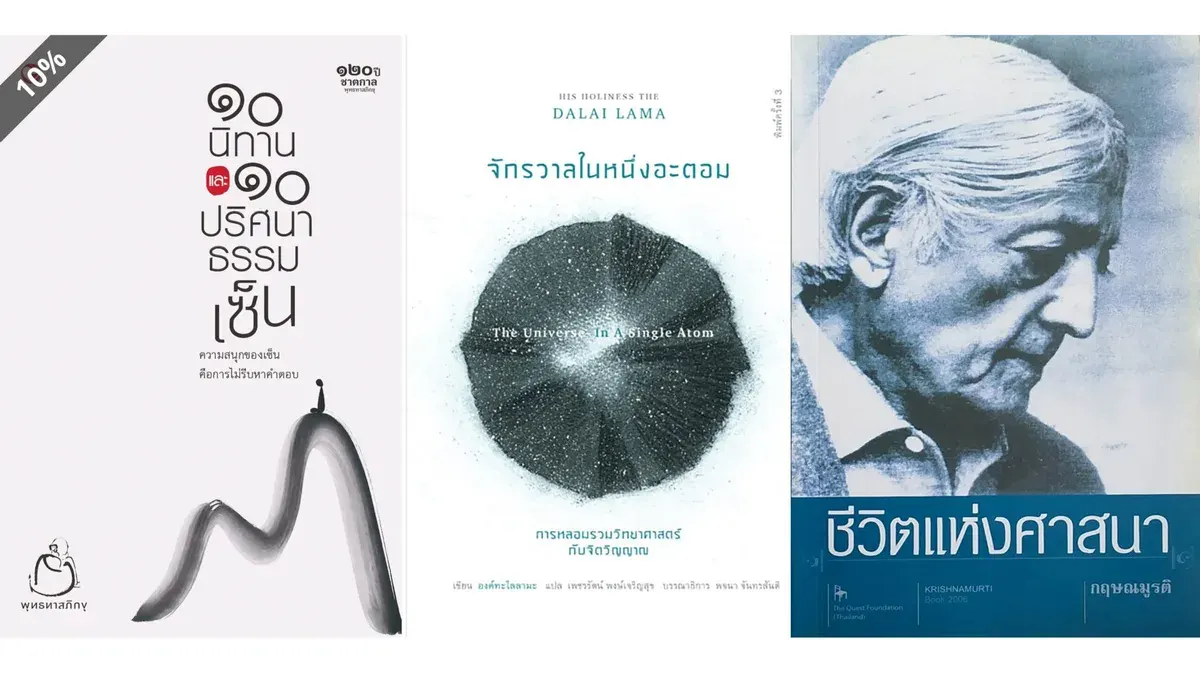
The book '10 Zen Tales and 10 Zen Riddles' is authored by Bhikkhu Buddhadasa and published by Sukhaphap Jai Publishing House for 115 baht. Sometimes the deepest teachings appear in the simplest stories. Zen Buddhism employs a unique teaching technique called "pointing directly at the mind," which directs instruction straight to the heart, enabling listeners to experience sudden realization or a rapid flash of insight and attain the Dharma instantly. Zen tales represent one of the widespread and popular teaching methods in contemporary Zen Buddhism. This book is the fourth discourse in the ethics guidance series, originally titled "Spiritual Entertainment for Ethics," which Ajahn Buddhadasa delivered to teachers at the Teachers' Council Auditorium on January 14, 1962. It was later published in Dhammakosanat volume 18 under the title "Buddhist Ethics." The current volume comprises 10 Zen tales accompanying the lectures, some of which may be familiar, such as the tale of overflowing tea. Ajahn Buddhadasa emphasizes that Dharma tales are essential as educational tools for teaching ethics to children and youth, as they make learning enjoyable and engaging while allowing young people to absorb the teachings naturally. Beyond the 10 Zen tales, the book also contains 10 Zen riddles with verses composed by Ajahn Buddhadasa based on Zen images from the Mokkhabhavan Spiritual Theater to help readers understand these riddles more easily. The Zen riddles include themes such as "The Sound of the Bamboo Flute Returns to the Bamboo Thicket," "Bowing to the Buddha Image," and "The Earthworm Writes a Letter to Humans," which invite readers to consider truths beyond their habitual thought patterns. All stories in the book are short, concise, and easy to read, yet they leave space for readers to discover meaning independently, which is the essence of Zen learning. It is hoped that this book will be suitable for teachers, students, and all those interested in Zen who wish to apply its teachings to their daily lives.